
Ballet Leotard Color Meaning: School Levels, Exams and Personal Choice
Ballet leotard color meaning depends on the school, class or event. A color may identify a training level within one school, form part of a performance costume or simply reflect the dancer’s preference. There is no color chart that tells you every ballet dancer’s level wherever they train.
For parents, that means checking the current class instructions before buying. For schools and retailers, it means describing exactly where a uniform is approved instead of presenting a local convention as a universal ballet rule.
Ballet leotard color meaning starts with the setting
A pink leotard does not, by itself, establish that a dancer is a beginner. A black ballet leotard does not prove that the dancer is advanced. The relevant information is the policy of the program in which the garment is being worn.
Think of a color as a label whose definition belongs to a particular setting. Inside a school, it may make a class group easy to identify. In a recital, it may belong to a character or ensemble. In an open class, it may have no assigned meaning at all.
| Setting | What the color may indicate | What it does not establish | Where to check |
|---|---|---|---|
| School class with a prescribed uniform | A named level, group or program | The same level at another school | Current school dress code and class placement |
| Examination | A recommended presentation or a school’s chosen outfit | Assessment credit simply for wearing that color | Current examination guidance and teacher instructions |
| Adult open class | Personal choice where the program permits it | A reliable sign of experience | The specific class’s clothing requirements |
| Recital or production | A costume decision for a role or group | Permission to wear the same outfit in weekly class | Costume brief from the production team |
The distinction matters when a customer brings in a photograph. A retailer can identify the visible garment, but the photograph alone cannot confirm which school policy it meets. Ask for the written requirement before describing a substitute as suitable.
Why level colors differ between schools
Schools can assign their own colors to classes. As one specific example, Boston Ballet School’s Classical Ballet Program dress code lists rose for Elementary 1, fuchsia for Elementary 2 and red for Elementary 3. Those assignments describe that program; they are not an international sequence of ballet grades.
A student transferring schools should therefore confirm the new uniform after placement. Matching the number in the previous class name is not enough. Different programs may organize age groups, levels and course names differently, and the uniform belongs to the new program’s instructions.
The same caution applies within a school. A promotion notice may introduce a new color, keep the same color with a different garment style or provide a transition arrangement. The school should make that explicit rather than expecting families to infer it from what older students wear.
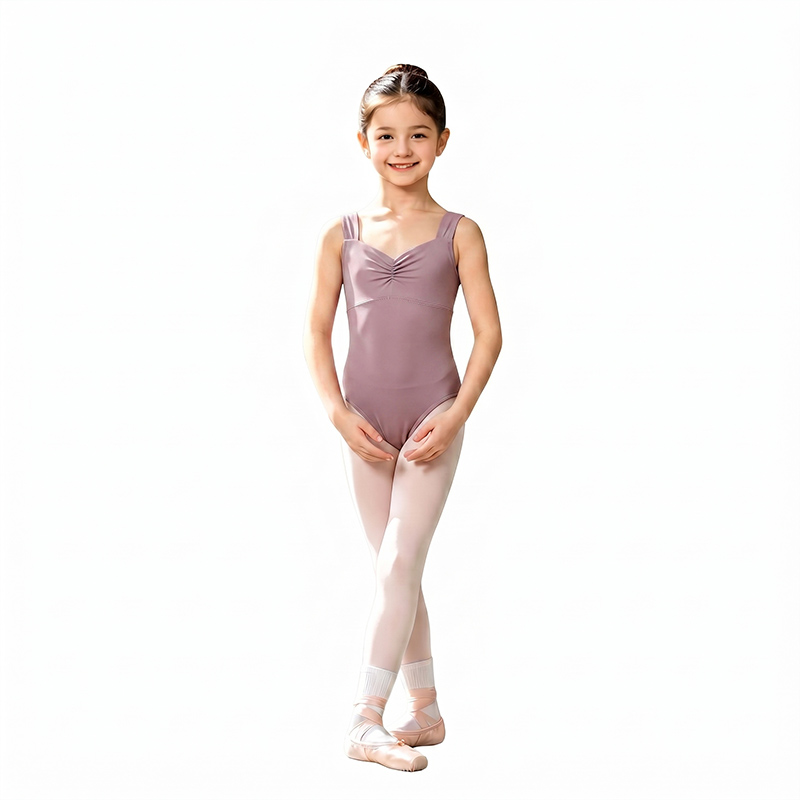
For buyers handling ballet school uniforms, keep the class name beside the approved product reference. A list headed only “pink, blue, black” loses the connection between the garment and the students for whom it was selected.
A class uniform and examination guidance are different instructions
A school’s everyday dress code may specify a particular style and color even when an examination organization offers broader guidance. Read both documents for their own purpose. Do not turn a school purchasing preference into a claim that an examining body requires that exact garment.
The Royal Academy of Dance’s current examination guidance says its uniform is recommended rather than required and is not part of the examination assessment. It also emphasizes comfort, appropriate support and a clearly visible silhouette. That is the Academy’s published examination position, not permission to ignore a school’s separate class policy.
If instructions seem inconsistent, ask the teacher which requirement applies to the occasion. The useful question is specific: “Is this the uniform for weekly lessons, the examination presentation or both?” It is much easier to resolve that before a group order is placed.
A retailer should be equally precise. A garment can resemble a commonly worn examination style without being an officially approved or endorsed product. Avoid certification or endorsement language unless there is actual authorization supporting it.
Adult classes may allow much more choice
Do not apply a children’s level-color chart to an adult beginner automatically. Some adult programs allow a broad choice of clothing. Others have more specific requirements, particularly for a course, workshop or performance. Check the actual program.
For example, Boston Ballet School’s Adult Dance Program requires ballet slippers but allows clothing chosen for comfort and ease of movement, with guidance on fit and stretch. That illustrates why a school’s classical-program uniform and adult-class clothing policy should not be treated as interchangeable.
Where a leotard color is optional, the dancer can choose a preferred shade while concentrating on fit, coverage and freedom of movement. There is no need to select a color that is supposed to announce “beginner” or to avoid one thought to belong to advanced dancers.
For someone new to class, a simple product explanation is more helpful than a color hierarchy. Show the neckline, straps, back and available sizing. Keep any special audition requirements separate; the audition clothing guidance should be consulted only for that specific setting.
Read the whole dress code, not just the color line
The correct color can still be the wrong garment. A dress code may also specify sleeve length, neckline, skirt permission or a particular product reference. Check those details together before ordering a ballet class leotard.
Pay attention to whether a skirt is required, optional or excluded. A matching skirt in a product photograph does not prove it belongs in the uniform. Similarly, contrast panels or decorative mesh may need approval even when the main fabric matches the requested color family.
Tights and footwear can have their own color instructions. Do not assume they must share the leotard’s color, and do not invent a requirement based on a styled photograph. Record each component separately so the customer can see which choices are fixed and which remain optional.
When a description is vague, ask one concrete question at a time. Does “navy” mean a named approved shade? Are alternative styles allowed? Can an existing garment be worn during a transition? The response should come from the school rather than from a general article about ballet traditions.
Build a school color system that families can actually follow
If the school is choosing its own palette, decide what the colors are meant to communicate. They might distinguish teaching groups, identify a program or create one consistent uniform across several levels. None of those aims requires copying another school’s sequence.
Keep the written class name alongside every color swatch. Families should not have to distinguish two similar shades from a small phone-screen image to work out which garment to buy. Add a product reference and a current photograph, then provide a contact for unresolved questions.
Define the policy for progression before announcing the palette. State when the new uniform takes effect, whether existing garments remain acceptable for a period and which parts change. These are school decisions; suppliers should not be left to infer them from an order containing several colors.
For multiple approved styles, check that the wording covers the real options. A school may approve different cuts in one shade to suit its students, but that permission should be explicit. Avoid presenting a single photographed body or garment as the only possible interpretation when the policy allows alternatives.
Retail listings should name the policy they support
Use specific, current descriptions when selling an approved school uniform. Identify the school, program, applicable class and approved style where you are authorized to do so. Keep general color products separate from products confirmed for a named uniform.
For an ordinary pink, navy or yellow leotard, describe the garment and its available options. Do not label a shade “Grade 1” or “advanced level” without the relevant school context. Such wording invites customers from other programs to apply the wrong rule.
Review the listing when the school updates its policy. A product can remain physically unchanged while its approved use changes. Keep a dated record of the instructions behind the listing so staff can answer questions consistently.
When a replacement style is proposed, send its details to the school for review. Similar color, fabric or appearance does not make a substitution automatically approved. The approval needs to cover the actual garment that families will receive.
Turn the policy into a supplier brief
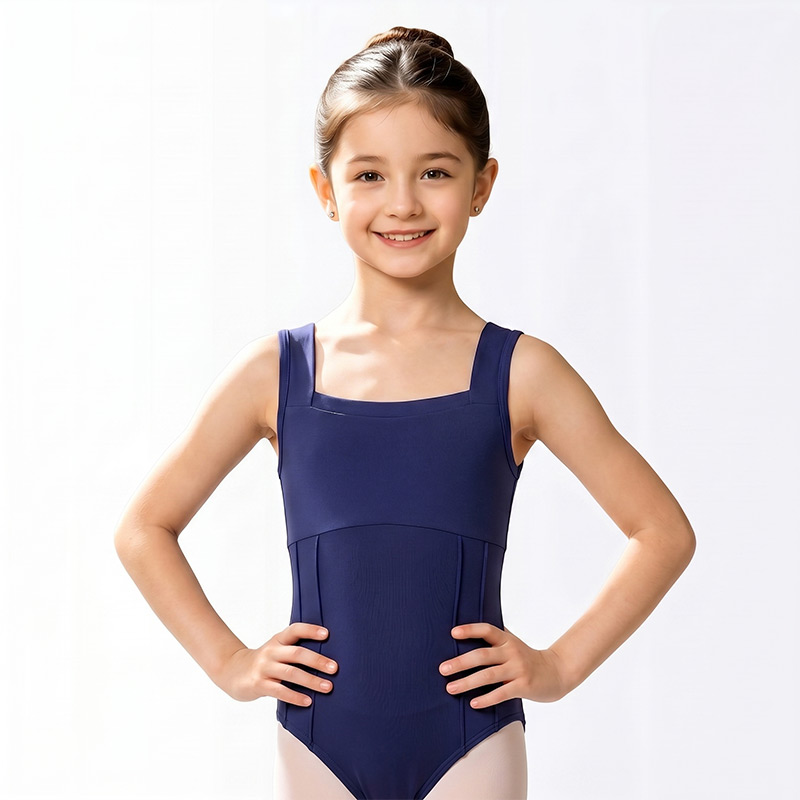
A supplier needs a garment specification, not just the meaning a school assigns to a color. Send the approved style, physical shade reference, size requirements and any restrictions on skirts or decoration. Include the class names as order information, while keeping the product references clear.
Jinwu’s Tank Ballet Leotard Set lists a tank leotard with a separate pull-on skirt, a 75% nylon and 25% spandex material entry, and children’s size labels 80–160. That gives a school a concrete starting point for a sample discussion. It does not establish approval for any named school or examination program; the school still needs to assess the garment and confirm the size definitions.
For repeat orders, keep the approved physical color reference rather than relying on the phrase “the blue for the next level.” The ballet uniform reorder guide explains how to carry those product decisions into subsequent orders without rebuilding the whole brief.
Send Jinwu your school’s uniform specification with the required garment options and the colors assigned to each group. Ask which existing styles can be sampled and which details need further confirmation before presenting them to families.
Conclusion
Leotard colors gain meaning from a particular school or occasion. Check that context, then confirm the complete garment requirement. Clear class names, product references and current instructions are more reliable than a universal-looking color chart.
FAQ
Does yellow indicate a particular ballet level?
Only if the specific school assigns yellow to that level. The color has no reliable level meaning outside that context. Check the school’s current class instructions.
Can an adult beginner wear a black leotard?
Yes, if it meets the class requirements and fits appropriately. Black is not reserved universally for advanced dancers. The program’s own clothing guidance takes priority.
Does an examination recommendation override the school uniform?
They serve different purposes. Ask the teacher which instructions apply to the examination and which apply to regular lessons. Do not assume a recommendation is a compulsory requirement.
Can a child keep the same uniform after changing schools?
Possibly, but ask the new school after class placement. The existing garment may meet the new policy or may be accepted temporarily; neither should be assumed from the color alone.
Can a supplier guarantee that a custom color is school-approved?
The school must approve its uniform. A supplier can work from an agreed specification, but a matching shade alone does not establish approval of the cut, fabric, decoration or complete outfit.