
A Ballet Class Outfit for Adults: Start Comfortable, Then Make It Your Own
For an adult ballet class, wear clothing that lets you move comfortably and meets the studio’s instructions. A leotard and tights are one option; a fitted top with leggings may be another where permitted. Confirm the footwear requirement before your first lesson, then choose an outfit you can wear without repeatedly adjusting it.
You do not need to settle your entire dance wardrobe before stepping into the studio. Start with the requirements and your own preferences for coverage and support. After a few classes, you will have a much better sense of which garments deserve a place in your weekly routine.
Find out what your class actually requires
Check the information for the class you booked. An adult open class, an examination programme and a ballet-inspired fitness session can have different expectations. A photograph of professional dancers on the school’s website does not necessarily show what beginners are expected to wear.
English National Ballet’s May 2026 guide to its adult classes accepts comfortable clothing options including leotards and tights, leggings, T-shirts or joggers. It separately requires ballet shoes for its ballet classes. This is a useful example of flexible clothing rules alongside a specific footwear rule; your own studio may differ.
Ask about any point that affects what you already own: whether leggings are accepted, whether skirts are optional and whether the teacher needs loose layers removed during class. If you have a coverage or changing requirement, raise it directly rather than assuming you must adopt the outfit shown in an advertisement.
Keep the first decision small. Once you know what is required, identify the suitable pieces already available to you and the actual gaps. A first lesson should not depend on assembling every accessory associated with ballet.
Choose between a leotard and separates
A leotard provides a continuous garment through the torso. Some adults like having no top hem to tuck in or pull down during a reach. Others prefer a separate top and leggings because that combination is familiar, offers the coverage they want or makes changing easier.
Neither arrangement is automatically the better starting point. Where both are permitted, compare how the outfit behaves when you raise your arms, bend and sit. A top that rides up may be distracting; a leotard that pulls vertically may be equally distracting. Choose the arrangement that fits the wearer and the class.
| Outfit approach | When it may be useful | Check before class |
|---|---|---|
| Fitted top and leggings | You prefer familiar separates and the studio allows them. | The top remains comfortable when reaching and the waistband does not need constant adjustment. |
| Leotard and ballet tights | You prefer a continuous torso garment or the programme requires it. | Torso length, neckline, leg openings and the intended underlayers work together. |
| Leotard with an optional short skirt | You want a removable layer and the teacher permits it. | The skirt stays in place and can be removed when requested. |
| Leotard with leggings or another permitted bottom layer | You prefer that coverage and the studio accepts the combination. | The layers do not bunch or interfere with your normal movement. |
| A removable warm-up layer | You want an extra layer before class or during an allowed warm-up period. | You can remove it easily and the outfit underneath is ready for class. |
For a retailer assisting an adult beginner, this comparison is more useful than declaring one outfit “proper ballet wear.” Explain the available options and ask what the studio requires. Leave room for the customer’s own comfort preferences.
Make coverage a practical choice
Decide where you want coverage before choosing decorative details. A high neckline, a fuller back, sleeves and a particular leg cut address different areas. A garment can cover the shoulders while still including sheer panels or a large back opening.
Jinwu’s High Neck Floral Ballet Leotard illustrates that distinction. Its product description identifies a high neckline, floral mesh upper section and elbow-length sleeves. These features offer a different shape from a camisole, but floral mesh should not be assumed to provide the same visual coverage as an opaque panel.
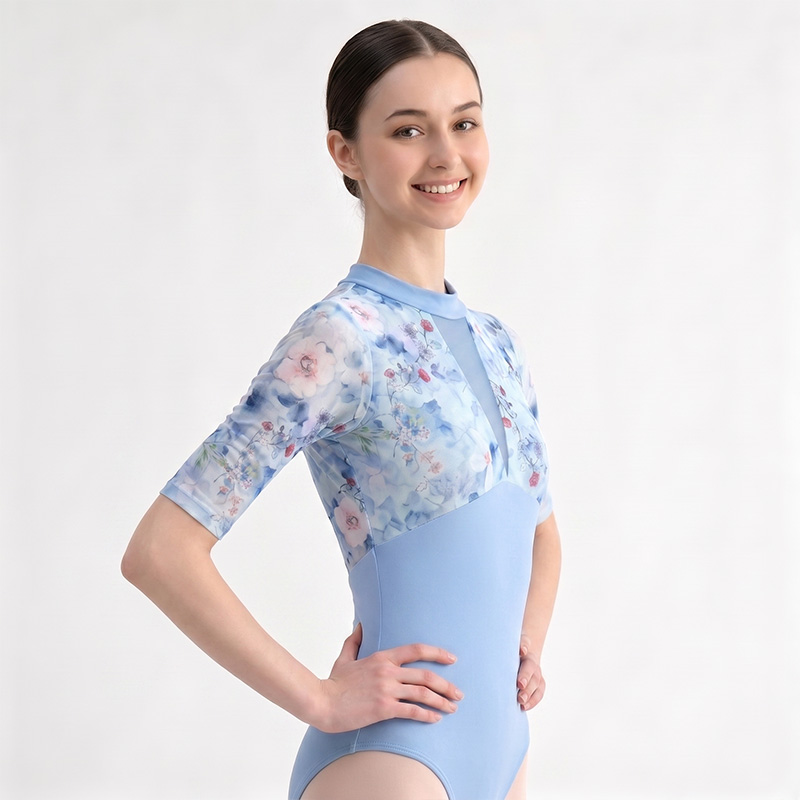
Review the back view and the fastening arrangement too. Ask what lining or internal support is included if that affects your choice. A high neckline does not establish bust support, and a material described as stretchy does not answer whether it works with a separate bra.
Try the garment with your intended support arrangement rather than an improvised substitute. If a particular cut makes that combination awkward, another neckline or back design may be a more practical choice. The aim is to find an outfit you can use comfortably, not to persuade yourself to tolerate one because you like the photograph.
Add a skirt or layer for a reason
A short ballet skirt can be an enjoyable part of a class outfit where permitted. It can also be left until you know whether you want one. Check whether the teacher allows skirts throughout the lesson, only for certain sections or not at all.
A separate skirt gives flexibility because you can remove it without changing the leotard. An attached skirt stays with the garment but cannot be set aside in the same way. If you attend more than one class with different rules, that distinction may matter more than the skirt colour.
Jinwu’s Ballet Starter Outfit is described as a camisole leotard paired with a matching pull-on skirt. The separate components offer a useful example of this arrangement. Confirm the measurements and supplied pieces for the version you are considering, rather than assuming every photographed item belongs to the set.
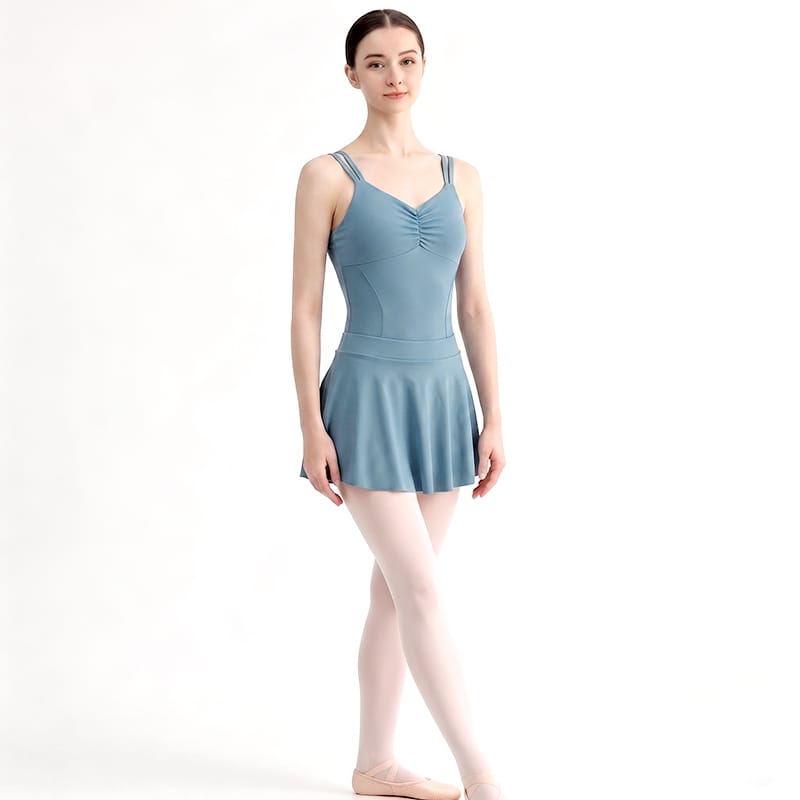
For a warm-up layer, consider how easily it comes off and where it will go when removed. Avoid choosing a layer that becomes a loose item you have nowhere to put. Ask the teacher when it should be removed so the clothing choice works with the class rather than interrupting it.
Settle footwear separately
Footwear deserves its own check even when the clothing rules are relaxed. Ask which ballet shoes the class requires and how a first pair should be fitted. Do not assume ordinary socks, outdoor shoes or footwear used in another activity are accepted on that studio floor.
Keep the fit of the shoe separate from the size of a clothing set. Your leotard size gives no useful shoe-size instruction. If ordering online, obtain the chart and fitting guidance for the exact shoe rather than transferring a familiar street-shoe number without checking.
For an ordinary beginner ballet class, do not add pointe shoes to the shopping list. Pointe work is a separate training decision for the teacher and dancer, not an outfit upgrade. Follow the class instructions and ask about anything unclear before attending.
Carry your class shoes in a clean, identifiable place, separate from outdoor footwear. That also makes it easier to check that both shoes are packed before leaving for the studio.
Try the outfit as a whole
Put on the complete combination at home. Sit, reach overhead and bend within your usual comfortable range. Check whether the layers remain where you want them and whether the outfit needs repeated adjustment. You do not need to rehearse unfamiliar ballet steps to learn whether a waistband is uncomfortable.
For a leotard, check the chart and ask how torso girth should be measured if the fit feels short or long. Do not rely on a size label alone. If your measurements point to different sizes, the guide to leotard proportions and coverage can help you describe the issue to a supplier.
Check any closure you will need to manage yourself. If you are coming to class directly from work, a garment that requires help fastening at the back may not suit your changing routine. That is a practical limitation worth discovering before the first lesson.
Assess opaque areas in ordinary light and the coverage you want while moving. A camera image, a dark colour or a high neckline cannot substitute for checking the actual garment. If you are not comfortable with it at home, do not assume the feeling will disappear in class.
Make the weekly routine manageable
Think about the journey as well as the lesson. Decide whether you will change at the studio, arrive partly dressed or need somewhere to keep your work clothes. Ask about the available changing facilities if that affects your plan.
Keep a short packing list for the first few weeks: the approved outfit, class shoes and the items the studio asks you to bring. Put smaller personal items in a separate pouch. You can refine the arrangement once you know the room and how much space is available.
After class, take the garments out of the bag and follow their care instructions. A leotard with floral mesh may have requirements that differ from your familiar exercise clothing. Keep the finished garment’s label available rather than treating a fibre percentage as a complete laundry instruction.
If you later attend several classes each week, plan around the care and drying routine you actually use. Add a second suitable outfit when it helps that routine. There is no need to buy duplicates of a cut you have not yet tried in class.
Choose the next garment from experience
After a few lessons, decide what you would change for a specific reason. Perhaps you prefer a separate skirt, want more shoulder coverage or find a certain waistband distracting. Those observations make the next purchase more purposeful than replacing the whole outfit because someone else wears a different style.
For schools and retailers serving adult beginners, organise recommendations around these decisions. Show the difference between opaque fabric and decorative mesh, identify removable components and provide measurements that let customers compare cuts. Avoid presenting every item in a styled photograph as essential.
If you are comparing Jinwu garments, send the product reference, class requirements and preferred coverage. Ask about the relevant sizing, lining and fastening details before choosing. For a studio assortment, explain the range of needs you want the selection to serve rather than assigning one style to every adult beginner.
Keep what works. A ballet class outfit can become more personal as you gain experience, but its everyday job remains straightforward: it should meet the class rules and let you move without clothing becoming the main thing you notice.
Conclusion
Begin with your studio’s requirements, then choose a comfortable base outfit and the footwear it asks for. Try the complete combination, keep the weekly routine simple and add pieces in response to your own experience. You can enjoy dressing for ballet without needing a complete wardrobe on day one.
FAQ
Do adult beginners have to wear a leotard?
It depends on the class. Some adult programmes accept comfortable separates; others specify a uniform. Check your booked class before buying rather than assuming all adult ballet follows the same rule.
Can I wear leggings over a leotard?
Where the studio permits that combination, try it and check that the layers remain comfortable during movement. The teacher’s requirements and your preferred coverage should guide the decision.
Is a floral mesh leotard suitable for a beginner?
Experience level alone does not decide that. Check the class rules, fit, coverage and care requirements. Mesh placement and opacity matter more to this decision than whether a design looks advanced.
Must my skirt match my leotard exactly?
Only a class requirement can make exact matching necessary. In a flexible adult class, choose an allowed combination you enjoy and check that the skirt works in movement.
What should I tell a retailer if I am unsure what to choose?
Bring the class instructions and describe your coverage, support and changing preferences. Ask for style-specific measurements and details of included components rather than relying on a general beginner label.