A Girls’ Ballet Starter Set: What the First Term Actually Needs
A girls’ ballet starter set should cover the child’s actual class requirements: the approved clothing, correctly fitted ballet shoes and any required tights. A skirt, hair accessories and a bag belong in the set only when they serve that class and the child can manage them. Before buying, obtain the dress code for the exact level and check what the product listing includes.
That last step matters more than the word “complete” on a package. A leotard-and-skirt set may be complete as a clothing combination while still leaving shoes and tights to buy separately. For parents, school administrators and retailers preparing a first-term kit, a clear contents list prevents more confusion than a long list of extras.
Get the requirements for the right class
Ask the school for the dress code attached to the child’s booked class, rather than a general ballet uniform photograph. Toddler movement, preschool ballet and a formal beginner syllabus may have different requirements, even in the same building. Also ask whether the rules for a trial lesson differ from those for the enrolled term.
Prince William County’s July 2025 recreation dance dress code provides a useful example: it lists flexible clothing options for its toddler and preschool classes, specifies colours at later levels and excludes skirts in some academy classes. Those are that programme’s published requirements, not universal ballet rules. They show why a set labelled “beginner” cannot confirm suitability on its own.
Write down the required colour, acceptable garment shape, tights and shoe requirements, and the policy on skirts. If a detail is unclear, send the school the exact product link before ordering. “Pink ballet outfit” is not a precise specification when a school expects a particular shade or does not permit the attached decoration.
For a very young child, confirm the practical arrangements too: where changing happens, whether a caregiver remains nearby and how a child asks for help. This informs the choice of garment without turning clothing into a test of independence.
Read the set contents literally
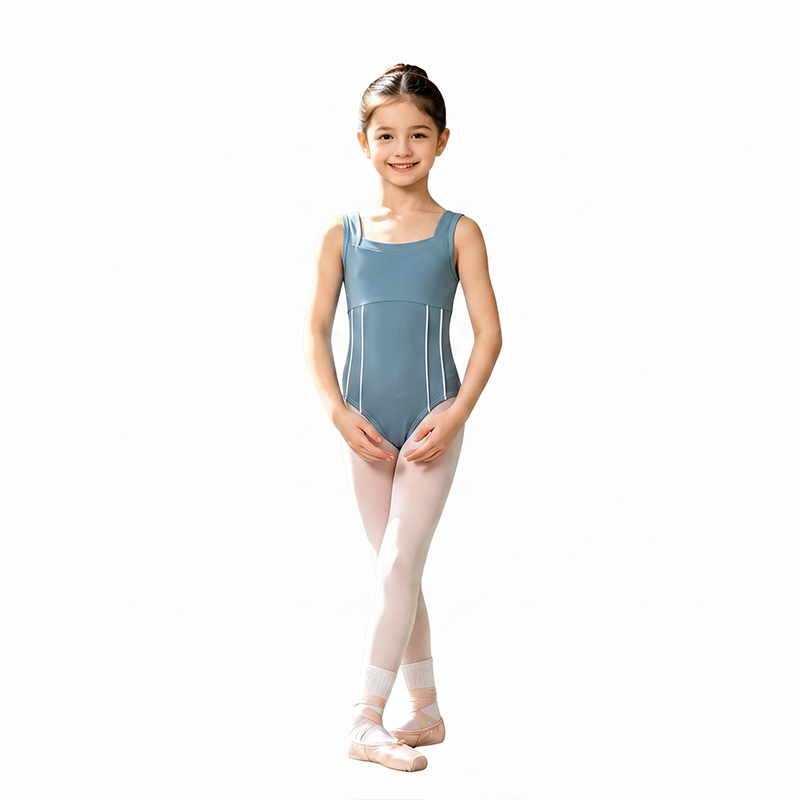
Separate the photographed outfit from the items included in the purchase. A model may wear shoes, tights or a hair accessory to show the clothing in use. Unless those pieces appear in the stated contents, do not assume they are supplied.
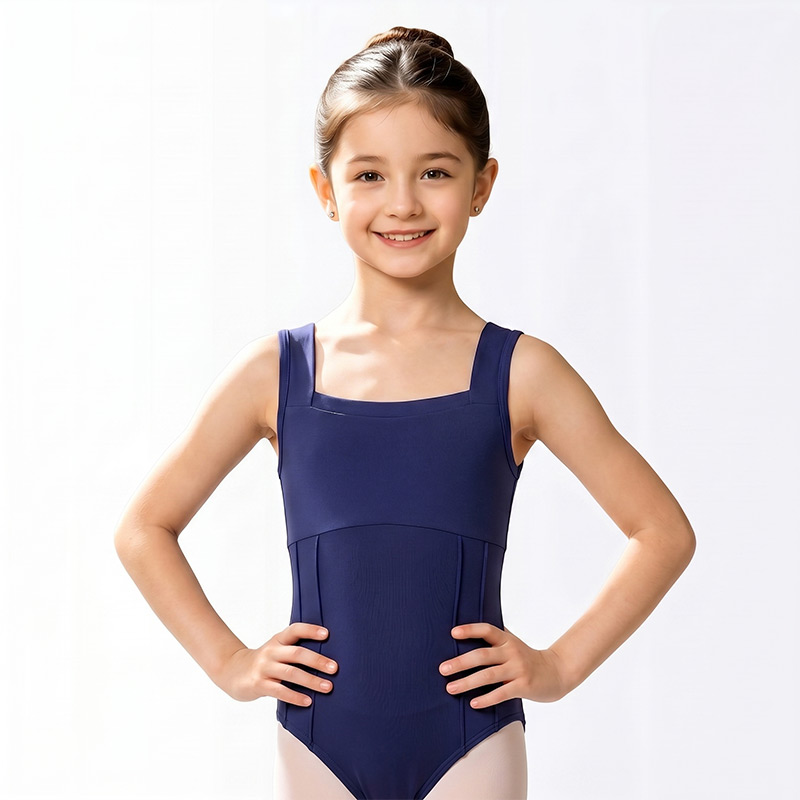
Jinwu’s Tank Ballet Leotard Set explicitly describes a tank-style leotard and a matching pull-on skirt. Its published material information lists a nylon–spandex blend. The set is therefore a candidate for the clothing part of a starter kit where those components meet the school’s rules; the listing does not make it a universal, fully equipped first-class package.
| Possible kit component | Confirm before buying | Reason to leave it out or choose separately |
|---|---|---|
| Leotard or approved alternative | Class colour, style and the child’s fit | A trial class may allow clothing the family already has. |
| Ballet tights | Whether required, permitted colour and suitable size | Some early-years classes accept another specified option. |
| Ballet shoes | The teacher’s requirements and the fit of the actual shoe | Shoe size should not be assigned from a clothing bundle size. |
| Skirt | Whether permitted or required, and attached or separate | A prohibited or distracting skirt adds no value to the class kit. |
| Hair accessories | The school’s hair guidance and what works for the child | A large decorative accessory is not automatically useful for class. |
| Bag | What needs carrying and who will carry it | A family may already have a suitable, easy-to-identify bag. |
For a school order, put the contents in writing at both ends: on the supplier order and on the information given to families. If a skirt is optional, say so. If shoes require a separate fitting, say that before the kit arrives.
Try the changing routine, not just the outfit
A child standing happily in a new leotard tells you only part of what you need to know. At home, practise putting the outfit on and taking it off with the help the child would normally receive. Check which side is the front, how the straps sit and whether the child can identify the waistband of a separate skirt.
Pay attention to closures and layers. An outfit with a small back fastening may require more adult assistance than a simpler neckline. Tights, a leotard and a separate skirt create several steps during a toilet break. There is no need to assume that every child of a given age can manage the same sequence.
Ask the teacher which arrangements are acceptable if the standard outfit is difficult for the child. Do not add snaps, cut an opening or alter a fastening just to make a new purchase work; first consider a permitted alternative garment and the help available during class.
Retailers describing a children’s ballet starter kit can make this easier by showing closures and the back of the garment. “Easy to change” needs an explanation of the construction. It should not be a promise based only on the child model’s age or a photograph taken from the front.
Decide whether a skirt belongs in the kit
A skirt can be part of the school uniform, an optional layer or unsuitable for that class. Let that rule settle the first decision. Then consider whether an attached skirt or a separate pull-on skirt works better for the child’s routine.
An attached skirt stays with the leotard, so there is no separate garment to misplace. It also cannot simply be left off when a teacher asks for a plain leotard. A separate skirt gives that flexibility but adds another item to put on, label and bring home.
The Tank Ballet Leotard Set’s stated pull-on skirt is relevant to this choice: it is a separate component, rather than evidence that every Jinwu dance dress has a detachable skirt. Confirm the construction on the particular product page and with the supplier if the description is unclear.
For a child who repeatedly adjusts or plays with a skirt during the trial lesson, ask the teacher whether leaving it off is acceptable. The aim is a workable class outfit. A recital look can be considered later, once the school has explained what the performance requires.
Fit the components separately
Use the child’s measurements and the size information for the specific garment. Do not treat the age printed on a package as a complete fit assessment, and do not assume that a number in a manufacturer’s range corresponds to a height without checking its definition.
Jinwu lists a children’s range on the Tank Ballet Leotard Set page, but the brief size notation alone is not enough to allocate individual starter sets. Request the corresponding measurements and confirm whether the leotard and skirt can be supplied in different sizes if needed.
During the fitting, let the child sit, reach and move comfortably. Look for a garment that stays in place without needing constant adjustment. Use the more detailed children’s leotard size-chart guide when comparing measurements; this starter-kit decision does not need a second, competing sizing system.
Fit shoes separately. A clothing size does not determine foot length or shoe shape, and one set size should not silently dictate both. For school purchasing, record the confirmed shoe choice alongside the clothing choice rather than assuming every component shares a size label.
Make the kit easy to use at home
Once the approved pieces are chosen, set up a simple place to keep them together. Label garments in a way that does not irritate the wearer or obscure care information. Put small hair items in a suitable separate pouch so they do not disappear into the bottom of the bag.
Keep the care instructions with the person who handles the laundry. The published fibre blend is useful information, but it does not replace the finished garment’s care label. If the kit includes different products, retain the instructions for each one rather than assuming the whole set can be treated identically.
Prepare for the actual journey to class. A child arriving already dressed may need a different bag arrangement from one changing after nursery. Ask what spare clothing is appropriate for the class and family routine. Avoid turning a straightforward lesson into a requirement to carry an elaborate performance kit.
A short picture or written checklist can help a caregiver who does not usually handle drop-off. List only the agreed essentials and where they are kept. If the school changes a requirement, update the list rather than relying on the usual parent to remember to tell everybody.
Prepare school starter packs without assumptions
For a studio introducing starter packs, begin with a component specification. Define the required clothing and the optional additions separately. State who confirms sizing, how families report a mismatch and which items still need an individual fitting.
Check one complete proposed pack before placing the group order. Compare its contents with the family-facing list, inspect the garment labels and try the changing sequence with the appropriate caregiver involvement. This is an evaluation to arrange for your programme, not a claim that a particular set has already passed a school trial.
Ask the supplier whether component sizes can be varied and how each student’s pack will be identified. If a skirt and leotard are bundled, establish whether replacing one component requires a new full set. Confirm these arrangements in writing; do not infer them from a general customisation statement.
For a Jinwu starter-pack enquiry, send the class dress code and the exact component list, along with the intended size range and number of children. Ask for the relevant garment measurements and sample details. That gives the supplier a concrete brief without suggesting that every catalogue set suits every preschool programme.
Review after the first lessons
After the child has attended class, ask a few practical questions. Did any garment need repeated adjustment? Was changing manageable? Did a supposedly essential item remain unused? Use the teacher’s feedback as well as the child’s experience before buying duplicates.
A school can record recurring questions from families and improve its next starter-pack sheet. If several parents misunderstand whether tights are included, revise the contents wording. If a separate skirt is regularly forgotten, consider how it is labelled and packed before deciding that the garment itself must change.
Review fit as the child grows, but keep that separate from the original kit contents. A useful starter set is a clear beginning, not a promise that every piece will suit the whole school year.
Conclusion
The right starter set is the smallest clear collection that meets the class rules and works for the child. Confirm the contents, fit each component and practise changing before the first lesson. Add optional pieces when there is a reason to use them.
FAQ
Does a starter set usually include ballet shoes?
Only the stated contents establish that. Jinwu’s Tank Ballet Leotard Set lists a leotard and pull-on skirt; do not assume the shoes shown in a styled photograph are included.
Must a toddler wear a leotard to a trial lesson?
Ask the programme. Some early-years classes allow specified alternatives, while others require their normal uniform. The trial-lesson instructions are more useful than a generic ballet shopping list.
Should I choose an attached skirt for easier changing?
It removes one separate component, but the whole outfit still needs a practical changing check. School rules, neckline and fastenings matter as well as the skirt attachment.
Can a starter set double as a recital costume?
Only if the school selects it for that performance. An approved class uniform does not automatically meet a recital’s design requirements. Wait for the costume brief before adding decoration or buying extra pieces.
What should a retailer show on the starter-kit listing?
Show the supplied components, exclusions, separate size choices, closures and care information. Make clear that families must check their own school’s dress code; avoid describing a set as approved for every ballet class.