
Choosing a Black Ballet Dress: Coverage Beyond the Colour
A black ballet dress is not automatically opaque, fully lined or suitable for a class that asks for a black leotard. Look separately at the body, neckline, back and skirt. Then check those areas on a correctly fitted sample, with the tights or other permitted layers the dancer will actually wear.
That distinction is easy to miss when buying from a front photograph. A dark mesh skirt can look substantial against a dark background while offering little visual coverage in another setting. A high front neckline can accompany an open back. For a studio or retailer, the useful question is not simply whether the dress is black, but where it provides coverage and whether that matches the intended use.
Start with the occasion and its clothing rules
Before comparing fabrics, confirm that a dress is permitted. A requirement for a plain black leotard does not necessarily allow an attached skirt, decorative mesh or rhinestones. Colour is only one part of a dress code.
For example, Springfield Ballet’s 2025–2026 handbook specified black among the colours for some upper-level classes while also restricting attached skirts and certain decorative details. Its adult open classes had different guidance. This is an example of how requirements can differ within one school, not a current rule for every dancer. Obtain the instructions for the relevant class and term.
A recital has another decision-maker: the teacher or costume coordinator may need the same outline across a group. A retailer serving recreational adults may instead need several clearly described options. Establish that context before labelling one dress as suitable for classes, examinations and performances alike.
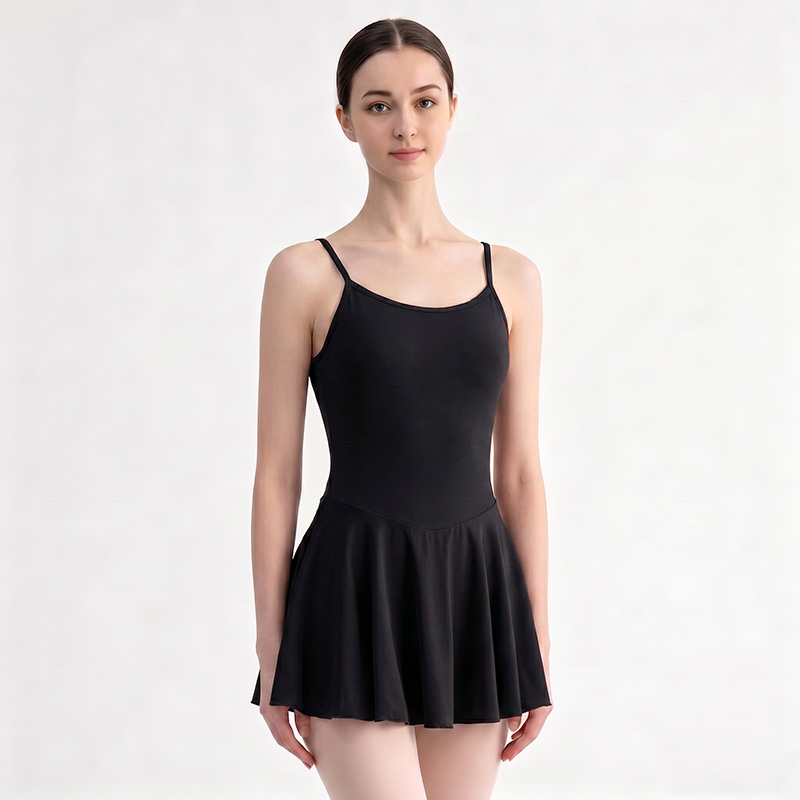
Jinwu’s Camisole Ballet Dress lists black as a colour option and describes a fitted camisole body with an attached flowing skirt. Those details make it a relevant starting point for a dress enquiry. They do not establish approval by a particular school.
Read a black ballet dress panel by panel
Break the garment into the areas a wearer will notice: front body, side body, neckline, back and skirt. Ask which are solid fabric, which are mesh and which have an additional layer behind them. A description that says only “black stretch fabric” leaves too much unresolved.
Mesh is a construction feature, not a guarantee of one fixed level of transparency. Examine the actual panel and what sits behind it. A mesh insert over a lining creates a different effect from an unlined insert in the same position. Decoration on mesh should not be treated as a continuous opaque layer.
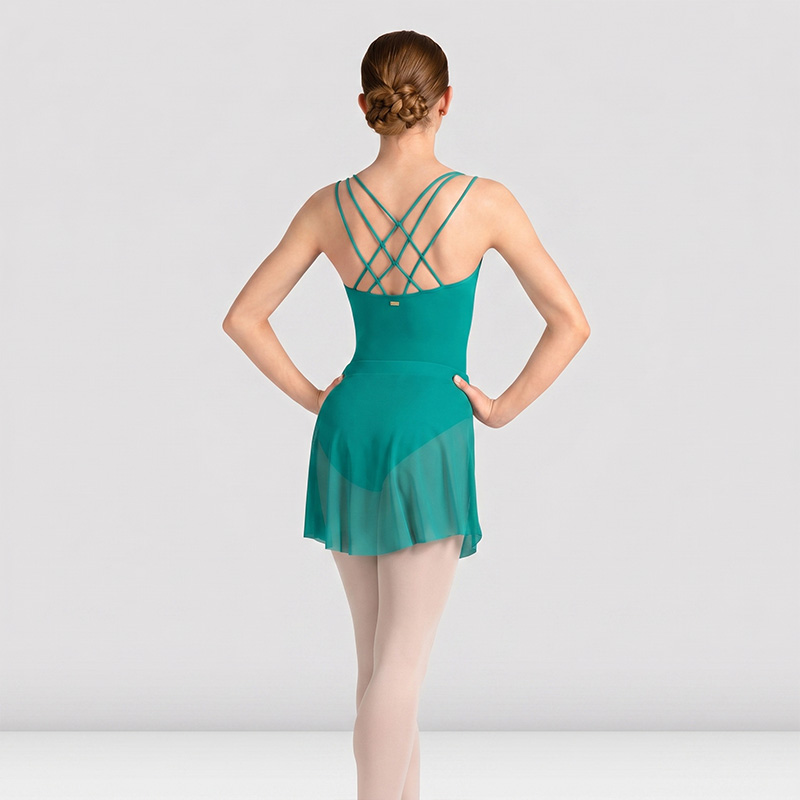
Look beyond the front. A dress can provide the desired front coverage yet leave the upper back open. That may be exactly what the dancer wants, or it may conflict with a preferred undergarment. Either way, the back view should be part of the buying decision rather than a surprise on delivery.
| Area to assess | What a photograph may hide | What to request or check |
|---|---|---|
| Front body | The extent of any lining and the effect of fit on appearance | An inside view and a correctly fitted sample |
| Side or neckline insert | Whether mesh has an opaque layer behind it | A close view of both sides of the panel |
| Back | Open areas, strap routes and undergarment visibility | A straight rear view with arms relaxed |
| Skirt | Sheerness, openings and coverage when moving | Side and rear views plus a short movement demonstration |
| Leg opening | Coverage concealed by the hanging skirt | A private fitting with the intended tights or layers |
This is a practical visual review, not a laboratory opacity test. If a buyer needs a measurable performance requirement, the supplier and an appropriate testing provider should agree a method and acceptance criteria. A favourable product photograph is not equivalent to a test result.
Separate lining from support
Ask where the lining starts and ends. “Lined” may not tell you whether the garment has front lining, a smaller lined area or lining through more of the body. Ask for the actual construction rather than filling in the missing detail yourself.
Lining and bust support are separate questions. An extra layer can change coverage without providing the structure a particular wearer needs for support. Likewise, a mention of cups does not establish that the whole torso is lined. Our guide to ballet leotard lining and support features explains the distinctions in more detail.
For a black dress, the decision should begin with the required outcome: which areas should be opaque, what the wearer prefers underneath and whether those layers remain concealed by the cut. Avoid promising that black fabric removes the need for lining or that a lined dress suits every undergarment.
Jinwu’s published Camisole Ballet Dress description does not establish the precise lining arrangement for the version a buyer will receive. Confirm that point for the selected style and size before using “fully lined” in a retail listing. If a different lining is requested, check its feasibility and review a sample of that construction.
Decide what you need the skirt to cover
An attached skirt can soften the outline of a leotard without hiding the garment beneath it. Decide whether the aim is an additional visual layer, a particular silhouette or more opaque coverage. Those are different requirements, and a sheer skirt may satisfy only the first two.
Check the skirt from the side and back as well as the front. Note any slit, overlap or shaped hem. For a wrap-style design, assess the overlap on the wearer rather than relying on a flat photograph. For a permanently attached skirt, consider what remains visible when the fabric lifts or moves away from the body.
The underlying leotard must still provide the required fit and coverage. Do not use a skirt to disguise a leg opening that the wearer finds uncomfortable or a body that shifts repeatedly. A moving skirt cannot be expected to stay in the same position as it does in a catalogue image.
Jinwu’s Rhinestone Ballet Dress combines decorative rhinestones with an attached skirt; its material information identifies a mesh skirt separately from the nylon-and-spandex body. That is a useful reminder to ask about each component. The decoration and skirt do not, by themselves, establish the garment’s lining or opacity.
Check coverage at the intended fit
Make the coverage decision on the right size. A garment pulled beyond its intended fit is not a fair representation of how that size should look, and choosing a larger size solely to change opacity may introduce loose straps, a shifting neckline or excess body length.
Start with the supplier’s measurements and fitting advice. Once the body fits appropriately, check the neckline, underarm area, back and leg openings during familiar class movements. Ask whether the wearer feels a need to adjust any area repeatedly. The wearer’s own comfort matters as much as the appearance to an observer.
For an inclusive size range, do not assume a satisfactory sample in one size establishes coverage throughout the range. Review representative sizes and proportions, especially where a mesh panel, neckline or back opening is part of the design. This is a fit-review recommendation, not a claim that a particular size will have a problem.
If your enquiry concerns plus sizes, request the actual dress measurements and availability. A size range published for another leotard is not evidence for this dress. The site’s dress sizing wording needs clarification with the supplier before a buyer promises a specific adult size range to customers.
Ask for photographs that answer the question
A useful image set makes the construction legible. Request front, side, back and inside views, then add close-ups of any panel whose coverage is uncertain. Ask for consistent lighting when comparing versions so a change in exposure is not mistaken for a change in fabric.
For a performance garment, review the sample under lighting reasonably representative of its intended use where possible. A studio fitting and a brightly lit stage are different viewing conditions. Do not turn one favourable photograph into an unrestricted claim such as “never see-through.”
The rear view below uses another colour to make the open-back construction and skirt easier to distinguish. It illustrates why a rear view matters; it is not evidence of how the black version looks under the same conditions.
Where a fitting involves personal coverage preferences, provide a private setting and ask for the wearer’s feedback. Detailed body photographs are not necessary for every approval. A written observation and a close-up of the garment off the body may answer a construction question more appropriately.
Turn preferences into a clear approval
Replace a vague request for “good coverage” with specific notes. Identify which panels must be opaque, whether the skirt may be sheer, the intended back opening and which permitted underlayers should remain concealed. Attach the relevant school instruction when one applies.
For example, an illustrative retail brief might require an opaque front and side body, allow a sheer attached skirt and accept an open upper back. A different customer may want the back covered too. Neither preference should be assumed from the colour or the wearer’s size.
Keep the approval tied to the reviewed version, including its lining and panel arrangement. If the material, cut or size specification changes, decide which coverage checks need repeating. For online listings, describe the visible construction plainly and use photographs that show the same version customers will receive.
Send Jinwu the dress reference and your coverage requirements, together with the intended use and size range. Ask the team to confirm lining, panel materials and the sample options for that exact version. This gives the enquiry a clear purpose without assuming that every design change is already available.
Conclusion
Choose a black ballet dress by its construction and intended use, then assess its coverage on a correctly fitted sample. Treat the body, lining, back and skirt as separate decisions. Clear photographs and precise approval notes help buyers explain the garment honestly and give dancers a better basis for choosing it.
FAQ
Does a black ballet dress meet a black-leotard dress code?
Not necessarily. Check whether the rule allows an attached skirt, mesh, decoration and the specific neckline or back. Send a photograph to the school if its wording leaves room for doubt.
Will adding tights make a sheer skirt opaque?
Tights change what is visible underneath, but they do not change the skirt’s fabric. Assess the complete outfit with the intended tights rather than describing the skirt itself as opaque.
Can a lined dress still have a transparent back?
Yes. Lining may cover only part of the garment. Ask for an inside view or a panel description that identifies exactly where the additional layer is used.
Should a retailer describe the dress as flattering for every body?
Describe its cut, coverage and verified measurements instead. Fit and appearance preferences vary, and a universal claim gives customers less useful information than clear front and rear views.
Is a rhinestone dress automatically suitable for examinations?
No. Follow the examination provider’s current clothing requirements. A supplier’s general list of uses does not replace the rules for the event the dancer will attend.