
Ballet Dress or Separate Skirt? Choosing a School Uniform That Works
Choose a ballet dress with an attached skirt when the school wants a skirt to stay part of the outfit throughout the lesson. Choose a leotard with a separate skirt when teachers may ask students to remove it, or when the two pieces need different sizes. Confirm the class rules before deciding: a garment can be well made and still be the wrong uniform.
For schools and the retailers supplying them, this is also an administrative choice. The format affects fitting appointments, what families receive, replacement orders and the instructions sent home. A uniform that looks coherent in a photograph needs to work just as well through an ordinary teaching week.
A ballet dress is not accepted in every class
Ask the person responsible for the uniform policy whether skirts are required, optional or excluded for each class. If skirts are allowed, establish whether they must be removable and whether there are restrictions on length, fullness or decoration. Do not assume that a rule for one age group also applies to the next.
For a concrete example, Maryland Youth Ballet’s children’s uniform guidance excludes attached skirts for its Little Dancer and Creative Movement leotard options. That is the school’s own policy, not a universal rule for ballet. It shows why an attractive skirted style cannot be approved solely because it is marketed for young dancers.
Separate weekly class requirements from examinations, demonstrations and recitals. A teacher may choose a particular outfit for one occasion while expecting the normal uniform for lessons. Put those distinctions in writing before asking families to order.
For an adult ballet dress, check the relevant adult class policy directly. Avoid importing children’s uniform rules into a class that has a different approach. Where several clothing options are permitted, offer them clearly rather than implying that every student must wear a dress.
Where each format earns its place
An attached-skirt dress keeps the bodice and skirt together. There is no separate skirt to pair with the leotard at the start of class. This can suit a program that wants the same skirted appearance throughout the lesson and has approved the garment’s fit and movement.
A separate skirt offers a different kind of flexibility. It can be removed without changing the leotard, and the two pieces can be fitted individually if the supplier allows mixed sizes. That matters when a student’s torso fit and skirt-waist fit do not align with one standard set size.
| School requirement | Attached-skirt dress | Leotard and separate skirt |
|---|---|---|
| Skirt worn throughout the lesson | Keeps the approved outfit together | Works if the skirt remains secure and comfortable |
| Teacher sometimes requires no skirt | Usually requires a change of garment | Skirt can be removed while retaining the leotard |
| Different torso and waist sizing needs | Must be resolved within one garment | May allow independent sizes; confirm ordering options |
| One component needs replacement | Replacement generally concerns the whole dress | Separate replacement may be possible if supplied individually |
| Simple kit identification | One garment to identify | Both pieces need clear identification |
| School changes skirt policy between levels | May require a different uniform | The leotard may remain usable if its own specification still matches |
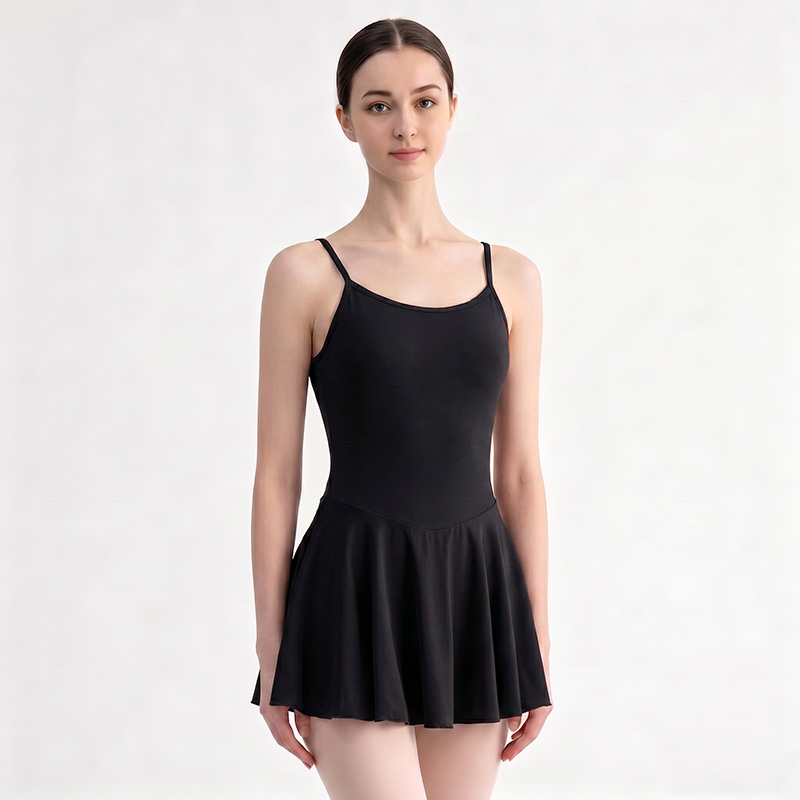
Jinwu’s Camisole Ballet Dress is an example of the attached format: its published design combines camisole straps, a fitted bodice and a flowing attached skirt. Use those confirmed construction details when deciding whether to request a sample. Confirm the exact fabric, size chart and available color for the proposed order.
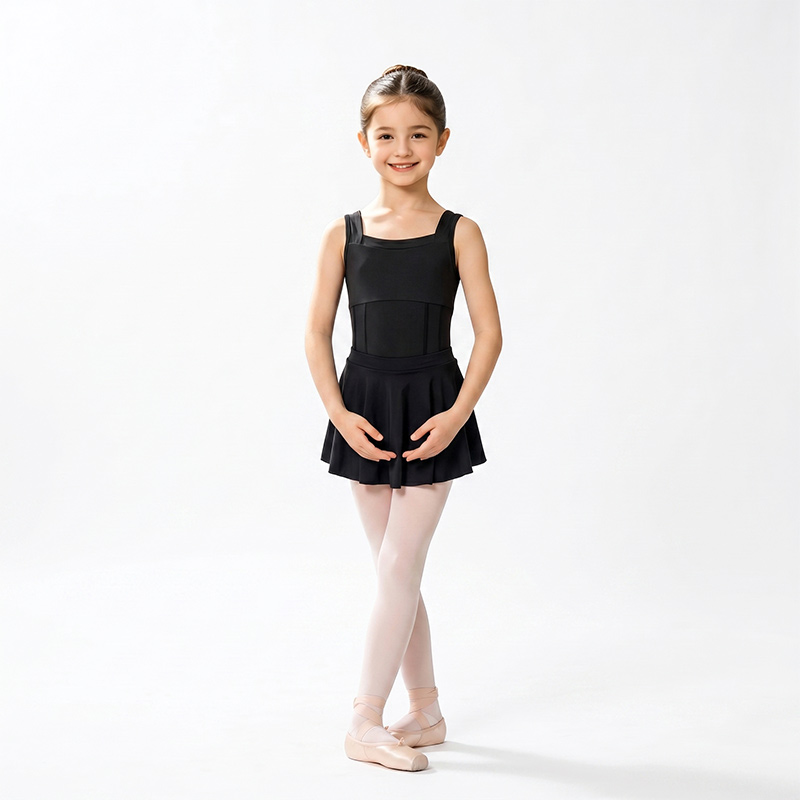
The Tank Ballet Leotard Set takes the separate route, pairing a tank-style leotard with a matching pull-on skirt. Its product description identifies child sizes. Ask whether the two components can be ordered in different sizes or replaced separately; a two-piece design does not by itself confirm those supply arrangements.
Give the teacher a sample, not just a photograph
A teacher needs to assess the outfit while the student moves. Arrange a short fitting or trial using movements appropriate to that class. Check that the neckline stays in place, the straps do not need repeated adjustment and the skirt allows the teacher to see what they need to assess.
Have the student move through the positions and changes of direction normally used in the lesson. The aim is to identify distractions or restrictions, not to create an elaborate performance test. Record which garment was worn, its size and what the teacher observed.
Ask for specific feedback. “The skirt needs to come off for this part of class” is a decision about uniform format. “The waistband turns during movement” is a fitting or construction issue. “The hem is too long for this group” calls for a length decision. These observations should not all be reduced to “the dress does not work.”
If an attached skirt is approved, test the complete dress. If separates are approved, trial the actual combination. A skirt that sits comfortably over one leotard may need reassessment over a different waist seam or fabric surface.
For a closer look at the construction options themselves, see the guide to attached and separate ballet skirts. The uniform decision here depends on how those options fit the school’s teaching routine.
Fit the bodice first, then assess the skirt
With a one-piece dress, begin with the leotard portion. Check the torso fit and openings before judging the skirt’s length or position. Selecting a larger dress simply to obtain a longer skirt can leave the bodice loose or the straps unstable.
For separates, fit the leotard and skirt as individual garments and then check them together. Ask the wearer whether the waistband feels comfortable during movement. Do not assume that the same letter or number on both labels means both pieces fit equally well.
Keep the manufacturer’s measurement guidance at the fitting appointment. Record the student’s relevant measurements and the sample size tried, with permission and appropriate handling of that information. An age label alone is a weak basis for ordering a fitted garment for a whole class.
Set aside cases that need further advice instead of forcing every student into the nearest available sample. If the supplier is asked to adjust a garment, explain where the fit needs to change. “Longer through the torso” is more useful than asking for an unspecified larger size.
Growth allowance also needs judgment. The garment must fit for the class it is being purchased for. Discuss likely replacement or refitting arrangements rather than relying on an oversized dress to serve indefinitely.
Agree on the complete appearance
If a school assigns colors by class or level, identify the color reference for each group before collecting orders. A label such as pink or blue is not enough to establish an exact match. Approve the physical sample or another agreed reference rather than relying on different screens.
The skirt and bodice may have different fabric structures, so a coordinated outfit need not look identical in every light. Decide whether the school expects a close tonal match, an intentional contrast or simply a specified combination. Make that choice visible in the sample approval.
For a ballet leotard and skirt set, photograph the approved pieces together and name both components. If a plain leotard is also an allowed option, show it separately. Families should not have to infer from a styled photograph which items are compulsory.
Decoration deserves a separate decision. Mesh, rhinestones and fuller skirts can change the appearance substantially even when the base color matches. Keep the regular uniform specification clear, and treat any performance variation as a distinct requirement.
Explain exactly what families need to order
Use the same names in the school handbook, fitting record and order form. If the uniform is a camisole ballet dress with an attached skirt, say so. If the approved outfit consists of a tank leotard and a separate pull-on skirt, list both pieces and state whether they are supplied together.
Clarify which items are required and which are optional. Tights, shoes and other accessories should only be described as included when the supplier has confirmed that they are part of the package. A photograph of a dancer wearing a complete outfit does not establish the contents of the order.
Give families a straightforward route for sizing questions and missing components. Include the class name, approved style reference and any fitting deadline. For two-piece outfits, explain how to identify both garments so they can be returned to the correct student after changing.
Care information should follow the actual garments supplied. If the two pieces have different instructions, preserve that distinction. Avoid replacing their care guidance with a generic school instruction that has not been checked against the product.
Build the order around students and components
Once the school has approved the format, prepare a list that connects each order to the correct class, style, color and size. For separates, include a size field for each component even when most students will receive matching label sizes. This makes any agreed exception visible.
Ask the supplier to confirm the available size and color combinations before the school announces them. Discuss how sample approval, order changes and replacement enquiries will be handled. Keep confirmed information separate from preferences still under discussion.
At delivery, check that dresses or set components match the order records. Look at the size labels on both pieces of a set rather than checking only the outer packaging. A correct quantity of packages can still contain an incorrect mix of garments.
Keep one approved reference available to the person handling subsequent orders. That person needs to distinguish an accepted uniform from a similar-looking style. If the supplier proposes a substitute, refer it back to the school before presenting it as equivalent.
To discuss a Jinwu uniform option, send the school’s skirt policy and preferred garment format, together with the intended size range and color reference. Those details let the team address the actual class requirement before sampling begins.
Review what happened in class
After the uniform has been used, ask teachers and families about specific recurring issues. Repeated waistband adjustment points to a different problem from students regularly forgetting a separate skirt. Record the pattern before changing the entire uniform.
Check whether the information supplied was clear. If families repeatedly expected tights in the package, the order description may need revision. If students arrived in attached skirts for a no-skirt class, the approved options may have been communicated poorly.
Use these observations when planning the next intake. A change should solve an identified problem, and any new sample should be reviewed against the same teaching requirements. This keeps the uniform program consistent without making it inflexible.
Conclusion
The right ballet dress or separate-skirt outfit is the one the school can use comfortably and explain clearly. Start with the class policy, trial the garment in movement, fit each component properly and document what families will receive. A well-chosen format makes the uniform easier to manage throughout the term.
FAQ
Is a ballet dress the same as a tutu?
The terms are not interchangeable. A ballet dress may have a soft flowing skirt, while a tutu has a different skirt construction and silhouette. Describe the actual garment and confirm the teacher’s requirements instead of choosing by the name alone.
Can the same uniform cover classes and recitals?
It can if the teacher or production organizer approves it for both purposes. Do not assume that class approval includes stage use, or that a recital outfit is accepted for weekly lessons. Confirm each requirement before ordering.
Should a skirt be exactly the same shade as the leotard?
Only if that is the school’s approved requirement. Different fabrics may show color differently. Review the pieces together and agree whether a close match, tonal coordination or contrast is intended.
Can students choose between a dress and separates?
Yes, if the school approves both options. Publish both specifications clearly, including any color or skirt restrictions. Do not leave families to decide which similar-looking alternatives count as the uniform.
Can I replace only the skirt from a Jinwu set?
Ask Jinwu to confirm separate component availability for the exact style, size and color. The Tank Ballet Leotard Set has a separate skirt, but that construction detail alone does not confirm individual replacement supply.