
Cap Sleeve Ballet Leotard: Choosing Shoulder Coverage That Moves Well
A cap sleeve ballet leotard gives a little coverage over the shoulder without extending far down the upper arm. It can be a useful choice when a dancer prefers more shoulder coverage than narrow straps provide, but does not want a longer sleeve. The important test is whether the sleeve edge stays comfortable as the arms move.
Do not choose by sleeve length alone. The neckline, armhole, upper-body fabric, and back opening work together. Two styles described as cap sleeve can feel quite different, even when their photographs look similar.
A Small Sleeve Can Still Change the Fit
A cap sleeve generally ends close to the top of the arm. A tank style leaves the arm more open and uses a broader shoulder section than a camisole strap. A conventional short sleeve extends farther down the arm. Product terminology is not perfectly consistent, so compare the photographs and construction instead of relying on the category name.
The front view is only part of the picture. Look at the side, where the sleeve ends, and the back, where the shoulder section joins the rest of the garment. A broad-looking shoulder in a flat photograph may not provide the coverage a buyer expects once the garment is worn.
Jinwu lists the Floral Mesh Ballet Leotard as a cap-sleeve design with a floral burnout-mesh upper section. Its product photographs are useful for assessing how little the shoulder coverage extends compared with a conventional short sleeve. Confirm the exact option with the supplier when the distinction matters to a school uniform or collection.
This is also why a sleeveless reference should not be presented as a long-sleeve product. If a buyer wants another sleeve length, that is a requirement to discuss and sample, not a feature established by the existing photograph.
Choose the Coverage You Actually Need
Begin with the reason for considering a sleeve. Is the priority a small amount of shoulder coverage, a particular visual line, a dress-code requirement, or coverage farther down the arm? Those questions lead to different choices.
| Option | Coverage to expect from the general shape | When to consider it | What to verify on the garment |
|---|---|---|---|
| Camisole | Narrow straps with open shoulders | The dancer prefers minimal shoulder coverage and the dress code allows it | Strap position, neckline stability, and compatibility with any underlayer |
| Tank | Broader shoulder sections with open armholes | A broader shoulder shape is wanted without a sleeve edge over the arm | Armhole depth and where the shoulder section sits |
| Cap sleeve | A short extension over the shoulder | Limited shoulder coverage suits the intended look and use | Comfort at the outer edge when raising and lowering the arms |
| Short sleeve | More upper-arm coverage | The brief calls for a distinct sleeve rather than a shoulder cap | Upper-arm room, underarm comfort, and sleeve position |
| Longer sleeve | Coverage extending farther down the arm | The wearer or dress requirements call for additional arm coverage | Length, elbow movement, cuff fit, and the specified fabric |
This table compares shapes; it is not a list of confirmed Jinwu stock options. Current availability and custom-development feasibility need to be checked for the design under discussion.
More covered skin does not automatically mean a warmer or more supportive garment. A sheer sleeve and a solid sleeve can serve different purposes. If warmth is the main concern, describe that need explicitly instead of assuming any long sleeve will answer it.
Look at the Sleeve Edge While the Arm Is Raised
Try the leotard with the arms down first. The shoulder section should settle without being pulled into position. Then raise and lower the arms through a comfortable, familiar movement. Notice whether the edge folds, presses, or draws the neckline away from where it started.
A little movement in the fabric is normal; the concern is an edge that feels uncomfortable or needs repeated adjustment. Ask the wearer to distinguish pressure at the outer shoulder from pulling under the arm. Changing sleeve length will not necessarily resolve a problem that begins elsewhere.
If the body of the leotard fits well but the shoulder area does not, compare another cut before simply increasing the size. A larger garment may give more room at the sleeve while becoming loose at the neckline or torso. The useful result is a balanced fit across the complete upper body.
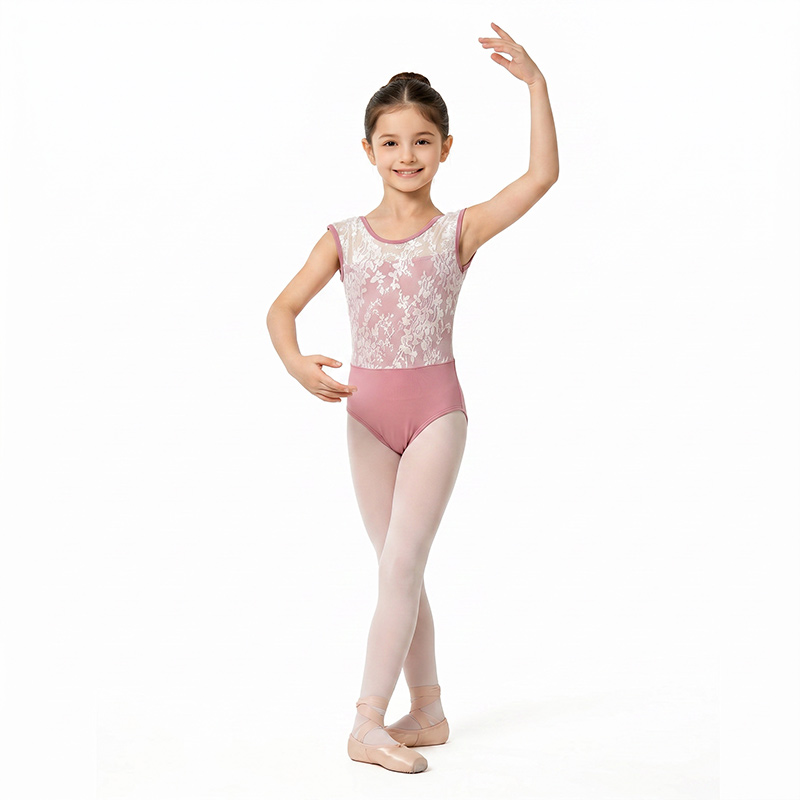
Product photographs show the design, not a fit test for another person. Use them to decide what to inspect on a sample. They cannot establish comfort for every shoulder width or size.
The Shoulder Panel May Behave Differently from the Body
Read material details by component. Jinwu’s Floral Mesh Ballet Leotard page lists a nylon-and-spandex body and a polyester burnout-mesh component. That is more informative than describing the whole garment only by the body fabric. It also gives the buyer a reason to check the join between those materials.
Fiber names alone do not settle stretch, recovery, or comfort. Examine how the upper section moves with the body fabric on the finished garment. A decorative panel may have a different construction and feel from the main body even when both are described as soft.
If a buyer needs formal elasticity evidence, ISO 20932-1:2018 describes strip tests for determining fabric elasticity. The supplier or laboratory should confirm the applicable method and version for the proposed material. A fabric test result is not a substitute for checking the neckline and sleeve in the assembled leotard.
For a broader material decision, the dancewear fabric guide covers component compatibility and sample evaluation. For sleeve selection, stay focused on the area that actually moves around the shoulder and armhole.
A Sleeve Does Not Decide the Neckline or Back Coverage
Cap sleeves can be combined with different necklines and backs. If the aim is to conceal an undergarment or provide a particular amount of coverage, inspect all the openings. A small sleeve over the shoulder does not guarantee coverage beside the armhole or across the back.
Where a higher neckline includes a back fastening, try putting the garment on and taking it off. This is especially relevant for children who may change without a parent present. Ease of changing is a construction question, not something that can be inferred from whether the sleeves are long or short.
For an open-back design, check whether the shoulder section remains comfortably positioned during movement. Do not assume that a wider shoulder area compensates for every back shape. The pattern needs to work as a whole.
A buyer comparing styles should therefore keep the intended neckline and back in the brief alongside the sleeve. “Same leotard, but with sleeves” can involve more development than the phrase suggests, particularly where the original armhole was designed for narrow straps.
Use a Short Fitting to Answer Specific Questions
Choose a few movements relevant to the wearer’s class, rather than testing every possible position. Begin with comfortable arm raises and ordinary class arm positions. Let the wearer report what they feel, and stop if there is discomfort.
Keep the comparison fair. Try the same intended underlayers, check the correct size guidance for each style, and avoid comparing one garment that has been repeatedly washed with another that is new unless that difference is the point of the review.
Write down observations that another person can understand. “The outer sleeve edge presses when the arm is raised” is useful. “The shoulders are wrong” is harder to act on. If a revised sample is offered, repeat the same movement so the comparison addresses the original issue.
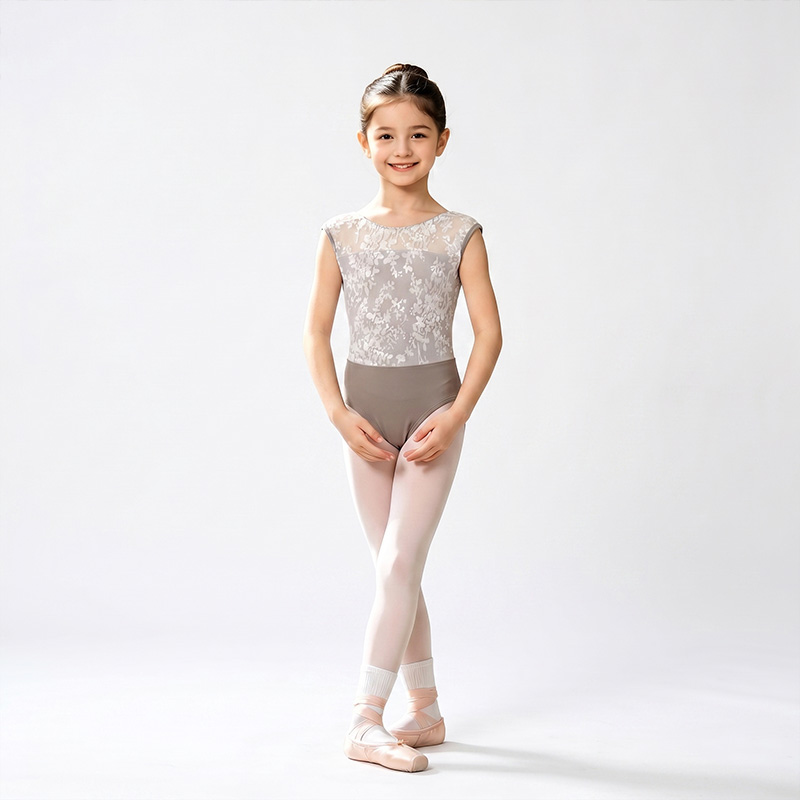
School buyers should include the teacher’s dress requirements in this check. A comfortable decorative cap-sleeve design may still be unsuitable where the class requires another exact style. Comfort and approval are separate decisions, and both need to be resolved.
Describe the Sleeve with a Reference, Not Just a Name
For a product inquiry, send the front, side, and back reference that best explains the desired shape. State whether the shoulder should be just covered or whether the sleeve needs to extend farther onto the upper arm. If a particular edge position matters, mark it on a garment sketch rather than relying on the word “short.”
Keep the material choice explicit. A request for the same sleeve in a different fabric may change how it sits. Ask for a finished sample with the proposed body and upper-panel materials together before approving the visual reference as a production specification.
For a range, review the sleeve at more than one size where appropriate. Do not assume that a detail approved on one sample has answered every fit question across the proposed size run. Ask how the shoulder and armhole measurements are developed with the rest of the garment.
Send Jinwu the preferred shoulder coverage and the relevant class requirements when requesting options. Identify whether you are considering the listed Floral Mesh style or asking about a different construction. That distinction keeps an available product inquiry separate from a development request.
Conclusion
A cap sleeve ballet leotard is best chosen by the coverage and comfort it provides on the wearer. Check the outer edge in motion, read the upper-panel material separately, and assess the neckline and back at the same time. Sleeve terminology helps narrow the search; the finished fit makes the decision.
FAQ
Is a cap sleeve the same as a short sleeve?
They overlap in some product descriptions, but a cap sleeve usually ends much closer to the shoulder. Use side views and the supplier’s construction details to establish the actual coverage.
Should I choose long sleeves or short sleeves for ballet?
Follow the class rules first, then consider the coverage you want and the fit of the actual material and pattern. A longer sleeve is useful when additional arm coverage is required, but length alone does not establish warmth or comfort.
Can cap sleeves hide bra straps?
Possibly, depending on strap position, neckline, and back shape. Try the intended garments together; shoulder coverage alone does not guarantee that an undergarment will be concealed.
Does a mesh shoulder panel stretch like the main body?
Do not assume it does. Ask about the specific mesh and assess the assembled garment, including the seams joining it to the body fabric.
Can a sleeveless leotard be ordered with cap sleeves instead?
That requires confirmation from the supplier. Adding a sleeve can change the armhole and upper-body construction, so discuss feasibility and review a revised sample before ordering.