
Dancewear Fabric Guide: How to Compare Leotard Materials
The best ballet leotard fabric is the one that provides the required fit, coverage, movement, appearance, and care performance in the finished garment. Fiber percentages help identify a material, but they do not prove stretch recovery, opacity, or comfort. This dancewear fabric guide explains how studio buyers and private-label teams can compare samples and turn a preferred feel into a usable purchasing specification.
Start with the intended class or collection, then evaluate the body fabric, lining, decorative panels, and seams together. A material that works well as a sheer shoulder panel may be inappropriate for an area requiring opaque coverage. An attractive swatch is only the beginning of the approval process.
Define the Garment’s Job Before Choosing Fabric
A school uniform, a decorative retail leotard, and a coordinated performance outfit can place different demands on the material. Write down the intended wearer, expected movements, coverage requirements, permitted appearance, and care routine before requesting samples. This brief gives the supplier a reason for each material choice.
For a regularly used school uniform, consistent fit after care and clear reorder specifications may matter more than a distinctive surface effect. For a decorative collection, the appearance of mesh, flocking, or a print can be central, but those details still need to function with the underlying garment. Avoid choosing a fabric solely because it looks unusual in a close-up photograph.
Record priorities in order. If opaque coverage is essential, a sample that fails that requirement should not win because it feels softer. If a class dress code excludes sheer panels, a well-made mesh style still does not match the brief. The decision should follow the use case rather than a universal ranking of fibers.
Separate Fiber Content from Construction and Trade Names
Ask for a material description that identifies fiber composition, construction, weight where relevant, and any finish or surface treatment. “Nylon and spandex” describes the fibers, while “mesh” describes an open structure and “flocked” describes a surface effect. These terms answer different questions and can apply to different parts of the same garment.
Elastane and spandex are names used for the same general elastic fiber category. Their presence does not by itself define how far a particular fabric stretches or how firmly it returns. Yarn selection, fabric construction, finishing, and the garment pattern also matter, so avoid treating a percentage as a complete performance specification.
Names such as “milk silk” and “ice silk” are not enough to approve a purchase or write a composition label. Request the actual fiber information for the proposed material rather than assuming silk content, cooling performance, or a particular manufacturing process from the name. Keep a supplier’s descriptive name as a reference only after its meaning is clear.
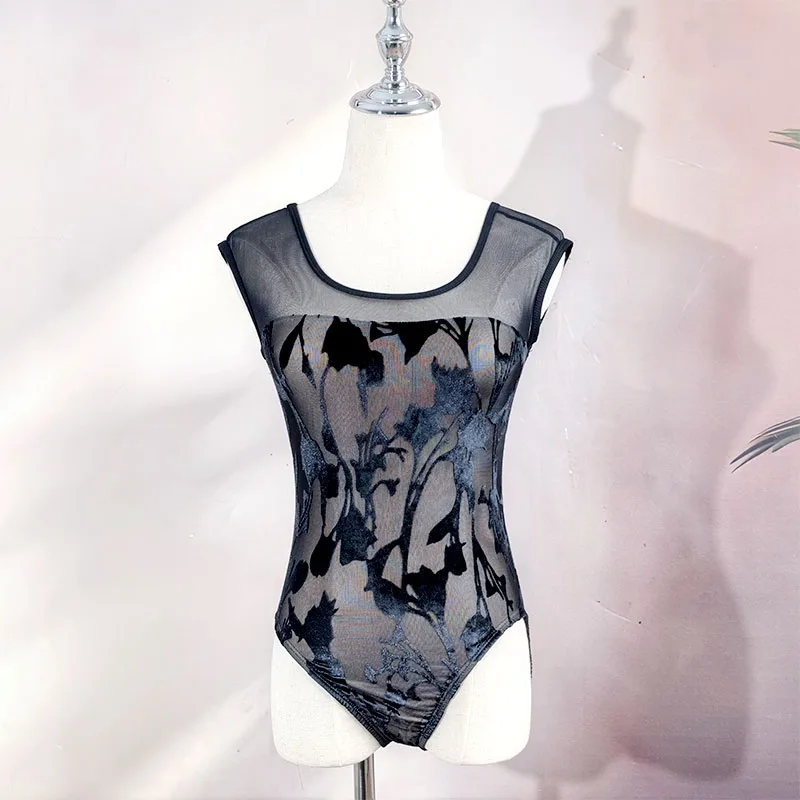
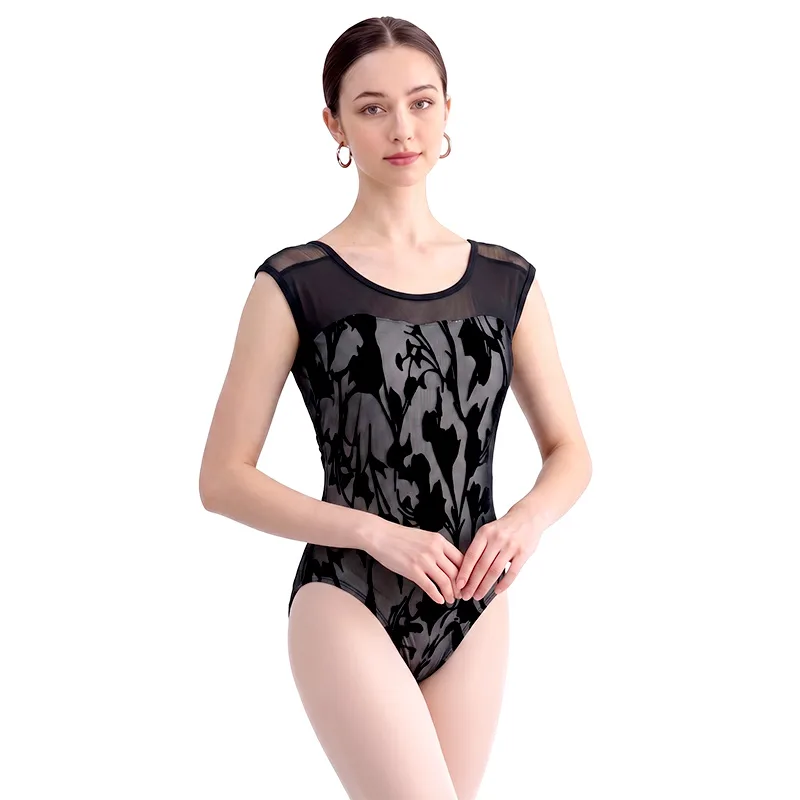
Jinwu’s Velvet Flocked Ballet Leotard illustrates why component-level information matters: its page lists a 75% nylon and 25% spandex body material and a 100% polyester mesh component, alongside a sheer mesh yoke and flocked detailing. Those published details apply to that listing; they should not be copied into the specifications of other styles.
Use a Leotard Fabric Comparison Based on the Decision
Compare materials by the role they must perform. Cotton-rich stretch fabric can be considered when the desired hand feel is a key selection criterion; nylon or polyester stretch blends may offer other preferred surface and handling characteristics. None of these categories should be accepted without evaluating the actual sample.
In particular, avoid saying that every cotton fabric is unsuitable for demanding movement or that every synthetic fabric is automatically quick drying. Such statements ignore construction and finishing. A reliable comparison keeps the chosen material, garment design, and required evidence connected.
| Material or component | When to consider it | What to verify | What the name does not establish |
|---|---|---|---|
| Cotton-rich stretch body fabric | The collection calls for a cotton-rich handle and appearance | Actual blend, movement fit, recovery, and dimensions after care | Guaranteed comfort for every wearer or automatic size stability |
| Nylon and elastane body fabric | The sampled surface and fit suit the intended leotard | Stretch in relevant directions, recovery, opacity, and lining interaction | A fixed support level or universal performance advantage |
| Polyester stretch body fabric | The proposed material matches the visual and functional brief | Finished-sample feel, print compatibility where needed, and care results | Quick drying or print suitability without material-specific evidence |
| Mesh panel | Sheer or open detailing is allowed in the design | Coverage, stretch compatibility, seam comfort, and resistance to snagging | Suitability as an opaque body fabric |
| Flocked or other decorated surface | Texture is important to the collection’s appearance | Appearance during stretch and after the intended care routine | The composition or performance of the underlying fabric |
| Lining | Additional coverage or a specified internal finish is needed | Compatibility with the outer layer, seam position, and movement comfort | A tested bra-support function |
Four-Way Stretch and Recovery Are Different Questions
Four-way stretch leotard fabric is generally described as extending in both lengthwise and crosswise directions. That description does not state the amount of extension in each direction, the force needed to achieve it, or the recovery after release. Ask the supplier what the phrase means for the exact proposed fabric.
Stretch allows the material to extend; recovery describes its return after the load is removed. A fabric that feels easy to pull can still behave differently from another material when made into the same pattern. Excess resistance can affect movement, while insufficient recovery can leave areas looking loose after use. These are reasons to compare samples, not grounds for assigning a guaranteed result to a fiber blend.
For formal dancewear fabric testing, ISO 20932-1:2018, with its 2021 amendment, describes strip and loop approaches for measuring fabric elasticity and related properties, excluding narrow fabrics. Agree the relevant method and criteria with the testing provider. A standard’s existence is not evidence that a listed garment has been tested to it.
A buyer’s initial handling trial can help shortlist materials, but it should not be presented as a laboratory result. Use comparable sample sizes, mark the direction, and record what was done. If the decision depends on a numerical performance claim, obtain a report with defined conditions rather than estimating a percentage by hand.
Check Opacity in the Finished Fit
Coverage should be evaluated in the garment’s intended size and movement range. An unstretched swatch can appear more opaque than the same material when extended over the body. Color, lighting, lining, and pattern tension can all change the visual result, so a flat photograph is not enough for approval.
Review the intended garment under relevant studio or presentation lighting, including movement appropriate to the user. Use the actual proposed color and lining wherever possible. Do not generalize a result from a dark sample to a pale version without checking the latter. If the sample is only a preliminary color, record that opacity approval remains open.
Lining can change coverage and feel, but it also becomes part of the stretch system. Check whether the lining pulls differently from the outer fabric, forms visible edges, or changes comfort at seams. A thicker fabric or an added layer is not automatically the best solution if it creates a new fit problem.
For school orders, combine material evaluation with the children’s leotard measurement and fitting guide. A material decision and a sizing decision should support the same finished garment rather than being approved independently.
Evaluate Mesh Panels and Surface Details on Their Own Terms
Mesh is normally chosen for a particular visual or structural role. First identify where sheer coverage is acceptable. Then check the panel’s extension against the adjoining body fabric. If the materials behave differently, the seam and panel shape need to be assessed during movement rather than only while the garment is laid flat.
Inspect contact points around the neckline, armholes, and panel seams. The question is whether the assembled detail feels appropriate and stays in position, not simply whether the mesh itself feels soft in the hand. Small decorative elements can also affect handling and care, so include them in the finished sample.
For flocked details, review the surface before and after the agreed care routine and observe the appearance when the garment stretches. Confirm the acceptable visual result with the supplier. Avoid publishing “will not shed,” “will not crack,” or similar absolute claims without evidence that supports the exact wording.
The adult dancewear collection provides styles with different panel and surface treatments for comparison. Product photographs can help narrow the design direction, but a sample is still needed to compare texture and movement behavior.
Connect Care Instructions with the Material Approval
Agree how the finished garment is intended to be cleaned before evaluating it after care. A result obtained with one washing and drying routine cannot automatically justify another. Include the decorated surface, lining, and trims because a plain fabric swatch may not reveal a problem introduced by the complete construction.
ISO 6330:2021 specifies domestic washing and drying procedures for textile testing. The procedure, equipment, detergent, and drying choices matter when interpreting results. The standard supplies testing procedures; it does not itself certify a leotard as suitable for every washing method.
Record changes in dimensions, appearance, seam behavior, and the feel of the sample after the agreed care sequence. Compare the same measurement points before and after. If a supplier reports “tested,” ask which material or garment was evaluated, which procedure was used, and what result supports the intended claim.
Colorfastness also requires a specific question. Resistance to rubbing is not the same as resistance to washing. Choose relevant evidence for the intended garment and color combination rather than treating a single favorable result as proof of all color performance.
Compare Fabric Samples Under Comparable Conditions
A useful sample review keeps avoidable differences under control. Compare the same intended color where possible, label each swatch clearly, and separate preferences about appearance from requirements about fit or coverage. A soft pale swatch and a dense dark swatch may differ in several ways at once, making an unsupported fiber-level conclusion easy to draw.
Shortlist the materials, then evaluate complete garments in the proposed construction. Keep the pattern and size consistent when the purpose is to compare fabric behavior. If the supplier recommends a pattern adjustment for one fabric, document that change and assess the resulting garment as a different combination.
Use a simple review sheet with the requirement, observation, supporting evidence, and decision. For example, an illustrative requirement might be “opaque coverage during the studio’s normal class movements.” The observation should describe what was actually seen in that sample. This separates a genuine review result from a generic marketing description.
Retain a physical approved reference where practical, with its supplier material code and date. Screen images can help identify a sample but should not be the sole basis for approving feel, shade, or surface texture.
Write a Material Specification That Can Be Reordered
The final specification should identify each component: body fabric, mesh or other panel, lining, elastic, and relevant decoration. Include the approved material reference, composition, color reference, agreed performance requirements, and care instructions. Record which claims are supported by a report and which are only descriptive preferences.
Set a clear process for substitutions. A replacement with the same fiber percentage may have a different construction or finish. Ask the supplier to disclose the change before production and determine whether it requires a fresh garment sample or targeted testing. Reorder consistency depends on the approved combination, not just the fiber label.
When discussing Jinwu’s OEM and ODM development services, provide the reference style, intended users, material preferences, coverage needs, and care expectations. Ask the team to identify available materials and the evidence needed to approve your exact project.
Conclusion
A useful dancewear fabric guide leads to a better sample decision, not a universal winning fiber. Identify the material accurately, evaluate stretch and coverage in the finished garment, check the intended care routine, and preserve a clear specification for repeat production.
FAQ
Does a higher spandex percentage always mean a better leotard?
No. Composition is only one input. The fabric construction, finishing, pattern, and lining influence the finished result. Compare the actual material and garment against the intended use.
Is fabric weight enough to predict opacity?
No. Weight can help describe a material, but color, construction, stretch, and lining also affect coverage. Verify the proposed finished sample rather than selecting by weight alone.
Can the same fabric be used for the body and every decorative panel?
Only if it serves each part’s role. A design may require different coverage, texture, or stretch behavior in different areas. Confirm compatibility at the seams and during movement.
Should every color be reviewed before a bulk order?
Review the proposed colors to the extent needed for shade and performance approval, especially when coverage or color transfer matters. Do not assume that one color’s result establishes every other color’s behavior.
What should accompany a fabric sample request?
Send the garment reference, intended use, color direction, required coverage, care expectations, and any existing material specification. Explain which properties are essential and which preferences can be adjusted.