
Ballet Uniform Reorder Planning: Keep the Next Order Consistent
Ballet uniform reorder planning starts with a saved reference garment and a written record of what was approved. Before requesting more pieces, confirm the style revision, fabric, color reference and size specification. “The same as last time” leaves too much room for different interpretations when materials, staff or students have changed.
For a school, the practical aim is continuity: new students should receive an approved uniform, and replacement pieces should be assessed against an agreed standard. Color is often the first difference people notice, but a repeat order also needs to preserve the fit and construction that made the original garment suitable.
Save an approved garment before it enters circulation
Keep a reference garment that represents the approved production, with its style, size, color and order details attached to the record. Identify whether it is the final development sample or a checked production piece. If the two differ, resolve which version is the repeat-order target.
An everyday worn uniform can help explain a customer concern, but it should not be the only color or fit reference. Wear and care may have changed it. Retain a clearly identified unused reference where practical, and protect it from unnecessary handling and exposure.
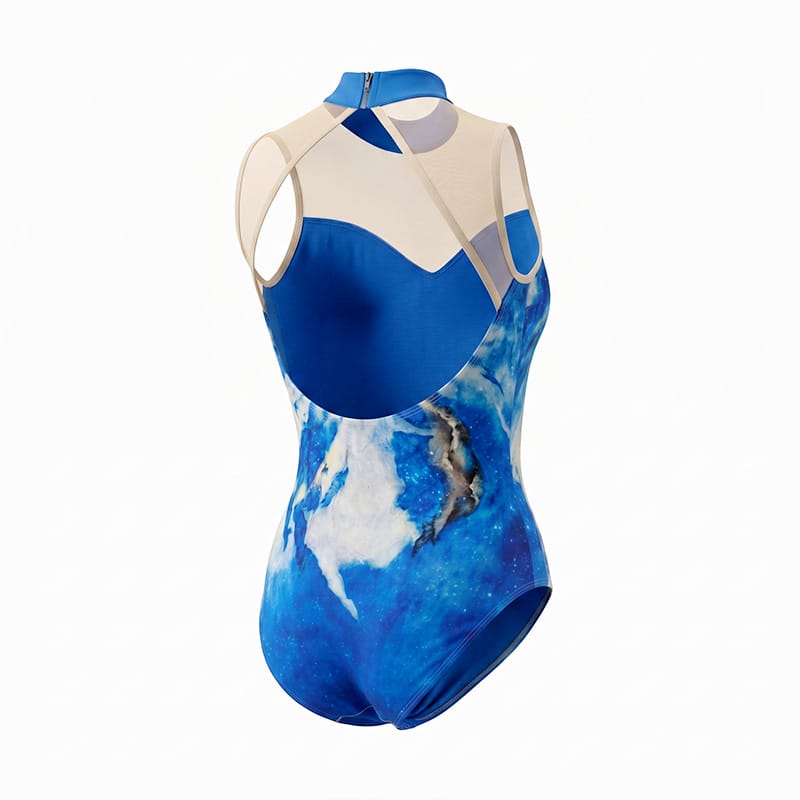
Save more than a front photograph. Include the back, inside construction, labels and any detail that distinguishes the approved style from a similar one. Photographs help identify the reference; they do not replace the physical garment for color approval.
For a printed style such as Jinwu’s Marble Print Ballet Leotard, the repeat record should identify the approved print as well as the garment. Its high-neck design and contrasting mesh make it clear why a general description such as “the blue leotard” would be insufficient. Confirm the exact material and print reference for the order being repeated.
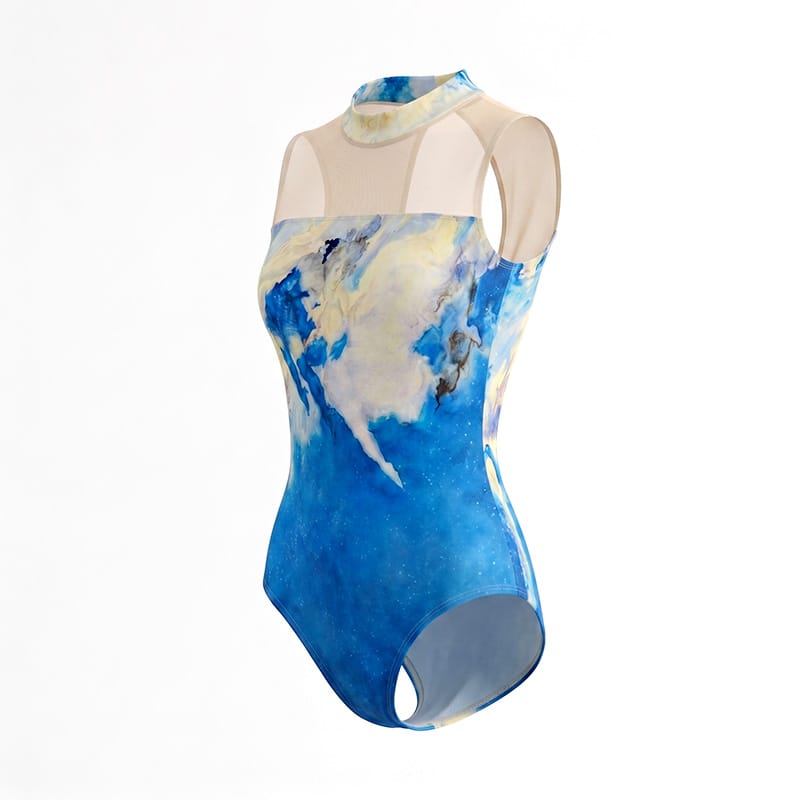
The product images here illustrate details worth recording. They are not physical color standards or evidence that two production batches match.
Compare color against the agreed reference
Use the approved physical reference and consistent viewing conditions when comparing a new sample or delivery. Ask the supplier which color reference they hold and whether the repeat will use material from the original batch or a new one. Do not assume a repeated color name establishes an identical shade.
For formal visual assessment, AATCC EP9-2025 provides principles and a procedure for describing textile color difference by comparing specimens with a standard. Agree on the relevant assessment and acceptable difference with the supplier or testing provider. The procedure does not supply a universal pass threshold for every ballet uniform.
Compare the correct materials together. A mesh panel, solid body and separate skirt may have different appearances even when intended to coordinate. If the school approved a specific combination, retain the references for all visible components rather than checking only the main fabric.
For example, a school may use purple for one class level and require new students to join an existing group in a coordinated uniform. The buyer should compare the proposed repeat with the approved purple reference, then discuss how the new pieces will sit alongside garments already in use. That is an illustrative planning situation, not a claim about a particular Jinwu delivery.
Keep batch matching separate from colorfastness. A new garment that differs from an approved reference presents a different question from a garment that loses or transfers color after care. The guide to leotard color bleeding addresses the latter issue.
A repeat order can still need a new sample
Ask the supplier to confirm the fabric reference before production. Composition alone is not a complete match: the repeat record should also preserve the relevant construction, weight or finish details that were agreed for the original garment.
If the original material is unavailable, request a clear description of the proposed substitute and the reason for the change. Ask which properties may differ and which parts of the garment use the replacement. Do not let a conversation about availability silently become approval of a new material.
For a substitute, agree on any relevant dancewear fabric testing as well as the fitting review. Review the substitute as a garment where fit, coverage or appearance could change. A swatch can help assess color and surface feel, but it cannot demonstrate that the existing pattern and lining still work as intended.
Dancewear sample approval for a substitute should identify the new material and garment revision. Record whether the revised garment replaces the original uniform for future orders or is accepted only for a particular delivery. That distinction prevents an exception from becoming the new default without the school’s knowledge.
If a change cannot be accepted, discuss the available alternatives with the school before promising a solution to families. The important point is to make the decision while options remain open.
Separate student growth from a changed size specification
A student needing a different size does not necessarily mean the uniform has changed. Recheck the student’s current measurements and fitting needs against the approved chart. Keep that decision separate from the question of whether a new garment matches the previous size specification.
For product comparison, measure the same garment points using the same agreed method. Record the style revision and label size of each sample. Comparing different sizes or different measurement methods can create an apparent inconsistency that is not actually a production change.
If the supplier has revised the pattern or size chart, ask what changed and how existing customers should be guided. Do not assume that a familiar label size still represents the same garment measurements.
For school stock, keep old and new revisions identifiable until the relationship between them is clear. A fitting adviser needs to know which chart applies to the piece being offered. The dancewear size grading guide explains how a size range should be reviewed beyond a single sample.
Work backward from when the uniforms are needed
Use the date students need to wear the uniforms as the planning endpoint. Include time for receiving, checking, sorting and resolving issues before distribution. A shipment arriving on the first day of class leaves no practical margin for those tasks.
Ask for the current dancewear production lead time for the exact repeat order, including any new fabric, color or size requirements. A previous delivery schedule is useful background, but it is not a confirmation of present availability or production capacity.
Separate approval, production, dispatch and arrival milestones. If a color sample or substitute fabric needs review, identify who will approve it and when. Transport arrangements and school distribution also need their own dates; they should not be hidden inside a single broad lead-time estimate.
Do not publish a fixed reorder turnaround to families until the supplier has confirmed the relevant order. Jinwu’s public information describes different stock and custom-order routes, so the schedule should be confirmed for the selected style and current requirements.
Use actual intake and replacement records when estimating quantities. Record known student orders separately from any additional stock the school chooses to hold. That makes later adjustments easier to understand than a single unexplained total.
Send a repeat-order request someone else can understand
The supplier should be able to identify the approved uniform without reconstructing a long message history. Put the essential details in one request and attach the relevant references. Mark any intentional changes explicitly.
| Record | What to include | Why it matters on a repeat |
|---|---|---|
| Order identity | Previous order reference, style and approved revision | Prevents a similar style or earlier sample being used |
| Color target | Physical reference identifier and agreed assessment | Gives both sides the same comparison point |
| Materials | Body, lining, mesh and trim references where applicable | Makes substitutions visible |
| Sizes | Current chart revision and quantities by size | Separates size allocation from pattern changes |
| Artwork and labels | Approved files, wording and placement references | Avoids outdated branding or label content |
| Timing | Required use date and confirmed approval milestones | Leaves room for checking and distribution |
| Changes | Each requested exception and who must approve it | Prevents an informal suggestion becoming a production instruction |
For a multi-piece uniform, include the component list and quantity for each piece. Confirm whether different component sizes or individual replacements can be supplied. A matching set in the catalog does not automatically establish every possible reorder arrangement.
Jinwu’s OEM and ODM service page describes customization areas including fabrics, colors, labels and packaging. For a repeat, state which of those details must remain unchanged. Published customization options do not by themselves guarantee indefinite material availability or retention of every past production reference.
Compare the new delivery before issuing it
Check the delivery against the approved record while sizes and batches are still identifiable. Review the garment style, labels, color and the agreed measurement points. For patterned or multi-material garments, look at the visible components as well as the main body.
If you find a difference, document which pieces are affected and compare them with the correct reference. Include clear photographs for identification, but retain the physical pieces when color assessment is needed. Avoid mixing questioned garments into school stock before the issue is understood.
Describe the finding precisely: a different shade, changed torso measurement, missing component or outdated label each needs a different response. Agree with the supplier how the affected pieces will be handled before making promises about replacements.
Record acceptable variations and any agreed resolution. That evidence makes the next order easier to manage and helps staff explain which stock is suitable for which students.
Ballet uniform reorder planning between terms
Choose one place for the current uniform record and identify who can approve changes. When school staff or purchasing contacts change, hand over the physical reference as well as the files. A folder of photographs without a clear final revision is easy to misread.
Review the record before each intake rather than assuming that last term’s quantities, dates and student sizes still apply. Keep the approved product specification stable where intended, while updating the actual order requirements.
For an upcoming Jinwu repeat, send the previous order reference, current size breakdown and required use date. Ask the team to confirm material and color continuity and flag any proposed changes before the order is finalized.
Conclusion
Ballet uniform reorder planning works best when the repeat has a clear target: an identified garment, documented materials and color, and an approved size specification. Confirm what is still available, review changes before production and check the delivery before distribution. That gives the next order a dependable basis for comparison.
FAQ
How far ahead should a school place a repeat order?
Work backward from the required use date using a supplier-confirmed schedule. Allow for approvals, production, transport, receiving checks and distribution. There is no single lead time that applies to every stock item, custom fabric and order quantity.
Is a color code enough to guarantee a match?
A code helps identify the target, but the material and agreed physical reference still matter. Confirm how the new fabric will be assessed against that reference. Do not treat the code alone as evidence that the delivered garments match.
Should the school keep spare uniforms from the first order?
That can be considered when immediate replacements are important. Base the size mix on actual school needs and available storage rather than assuming a standard allowance. Keeping spare garments does not remove the need to inspect or identify them.
Can a supplier change fabric without changing the style name?
A style name alone does not establish a fixed material specification. Put the approved fabric reference and the requirement to review substitutions in the order record. Ask the supplier to confirm the actual materials for every repeat.
What if no original reference garment was saved?
Gather the original order details and ask what references the supplier retains. Review a current sample and agree on a documented target before proceeding. Do not claim an exact historical match when the original reference cannot be established.