
Tutu Ballet Dress or Stage Tutu? What Buyers Need to Specify
A tutu ballet dress should be chosen by its skirt construction and intended use, not by the word tutu alone. A soft, layered dress for a children’s recital is a different proposition from a structured costume for a classical ballet role. Start with the shape the teacher or choreographer needs, then confirm the bodice, fit and movement of the complete garment.
Online listings often place flowing dance dresses, short layered tutus and professional stage silhouettes close together. For a school or retail buyer, sorting those categories early prevents the wrong sample from becoming the basis of an order.
Translate the product name into a skirt shape
Ask whether the skirt falls downward, forms a soft short volume or holds a more horizontal shape. Establish its intended length and how it behaves while the dancer moves. Those observations are more useful than an unqualified label such as traditional or professional.
The Australian Ballet’s explanation of tutu construction distinguishes the longer, flowing Romantic silhouette from the stiffer pancake form and also describes softer, shorter stage variations. These are different costume constructions. A short layered dress is not automatically a professional classical tutu simply because it has several layers.
Use that distinction to clarify the request, rather than trying to assign every catalog garment a historical category. A school asking for a full skirt for a young recital group may need a soft dress. A choreographer requiring a specific classical silhouette should define the costume separately.
| Garment description | What the buyer should establish | Where a mismatch can arise |
|---|---|---|
| Soft tutu ballet dress | Attached layered skirt, bodice construction and movement | Assuming the skirt will hold a rigid horizontal shape |
| Flowing ballet dress | Skirt material, drape and length | Expecting the volume of a layered tutu from a lighter skirt |
| Romantic-style stage tutu | The longer silhouette and the production’s costume specification | Choosing a short dress because both listings say tutu |
| Structured classical stage tutu | Required silhouette, support construction and role-specific fitting | Treating a general children’s tutu dress as an equivalent |
The stage categories in the table explain differences in the buying brief. They do not confirm that Jinwu supplies every construction shown. Ask for evidence of the exact requested style before including it in a procurement plan.
What to look for in a soft tutu ballet dress
For a soft dress, examine the relationship between the fitted upper garment and the layered skirt. Confirm whether the skirt is attached, how it joins the body and whether the complete garment is easy for the intended wearer to put on.
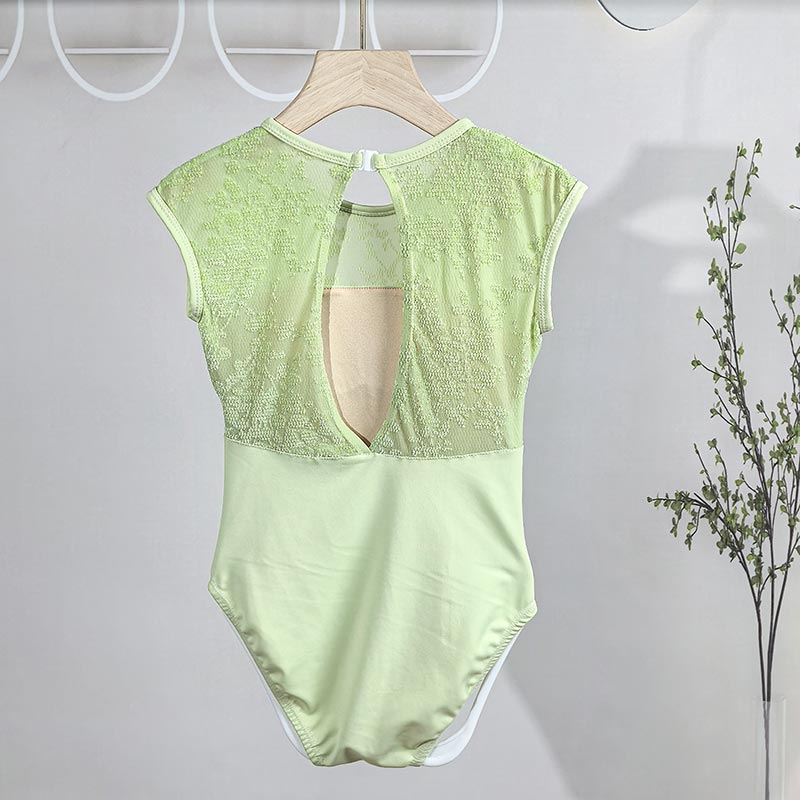
Jinwu’s Lace Tutu Ballet Dress is a relevant children’s example. Its published description identifies a fitted upper section with lace detailing and a layered tulle skirt. The material listing specifies 75% nylon and 25% spandex, with burnout mesh listed separately as 100% polyester.
Those details establish a particular dress concept. They do not establish a rigid hoop, a boned bodice or an exact number of skirt layers. If any of those features is essential to the performance, ask for explicit confirmation rather than inferring it from the product name.

Compare the sample with the actual recital brief. A soft skirt may provide the intended full appearance for one dance but be unsuitable for a role that depends on a different outline. The decision belongs to the teacher or costume organizer working with the choreography.
Find out what sits above and beneath the skirt
Check whether the upper section is a stretch leotard body, a separate bodice or another construction. Ask for an inside view showing how the body and skirt connect. A front photograph may conceal the difference between a complete one-piece garment and separately styled components.
Confirm the neckline, back opening and any closure. The wearer should be able to get into the approved size without forcing delicate areas. If a child needs help dressing, that practical detail should be understood before a group order is distributed.
Assess coverage in the upper fabric and lining. A decorative lace effect can be visually dense in a photograph while still requiring a closer look when worn. Check the actual color and lining arrangement rather than assuming that the word lace establishes a particular level of opacity.
Look at the inside of the skirt join as well. A seam that appears tidy outside may still feel uncomfortable against the body or at the point where the wearer bends. Ask the student to describe any pressure or rubbing during the fitting.
Where an undergarment is needed, include it in the fitting with the wearer’s comfort and privacy respected. Do not approve the outer appearance on the assumption that any layer will fit beneath the dress without changing the result.
Layer count is only one part of the skirt
The number of layers does not fully describe how a skirt will look or move. The material, length, fullness, arrangement and attachment all contribute to the finished result. Request a side view and a short movement view of the actual sample when the silhouette is important.
Examine whether the layers sit evenly around the garment and whether the hem appearance matches the intended design. An intentionally irregular or petal-like outline should be identified as such; it should not be confused with an accidental uneven finish.
During a fitting, check the skirt through the movements used in the dance. Does it settle as expected after a turn? Does the wearer repeatedly adjust it? Does the skirt interfere with a movement or neighboring dancers? Keep the assessment appropriate to the class and the garment.
If the production needs a rehearsal tutu, clarify that requirement with the choreographer. A practice garment should be selected for the role and movement being rehearsed; a dress chosen mainly for a recital photograph may not provide the same experience.
Jinwu’s Camisole Ballet Dress offers a contrasting reference with a flowing attached skirt. Comparing its outline with the layered Lace Tutu Ballet Dress helps make the desired volume clear. It does not make the two styles interchangeable.
Begin with the dance, then choose the decoration
For a recital order, obtain the organizer’s requirements for silhouette, color, length and permitted decoration. If students perform as a group, establish whether the aim is a closely coordinated costume or a range of approved variations.
Check the garment against the planned use rather than the age of the dancer alone. Two groups of the same age may have different choreography, dressing arrangements and presentation requirements. An age label cannot resolve those differences.
Ask how the costume will be used before and after the performance. If the school also wants it for weekly class, confirm that the regular dress code allows the skirt. Performance suitability does not automatically make a tutu dress the right everyday uniform.
Keep accessories and styling separate from the garment specification. Tights, shoes, hair pieces and skirts shown elsewhere in a gallery should only be described as included when the component list confirms them. A clear list prevents families from expecting a complete costume package when they have ordered one dress.
If the planned look depends on a particular decoration, request a close-up and confirm its attachment and care instructions. Avoid adding decorative features late without checking how they affect the garment’s handling and use.
Fit the bodice and skirt as one garment
Start with the body fit. Check the torso length, neckline, arm openings and leg openings using the supplier’s measurement guidance. A skirt can distract from fit problems underneath, so assess the leotard portion before judging the overall silhouette.
Then look at where the skirt sits. Its position should follow the approved design on the wearer rather than being pulled upward by a short torso or displaced by an oversized body. Sizing up solely to change skirt length can create new problems elsewhere.
Use current measurements and an actual sample for group sizing. Jinwu’s Lace Tutu Ballet Dress page lists child size labels from 80 to 160, but the meaning of those labels should be confirmed through the current product chart. Do not automatically interpret the numbers as a complete height-based fit recommendation.
Record the sample size, relevant wearer measurements and any movement concern. If several students report the same issue at the skirt join or opening, ask the supplier to review it before expanding the order. One good-looking sample on a hanger is not a complete group fitting.
Include practical handling in the review. Follow the supplier’s care instructions and confirm how the skirt should be stored and transported. For travel, the tutu packing guide explains why the actual skirt construction should determine the method.
Write the order in terms the sample can prove
A useful request identifies the wearer group, dance or event, skirt silhouette, bodice type, preferred color and size range. Attach the reference and explain which parts matter. “Use this layered skirt shape with this neckline” is clearer than asking for a professional-looking tutu.
List any essential construction details that are not confirmed on the product page. Ask whether the supplier can show the inside, provide the current chart and confirm the component list. If a requirement differs substantially from an existing dress, discuss it as a development request rather than assuming a standard variation.
Keep the final sample approval tied to the correct revision. Record the agreed materials, skirt shape, lining and any approved decoration. A change in one of those areas may need another fitting or appearance check.
Jinwu’s public Lace Tutu Ballet Dress information describes custom colors, sizing programs and branding options. To discuss a suitable garment, send the recital silhouette and sizing brief with the product reference. Ask the team to confirm the exact sample construction before treating it as the final costume.
Conclusion
A tutu ballet dress is easiest to specify when the buyer names the required shape, body construction and movement needs. Use the product details and sample to establish what is actually supplied. That keeps a soft recital dress, a flowing ballet dress and a specialist stage tutu from being confused in the same order.
FAQ
Does every tutu ballet dress contain a hoop?
No. The name does not establish a hoop or rigid support structure. Ask for the actual skirt construction. Jinwu’s linked Lace Tutu Ballet Dress description identifies layered tulle but does not confirm a hoop.
Can a soft tutu dress be worn to ballet class?
Only when the school permits that garment for the relevant class. Confirm the skirt policy and have the teacher assess movement and visibility. A recital costume is not automatically an approved training uniform.
Are more layers always better?
No. Choose the finished silhouette and movement required for the dance. Layer count should be considered alongside material, length, fullness and attachment, not used as a standalone quality ranking.
Can the skirt be removed from a one-piece dress?
Do not assume an attached skirt is removable. Confirm the construction. If the school needs the option to wear the leotard alone, discuss a separately supplied skirt or a specifically designed detachable arrangement.
What should a retailer call a soft layered dress?
Use the accurate product name and explain the structure, such as a fitted dance dress with an attached layered tulle skirt. Avoid implying specialist classical-stage construction unless those features have been confirmed.