
Dancewear Size Grading: Keeping the Fit Consistent Across a Range
Dancewear size grading develops an approved pattern into the other sizes in a collection. The objective is to preserve the intended fit and design across the range, not to enlarge every part by the same percentage. For a leotard or ballet dress, that means reviewing torso length, width, openings, straps and adjoining panels together.
A successful sample in one size is an important milestone. It is not evidence that the smallest and largest sizes will fit equally well. Before approving a size run, a brand needs a clear target wearer, measurement specifications and samples that show how the design behaves beyond the starting size.
Body Measurements, Garment Measurements and Grade Rules Are Different
Start by identifying what each document describes. A body size chart sets out the wearer dimensions the range is intended to serve. A finished-garment specification describes the actual garment at defined measurement points. Grade rules explain how pattern points change between sizes.
Those documents need to agree, but their numbers are not interchangeable. A body circumference is not the same measurement as a garment laid flat on a table. A pattern dimension may also include construction allowances that are not part of the finished measurement.
ISO 8559-2:2025 concerns primary and secondary dimensions used in clothing size designation, based on body measurements. It does not supply a ready-made grading rule for every leotard. Keep that distinction clear when a supplier refers to an “international size standard.”
For the customer-facing side of the subject, our adult leotard size chart guide explains how to read measurement information. A development team has a different task: deciding how the garment will deliver the fit that its chart describes.
Resolve the Base-Size Fit Before Extending It
The base size is the starting reference for the range. Choose it with the patternmaker and make sure its fit target is explicit. Record the wearer measurements used for the review and the design decisions the sample is meant to demonstrate.
Review the sample in the intended material and construction whenever possible. If the sample is provisional, mark the limitations. A temporary lining or substitute body fabric can leave important fit questions unresolved even when the outline looks correct.
Keep comments precise. “More comfortable” may describe the goal, but it does not identify the change. A useful note records where the wearer feels restriction, what happens during the agreed movement review and which measurement or pattern area needs investigation.
Ask the patternmaker to resolve the cause before applying a correction throughout the range. Lengthening the entire garment because one area feels tight can create changes elsewhere. The first approval should leave a stable reference, not a list of unresolved preferences that each subsequent size interprets differently.
Review Length and Width as Separate Decisions
A larger target circumference does not tell you how much additional torso length the design needs. Likewise, making a garment longer does not resolve every issue around the bust, hip or upper opening. Review these dimensions against the intended wearer range rather than using one global enlargement.
The Fashion Institute of Technology’s patternmaking curriculum treats grading, fit analysis and plus-size pattern development as related but distinct subjects. Its descriptions emphasise measurement specifications, proportion and balance. That is a useful reminder that a size range is a design and fitting problem as well as a set of increments.
For an extended range, discuss whether one base pattern remains appropriate or whether additional development is needed for a different fit target. Do not assume a universal size at which the pattern must change; the decision should follow the intended body dimensions, silhouette and sample evidence.
Children’s and adult ranges also need their own reasoning. A child’s size label and an adult’s size label do not create a continuous grading system simply because they appear in the same catalogue. Confirm which range the specification actually covers.
Keep the Material Choice Connected to the Grading Review
Stretch affects how a dance garment fits, but “stretch fabric” is not a complete specification. Two proposed fabrics can behave differently even if their fibre descriptions look similar. The pattern and size review should therefore identify the material actually used.
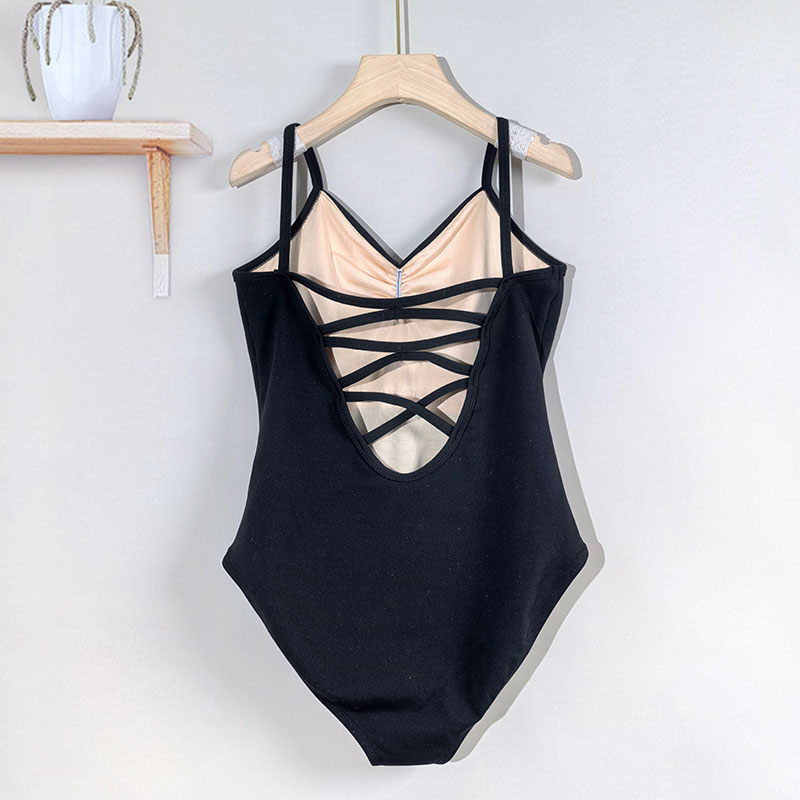
Jinwu’s Cross-Back Ballet Leotard is listed with a 75% polyamide and 25% spandex body and an adult XS–5XL range. Those are concrete product details to discuss. They do not establish how a custom fabric, different strap layout or altered opening would behave throughout that range.
If a buyer changes the material after approving fit, ask which parts of the review need repeating. The answer may depend on whether the new fabric changes stretch, thickness or the behaviour of an adjoining seam. Treat a material substitution as a recorded development decision rather than a minor administrative update.
For a lined style, identify both fabrics in the sample record. For mesh panels, identify the mesh as well as the body material. An acceptable fit in the body does not automatically establish comfortable movement across a seam joining materials with different behaviour.
Check the Design Details That Move with Size
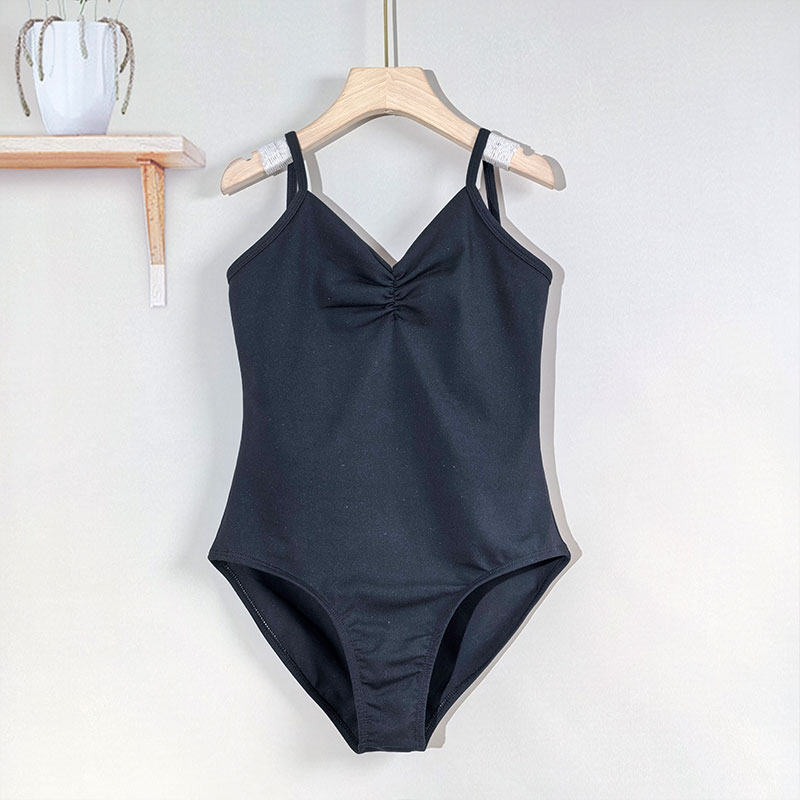
A garment can meet its main width and length targets while a secondary detail sits in the wrong place. Look at neckline depth, strap position, back openings, leg openings and the points where panels meet. The intended visual relationship should remain clear as the size changes.
For a cross-back design, review the straps and opening together. If the body changes but the strap arrangement is carried over without review, the result may differ from the intended fit. Ask the patternmaker to explain which dimensions control that relationship and how they will be checked.
For a ballet dress, review the bodice and skirt as connected parts. The skirt attachment, length and distribution can affect the overall appearance. Decide whether the design intends the same finished skirt length across selected sizes or a change with size; do not leave that choice to an assumption.
Decoration needs a decision too. A motif may be kept at one size, repositioned or resized, depending on the design. State the intention and review its placement. A larger garment does not automatically require every decorative element to become larger.
Choose Size-Set Samples That Answer Real Questions
A size set is a group of samples used to review the range. Agree which sizes it will include and why. The aim is to examine where the design or fit assumptions need evidence, not simply to accumulate samples with different labels.
For a new or substantially extended range, include the ends of the proposed range in the discussion. Consider additional checks where the pattern approach, construction or wearer profile changes. The exact sample plan should be agreed for the style; there is no universal number that proves every collection is ready.
| Review area | Question for the size set | Record to retain |
|---|---|---|
| Torso fit | Does the garment sit as intended without resolving one area at the expense of another? | Wearer reference, garment measurements and fit observations |
| Upper openings | Do neckline and back coverage remain consistent with the design? | Comparable front, side and back views |
| Straps and sleeves | Are position, length and movement suitable in each reviewed size? | Specific adjustment notes tied to the sample |
| Leg openings | Does the intended coverage remain appropriate? | Observed behaviour and the relevant measurement points |
| Skirt or attached panels | Do attachment and proportions match the approved intention? | Length and placement decisions by size |
| Material combination | Was the approved construction used in the reviewed samples? | Fabric and trim references with any exceptions |
Use consistent photography and measurement methods across the set. A different pose or camera angle can make two otherwise comparable garments appear different. Keep the visual record useful enough that another member of the team can understand the decision without having attended the fitting.
Wearer feedback and measured results should sit beside each other. Neither a flat measurement alone nor a general comment that a garment “looks fine” provides the full explanation for approving the size.
Distinguish a Grading Issue from Production Variation
If one sample differs from its measurement specification, first investigate that difference. It may reflect how the garment was made or measured rather than the grading plan. Revising the grade rule before checking the sample can move the whole range in the wrong direction.
Compare the sample with the correct revision and confirm the measurement method. Was the garment relaxed, laid out as specified and measured between the same points? Were the approved materials used? Resolve those questions before deciding that a pattern change is needed.
A repeated fit issue across correctly made sizes may justify reviewing the grading or target fit. A single inconsistent piece may instead call for a production correction. These are working distinctions for investigation, not conclusions to draw from one photograph.
Keep tolerances separate from grading increments. An increment describes the planned change between sizes. A tolerance describes an agreed allowance around a specified measurement. A tolerance should not be used to conceal an intentional fit change that has never been approved.
Approve the Range with Its Conditions Attached
Record the pattern revision, measurement specification, materials and sizes actually reviewed. List any outstanding size or construction questions separately. Approval should make it clear what is ready and what still needs work.
If only part of the range has passed review, do not let a general “sample approved” message imply that every size is complete. Name the reviewed sizes and the scope of the decision. If a later change affects earlier approvals, identify which sizes need another check.
Keep the final records together with the development brief. Our dancewear tech pack guide covers the broader documentation; the grading record should connect to that file rather than living in a separate chain of messages.
For a Jinwu development enquiry, send the intended size range, body-measurement targets and current sample notes. Identify the style features that need to remain consistent and ask how the proposed size set will be reviewed. If you do not yet have a settled fit reference, state that at the start.
Conclusion
Good dancewear size grading preserves an intended fit through documented decisions and checks across the range. Settle the base size, distinguish body and garment measurements, keep materials consistent and review the details that change with size. A clear approval record makes the resulting range easier to manufacture, explain and repeat.
FAQ
Can a single approved sample justify releasing every size?
It establishes the reference size, but it does not demonstrate the fit of every other size. Agree a size-set review that addresses the range and design before treating the whole collection as approved.
Should every measurement increase by the same amount?
No universal increment applies to every measurement point. Grade rules should follow the intended body dimensions and garment design, with the resulting proportions checked in samples.
Is grading the same as offering made-to-measure garments?
No. Grading develops a repeatable size range. Made-to-measure work responds to an individual wearer’s measurements and may require a different development and approval process.
Does changing a size label improve the fit?
Changing the label changes the name, not the pattern or garment. If the product needs a different fit, review its measurements and construction; then make sure the customer-facing label and chart describe the result clearly.
Can an approved grade be reused with a new fabric?
It can be a starting reference, but the new material needs review. Confirm whether its behaviour changes the garment fit or construction before carrying the previous approval across unchanged.