
Cotton Ballet Leotard Buying Guide: Read the Blend, Then Test the Fit
A cotton ballet leotard is worth considering when a dancer or school prefers a cotton-rich fabric, but the word “cotton” is only the start of the specification. Check the complete fiber blend, how the finished garment stretches, and whether it still fits after the intended care routine. A soft swatch cannot answer those questions on its own.
For a retailer or school buyer, the first decision is whether cotton is a firm requirement or simply shorthand for a familiar feel. That distinction changes which samples belong on the table. This guide focuses on evaluating a cotton or cotton-blend option without assuming that every soft leotard contains cotton.
What does “cotton ballet leotard” actually describe?
Ask for the fiber percentages before comparing styles. A garment described as cotton may use a cotton-rich stretch blend, while a search result or collection name may use the term more loosely. Cotton content, stretch-fiber content and the composition of any lining should be clear in the supplier’s specification.
Do not treat “cotton feel” as a composition statement. It describes an impression, not a verified fiber content. Similarly, a fabric name does not tell you its weight, knit construction or finishing. Two fabrics with the same listed percentages can still behave differently when made into a close-fitting garment.
Record the body fabric and lining separately. If mesh or another contrast panel is part of the design, identify that material too. Otherwise, an apparently straightforward cotton brief can leave the supplier guessing which parts of the leotard must meet the requirement.
Start with the school’s actual wording. “Cotton preferred,” “cotton-rich” and a specified composition are different instructions. Where a uniform policy is unclear, ask the school to clarify before approving fabric. A garment that meets the buyer’s interpretation may still fail the teacher’s requirements.
Cotton versus nylon: compare the actual options
If cotton content is mandatory, begin with documented cotton-containing fabrics. If the aim is comfort or a particular surface feel, compare finished samples without assuming one fiber name guarantees the result. Let the wearer assess the inside surface, pressure at openings and comfort during movement.
A nylon ballet leotard is a useful alternative to assess when the brief permits it, but it is not a substitute for a specified cotton composition. Jinwu’s Wide Strap Ballet Leotard, for example, lists 75% nylon and 25% spandex. Those are the published material details; this product should not be presented as a cotton leotard.
The garment photographs in this guide illustrate leotard construction, not verified cotton fabric. The cross-back style pictured below is also a polyamide-and-spandex design. For a cotton version, ask Jinwu to confirm fabric availability and whether a new sample is needed before making a purchasing decision.
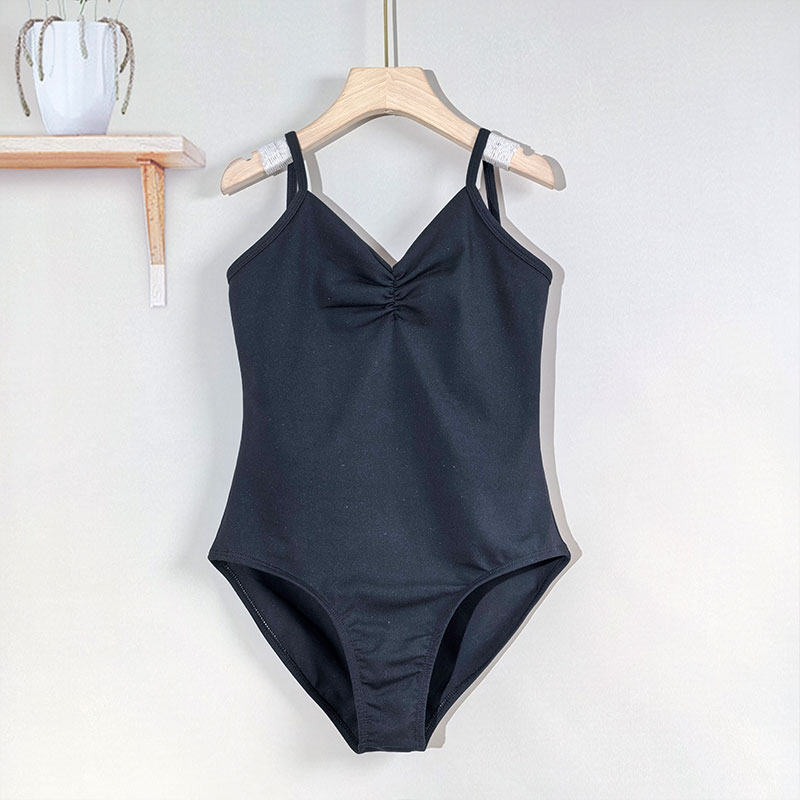
A fair comparison keeps the design as similar as possible. If one sample has a high neckline and full lining while the other is a lightly lined camisole, the wearer is assessing several differences at once. Either obtain closer samples or note those differences so they are not wrongly attributed to cotton or nylon.
When choosing between fabrics, prioritize the issue that prompted the search. A school enforcing composition needs documented fiber content. A retailer responding to fit complaints needs garment trials. A buyer replacing a discontinued style needs both a comparable feel and a specification that can be repeated.
Stretch must work with the pattern
Four-way stretch leotard fabric stretches along both its length and width. The phrase does not tell you how far it extends, how much force extension requires, or how completely it recovers. Ask about both directions, especially when assessing a cotton blend for a fitted ballet garment.
Stretch across the body helps accommodate movement and circumference; stretch along the torso also matters when the dancer raises their arms or bends. A fabric that feels easy to pull sideways may behave differently vertically. Do not approve it solely from a hand stretch across a small swatch.
For a quantified comparison, agree on a test method and the properties to report. ISO 20932-1:2018, with its applicable amendment, describes strip and loop methods for assessing fabric elasticity and related properties. Naming the standard is not evidence that a particular Jinwu fabric has been tested or passed a buyer’s requirement.
Then assess the finished garment. Watch for neckline movement, straps pulling, leg openings cutting in and fabric remaining stretched after movement. Keep the wearer’s measurements with the sample record. Without those measurements, it is difficult to distinguish a fabric issue from a garment that is simply the wrong size.
Replacing nylon with a cotton blend in an existing pattern may require a fresh fitting. Even if both fabrics contain stretch fiber, do not assume that the original pattern allowance will suit the replacement. Approve the combination of fabric, pattern and construction.
Choose lining by coverage and movement
A light-colored cotton blend does not automatically need full lining, and a darker fabric does not automatically provide enough coverage. Check the finished garment in its intended color, on an appropriately sized wearer, under the lighting relevant to the class or performance.
Stretch can change how a fabric appears. Look at the front, seat and areas where the fabric is under tension rather than judging only a flat piece on a table. Where coverage is inadequate, discuss fabric choice, lining coverage or fit before approving the design.
Ballet leotard lining also needs to move with the outer fabric. If the lining restricts an otherwise flexible garment, adding more of it is unlikely to solve the whole problem. Ask for the lining composition and examine its attachment at seams and openings.
Use the ballet leotard lining guide for a more detailed assessment of lining placement. Keep this decision tied to the chosen cotton sample rather than copying the lining specification from a visually similar style.
A sample comparison that leads to a decision
Give each fabric and garment sample an identifier. Record what is known, what the wearer observed and what still needs confirmation. This makes the next supplier conversation more useful than a general verdict that one sample feels “better.”
| Check | What to compare | Decision it supports |
|---|---|---|
| Composition | Documented percentages for body, lining and contrast fabric | Whether the sample meets the cotton requirement |
| Surface feel | Inside and outside surfaces of actual garment samples | Whether the wearer accepts the fabric against the skin |
| Stretch and recovery | Lengthwise and widthwise behavior under an agreed assessment | Whether the fabric suits the pattern and movement |
| Coverage | Chosen color, finished lining and fabric under realistic tension | Whether fabric or lining needs revision |
| Fit after care | The same garment points before and after the approved routine | Whether the initial fit remains acceptable |
| Repeatability | Fabric reference, color reference and approved sample revision | Whether production can be checked against a clear target |
For example, imagine two cotton-blend samples that both meet a school’s stated composition requirement. One is preferred to the touch but pulls at the shoulders during an overhead reach. The other feels slightly different but moves comfortably and retains its fit after care. The choice should account for those observations; cotton content alone cannot settle it.
This is an illustrative comparison, not a Jinwu test result. The useful habit is to write down the tradeoff and identify whether another fitting or a different fabric would resolve it.
Check the fit again after care
Use the proposed care instructions for the sample, and record the washing and drying conditions. Do not assume that a routine suitable for another cotton garment will also suit a leotard’s stretch fibers, lining, elastic and decoration.
Measure the same agreed points before and after care, with the garment arranged consistently. Include the torso-related dimensions that affect fit as well as width. Examine seam appearance, fabric distortion and how the neckline and leg openings sit once the sample has dried.
A shorter garment after care and a garment that has become loose during wear are different findings. Keep them separate in the report. Describe the change and the conditions under which it happened rather than attributing every problem to “cotton shrinkage” or “poor elastic.”
If a laboratory comparison is needed, ISO 6330:2021 provides domestic washing and drying procedures for textile testing. Agree on the relevant procedure and assessment with the testing provider. It is not a universal care instruction, nor does mentioning it establish an acceptable result.
For a school program, include the people responsible for care in the discussion. A technically acceptable fabric is less useful if the proposed routine is impractical for normal use. Resolve that mismatch before the garment and its care wording are finalized.
Tell the supplier what cotton needs to achieve
A useful enquiry states whether cotton is compulsory, what composition has been specified and who will wear the garment. Include the class or uniform context, preferred cut, color, lining expectations and size range. Add a reference sample if its feel or construction is important.
Separate requirements from preferences. “Must meet this cotton composition” gives the supplier a clear boundary. “Prefer the feel of this sample” invites comparison but still needs a documented material choice. Do not turn a preference into an unsupported claim about comfort, skin suitability or performance.
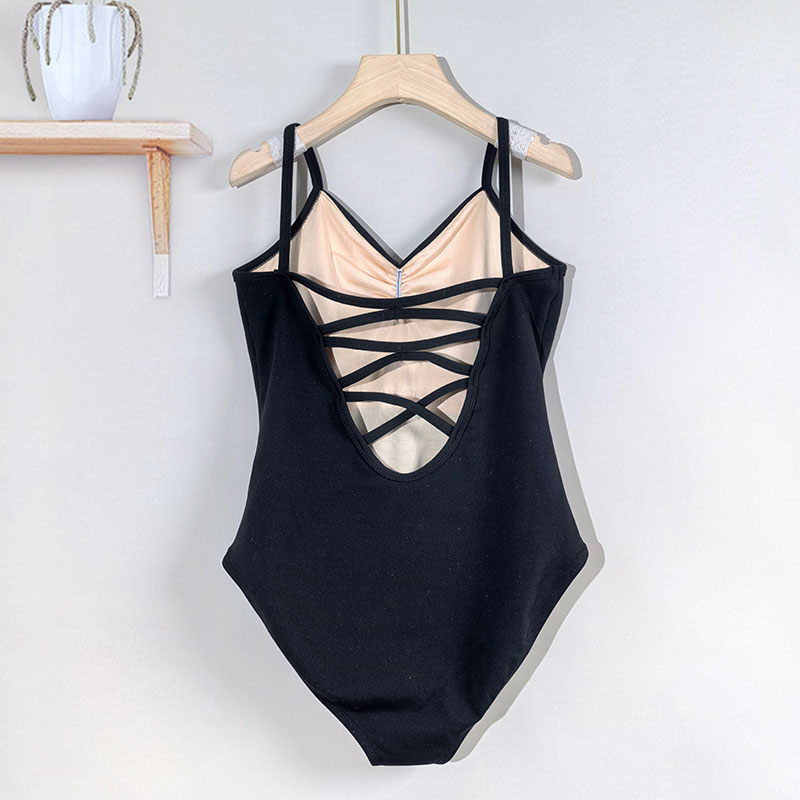
If you like the construction of Jinwu’s Cross Back Ballet Leotard, use it as a design reference and identify which features matter. Its published fabric is 75% polyamide and 25% spandex, not cotton. A request to develop a cotton-blend interpretation needs its own material confirmation and fitting.
Send your composition requirement, intended use and reference through Jinwu’s enquiry page. Ask which material options can actually be sampled before committing to a cotton description for the collection.
Approve the specification, not just the favorite sample
Once a sample is acceptable, attach its fabric reference, composition, color, lining details and fit comments to the approval record. Identify the sample revision so an earlier version cannot be mistaken for the final one.
Keep a reference garment available for production comparison. Agree which changes require a new approval, particularly a different body fabric or lining. A replacement material that looks similar can still change the fit you approved.
Check that the product description matches the final material. If a development request began as cotton but the approved garment uses nylon and spandex, update the description accordingly. Clear naming prevents the original search term from becoming a misleading product claim.
Conclusion
Choose a cotton ballet leotard by confirming the blend, assessing the finished fit and checking the result after care. Where cotton is essential, document that requirement. Where it is a preference, compare realistic alternatives and decide from the samples. Either way, the approved garment should support the description used to sell it.
FAQ
Does a cotton leotard have to be 100% cotton?
No. The description may refer to a cotton blend. Check the full composition rather than assuming the percentage from the name. If a school specifies a particular blend, use that requirement when requesting samples.
Is spandex the same as elastane?
Spandex and elastane are names used for the same type of stretch fiber. Keep the terminology consistent in the supplier specification, and confirm the appropriate labeling terminology for the destination where the garment will be sold.
Can I identify cotton from a product photograph?
A photograph cannot verify fiber composition. Lighting, finish and image processing can affect the apparent surface. Use the documented material information and ask the supplier to resolve any conflict between the description and the sample.
Should I order a larger size to allow for shrinkage?
Do not size up as a substitute for evaluating the fabric and care routine. An oversized garment may fit poorly before washing and still change unpredictably afterward. Resolve the sample’s dimensional behavior, then choose the size from the approved fit guidance.
Does Jinwu currently offer a confirmed cotton version?
The product examples linked in this guide are published as nylon or polyamide blends with spandex. They do not confirm a cotton version. Contact Jinwu with the required composition to establish whether a suitable fabric and sample can be supplied.