
Table of Contents
This guide to ballet training wear focuses on how to approve a usable colour reference across materials and repeat orders. The product example is Jinwu’s Velvet Flocked Ballet Leotard: a velvet-flocked leotard with decorative mesh areas. The practical outcome is a physical colour reference with named components and acceptable variation. Start by checking the contact between flocked decoration, mesh panels and the stretch base and avoid treating a decorative surface as if it had the same care and stretch behaviour as the base fabric.
Understand the Velvet Flocked Ballet Leotard Reference
The Velvet Flocked Ballet Leotard listing is the starting reference in Jinwu’s Adult Dancewear collection. Confirm mesh coverage, motif boundaries and seam placement around decorative areas for the selected version before treating ballet training wear as an approved purchase.
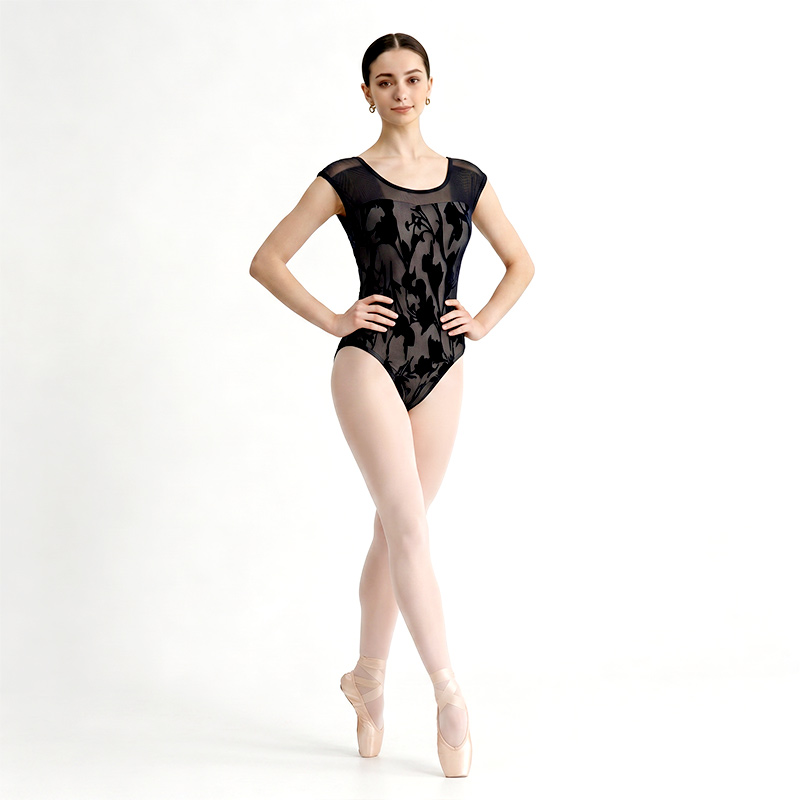
Flocking changes the surface of a leotard and deserves its own approval. Identify which areas carry the raised decoration and which remain plain. Inspect the boundary of the motif, the consistency of the surface and any sections where it meets a seam. A description that refers only to ‘velvet fabric’ can hide the difference between a separate velvet panel and a flocked effect applied to another material.
Check decorative mesh against the intended coverage requirement. Hold the finished sample in ordinary studio light and view it on the intended wearer with the agreed lining arrangement. The appearance on a dark mannequin or a heavily lit catalogue background can be misleading. Where opacity is required, ask for the actual panel construction rather than assuming that a dense motif provides continuous coverage.
Colour Approvals for Ballet Training Wear
Approve colour on the material that will actually be used. A screen image, a printed card and a fabric swatch can look different even when they carry the same colour name. View the candidate under consistent lighting and compare it with the other items it needs to match. Record the chosen physical reference rather than relying on a phone photograph as the only instruction.
Different components may need separate shade approvals. A base fabric, mesh, ribbon and lining can respond differently to the same colour request. Decide which components require a close match and which are intended to contrast. This lets the supplier explain the available options before the buyer commits to a design that cannot be reproduced consistently.
Discuss repeat orders before treating a shade as a permanent school or brand colour. Ask how the reference will be retained and how a new material batch will be presented for review. If the next batch differs, decide whether to keep it separate, approve the change or choose another option. Do not let an unchanged colour name conceal a change that customers will notice.
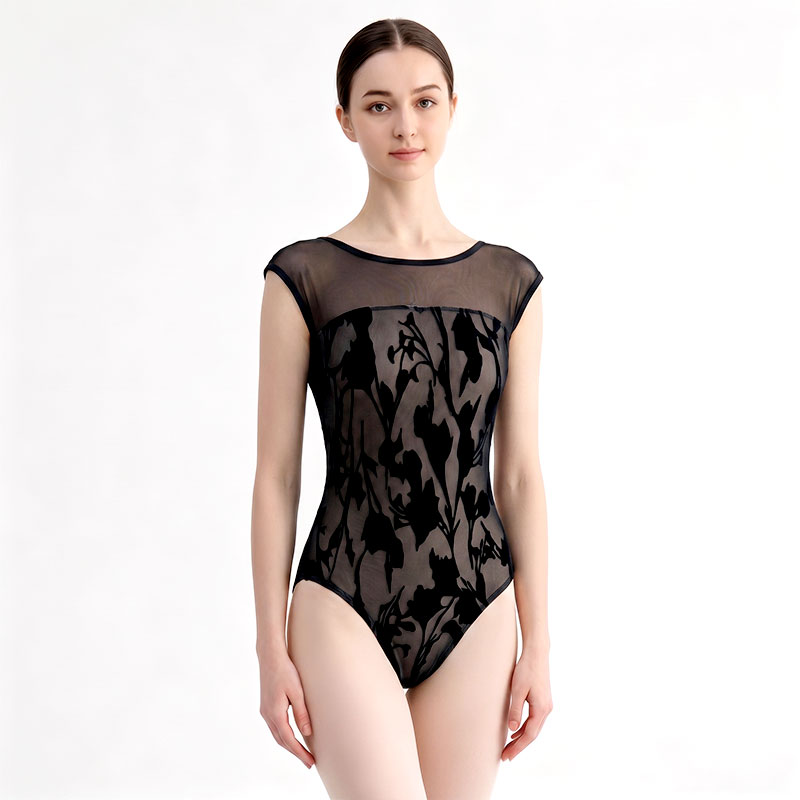
Review The contact between flocked decoration, mesh panels and the stretch base
The decorative surface should be reviewed after the intended cleaning process. Compare the flocked areas before and after care, looking for changes in appearance, loose material or distortion near the joins. Record what was done to the whole garment. A general washing instruction for a plain stretch leotard is not enough evidence for a style that combines mesh, flocking, elastic and lining.
Packing matters when a surface has a visible direction or raised texture. Review one garment after it has been folded and stored in the proposed retail pack. Check whether pressure marks remain and whether decorative areas rub against zips or rough packaging. Ask how the finished piece should be presented before shipping, then use the same method for the reference sample retained by the buyer.
Keep the Product Details Consistent
Keep the flocked style’s role clear within a collection. It may suit an expressive studio option or a presentation garment, but the school’s dress code still controls what can be worn in class or an examination. Obtain that approval before committing to a large size run. A decorative design should earn its place through a defined use case, rather than relying on the assumption that every dancer needs it.
A repeat order requires a surface reference as well as a colour name. Retain a swatch that shows the motif and its texture, alongside the finished sample. If a buyer asks for a new shade, review the decoration again because the contrast with the ground fabric may change. Do not approve a new colourway by changing only the colour entry in an old purchase order.
Write a useful fit note
A useful fit note states the model, sample size, observation and requested outcome. For example, describe where a neckline moves during an agreed arm movement instead of writing 'make it better'. Keep body information private and share only what the supplier needs for the revision. Ask the pattern maker to explain the proposed change, then review the revised sample in the same way so the before-and-after comparison is meaningful. This gives a buyer researching ballet training wear a specific question to resolve with the supplier.
Keep the quantity by model, colour and size in a single dated matrix. Check that its total agrees with the order and that any later changes are reflected in the packing plan. Use actual school fittings, enrolments or the retailer's relevant records where available. If the first allocation is an assumption, label it as such and plan how it will be reviewed. Do not invent a universal market size ratio. Keep this decision visible in the ballet training wear enquiry so the final offer answers the same brief.
Separate the school rule from personal preference
Ask the teacher which elements are required for the intended class or examination and which are optional. Neckline, back coverage, skirt use and colour may all matter, but the rules need to come from the actual programme. A supplier's description cannot establish universal acceptance across schools. Record the agreed requirements before extending a uniform range, then present optional retail choices without suggesting that every student must buy them. For ballet training wear, make this part of the written review before accepting the order.
Record the item reviewed, the reference used, the observations and the resulting decision. Photographs should show the location of a concern and include a scale where dimensions matter. State whether the review was informal or followed an agreed formal inspection method. An organised record helps a supplier investigate a specific issue and prevents an unresolved observation from disappearing when the project moves to another contact. When comparing ballet training wear, connect this check to the chosen product reference.
Keep two-piece relationships explicit
When a range includes a separate skirt or another coordinating piece, record how its size relates to the base garment. Check the complete combination after the leotard itself has been approved. The matching colour does not establish matching fit, and identical label numbers may use different measurement scales. A component pairing table helps the packing team issue the intended set and makes future single-piece replacements easier to manage. This gives a buyer researching ballet training wear a specific question to resolve with the supplier.
Identify where size, brand and care information will be placed, then inspect those labels on the finished sample. A label's cut edge or attachment seam can be noticeable against the body even when the printed information is correct. Ask the wearer to identify any contact issue and show its location in the revision notes. If the label method changes, review both readability and comfort rather than treating it as an artwork-only decision. Keep this decision visible in the ballet training wear enquiry so the final offer answers the same brief.
Set a clear communication owner
Use one project contact to consolidate design, teaching and purchasing feedback. Other reviewers can still contribute, but the supplier needs one current instruction set and a clear final decision. Keep questions and answers connected to the relevant sample revision. This reduces the chance that a production contact follows an old message or treats a suggestion from one reviewer as an approved change. For ballet training wear, make this part of the written review before accepting the order.
Sampling, approval, production, dispatch, transport and local distribution are separate stages. Confirm the assumptions for each one with the relevant party. A production estimate does not include every part of the delivery route, and a general website timeline is not a confirmed booking for a custom project. Review the consequences of late approvals before promising an unchanged customer deadline. When comparing ballet training wear, connect this check to the chosen product reference.
Compare the Evidence Before Approval
| Decision | Useful evidence | Avoid this shortcut |
|---|---|---|
| Surface identity | Flocked effect and ground fabric distinguished | Calling all textured areas velvet |
| Coverage | Finished panel checked with intended lining | Inferring opacity from the motif |
| Packing | Review after folding in the actual pack | Ignoring pressure marks on decoration |
| Colour Approvals | a physical colour reference with named components and acceptable variation | a colour name is mistaken for a repeatable physical standard |
A Worked Planning Example
Consider an illustrative ballet training wear enquiry for 52 units in 4 variants. The buyer wants to approve a usable colour reference across materials and repeat orders and therefore requests a record of mesh coverage, motif boundaries and seam placement around decorative areas, plus a view of the contact between flocked decoration, mesh panels and the stretch base. The required result is a physical colour reference with named components and acceptable variation. If a colour name is mistaken for a repeatable physical standard, that specific difference needs resolution before the affected approval. These figures are a planning example, not a customer case, quotation or minimum-order statement.
Use Category References Carefully
For general context for the garment category, see Wikipedia’s overview of leotards. Use the selected sample and product-specific evidence for the actual ballet training wear decision. The reference explains category terminology and does not certify Jinwu’s products.
Prepare a Focused Enquiry
Send Jinwu the Velvet Flocked Ballet Leotard reference, your destination and planned variant mix, with the request to approve a usable colour reference across materials and repeat orders. Discuss custom options through its OEM/ODM services or contact the team. Ask for current material options, quantities and timing for the actual ballet training wear brief.
Questions About Ballet Training Wear
What should I confirm when researching ballet training wear?
Start with the contact between flocked decoration, mesh panels and the stretch base in the Velvet Flocked Ballet Leotard sample. The purchase question here is how to approve a usable colour reference across materials and repeat orders.
Which measurements should the buyer record?
Record mesh coverage, motif boundaries and seam placement around decorative areas. Use the measurement method and current chart for the actual supplied model.
What record helps with colour approvals?
Prepare a physical colour reference with named components and acceptable variation and identify the exact approved sample revision.
Which shortcut should I avoid?
For this enquiry, avoid the situation where a colour name is mistaken for a repeatable physical standard. Resolve the specific difference before approval.
How should I enquire about ballet training wear?
Send Jinwu the selected product reference, destination, quantity and variant mix. Ask how to approve a usable colour reference across materials and repeat orders for that scope.