
How to Start a Dancewear Brand: Build a First Collection Dancers Can Choose
Start a dancewear brand by defining a specific wearer and a product decision you can help them make. Then develop a focused collection, assess the actual garments and publish enough information for customers to choose confidently. A recognizable label matters, but it cannot compensate for unclear sizing, an unexplained fabric or a collection in which every style appears to serve the same purpose.
This guide focuses on a first balletwear collection developed with a manufacturing partner. It follows the decisions from customer research to launch and early feedback, with particular attention to what a founder needs to settle before putting a brand name on a garment.
Define the wearer and the moment they buy
“Dancewear for everyone” gives a founder very little direction. A parent purchasing a first class uniform, an adult dancer replacing a familiar leotard and a school organizing a recital are making different decisions. Pick the situation your first collection will address and describe it in ordinary language.
For example, an adult classwear collection might help dancers compare torso fit, neckline coverage and skirt options. A school-led collection might need approved uniform styles, clear size collection and consistent product references. These are illustrative directions, not claims that either audience will automatically buy a new brand.
Speak with people in the intended group before finalizing the assortment. Ask what they currently wear, how they choose a size, what information they struggle to find and why they replace a garment. A photograph that receives compliments is useful creative feedback; it is not the same as understanding a buying need.
Record recurring questions in the customers’ own words. Look for a problem your product and information can actually address. If customers mainly need a school-approved uniform, a dramatic back design may not solve their problem. If they need clearer adult fit guidance, another color alone may leave the important decision unchanged.
Choose a promise the garments can demonstrate
A first brand needs a reason for its choices. That reason could be an easy-to-understand range of classwear, a particular visual style or a carefully explained fit offer. Keep it concrete enough to influence which garments you include and which you leave out.
A useful positioning statement connects the wearer, use and evidence. For an illustrative adult-class collection, that might be: “Ballet leotards with clearly described coverage and fit, shown from every side.” The evidence would then be the actual cuts, photographs, measurements and sample assessment, rather than an unsupported claim that the garments suit every body.
Avoid starting with broad performance promises that the development process cannot substantiate. Terms such as sweat-wicking, compression, sustainable or universally flattering need more than a fabric name or an attractive photograph. Describe confirmed features precisely and gather appropriate support before making a stronger claim.
How to start a dancewear brand with a focused first collection
Give each proposed style a job. One might be the straightforward class option, another an alternative neckline or back, and another a coordinated piece that works with the base garment. The exact number should follow the customer need and your ability to assess and explain each product, not a rule that every brand must launch with a fixed quantity of styles.
| Possible role | Question the product answers | Evidence needed before inclusion | Reason to leave it out for now |
|---|---|---|---|
| Core class leotard | What can the dancer wear regularly for this use? | Fit, movement, care and clear size guidance | The basic fit remains unresolved |
| Alternative cut | Does the wearer need a different neckline, strap or back? | A visible and useful difference from the core style | It duplicates the same choice with little explanation |
| Decorative style | Does the customer want a specific design treatment? | Accurate decoration, coverage and care information | The design conflicts with the intended class rules |
| Coordinating skirt | Does the customer need this additional garment? | Confirmed inclusion, sizing and compatibility | It appears only as unexplained styling in photographs |
Color choices should serve those roles. A new shade may be worthwhile when customers request it or it supports a clear collection direction. It does not turn an otherwise identical style into a separate fit solution. Keep the difference between a design option and a functional choice visible in your planning.
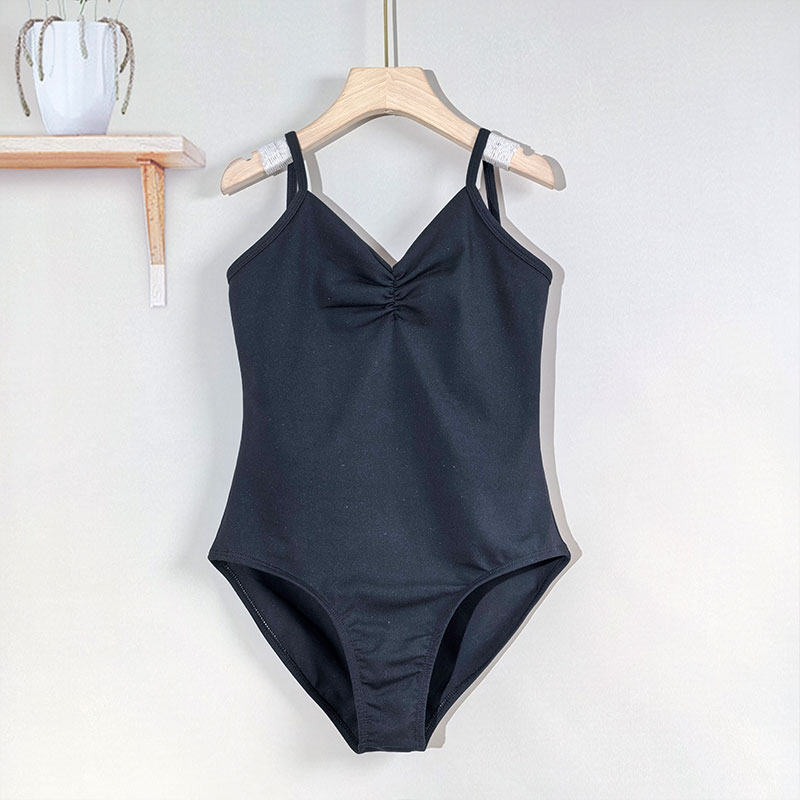
As a concrete starting reference, Jinwu’s Body danzatore a croce lists a ruched V-front, crossed camisole straps and a 75% polyamide and 25% spandex fabric entry at 230 GSM (grams per square meter). Those are details a founder can assess against a classwear brief. They do not replace a sample fitting or establish that the style meets every proposed brand claim.
Select the development route around the unresolved work
Private label dancewear is sold under the buyer’s brand, while production is carried out by a manufacturing partner. The phrase does not tell you how much product development is included. Establish whether you are choosing an existing style, modifying it or developing a new garment.
An existing design may suit a founder whose main work is understanding the customer and presenting a clear range. A new design may be needed when the product idea depends on a different construction or proportion. Neither route removes the need to assess fit, materials and the finished specification.
Jinwu Pagina del servizio OEM e ODM describes production from supplied designs, adaptation of its product library and fuller custom development. OEM means original equipment manufacturing; ODM means original design manufacturing. Ask what each route includes for your project rather than relying on the label alone.
Keep the initial choice tied to the product brief. The separate OEM versus ODM dancewear guide covers those responsibilities in more detail. Here, the important decision is who will resolve each design question before a sample is approved.
Treat the size range as a product decision
Decide who the first range is intended to fit, then ask how that range will be developed and evaluated. Adding more labels to a product page does not establish that the garment has been assessed across those sizes.
Request the measurement definitions, intended fit and relationship between body measurements and garment measurements. For leotards, make sure the discussion covers torso fit as well as circumferences. A customer should not have to infer a complete size recommendation from a single bust measurement.
Use sample feedback from wearers relevant to the intended range. Record the size worn, the fit issue and the movement in which it appears. Comments such as “too tight” become more useful when they identify the neckline, leg opening, body length or another specific area.
Agree which sizes need review before launch. If a style behaves differently at the ends of the range, resolve that rather than publishing a middle-size photograph as proof for every option. The brand’s size guidance should reflect the approved product, including any limits that remain.
Give each sample round a question to answer
A sample is easier to evaluate when you know why it was made. One round may establish the overall cut. Another may confirm the final fabric, lining or decoration. Keep those purposes clear so an early concept sample is not mistaken for the garment authorized for production.
Compare the sample with the brief, not just with the previous sample. Otherwise a series of small revisions can move the style away from the reason it was selected. Record what was accepted, what changed and what still needs attention.
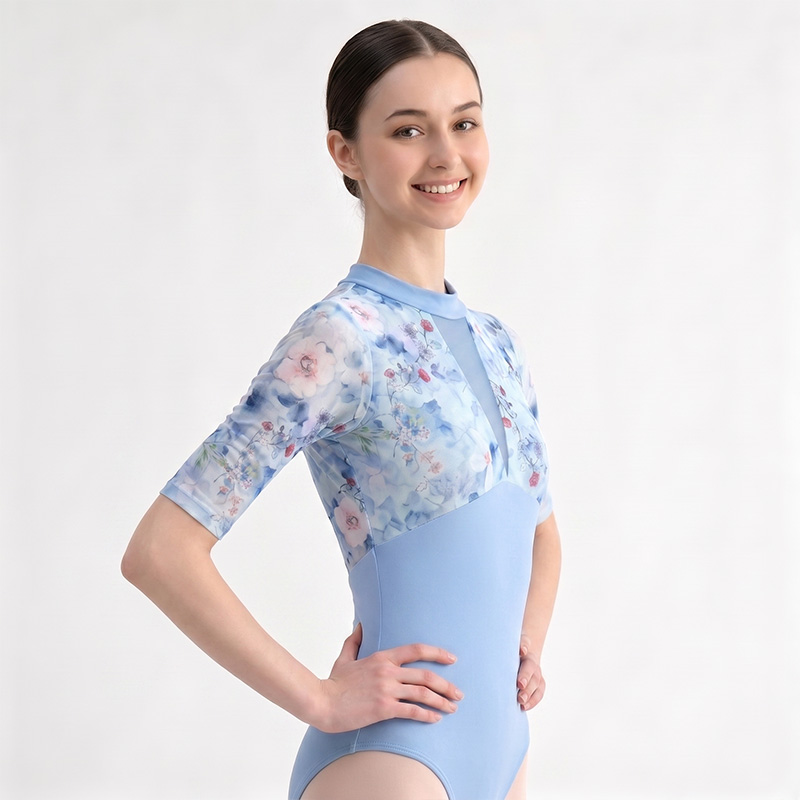
For a mesh style, inspect the panel boundaries, coverage and movement as well as the visual effect. The Body da balletto floreale al collo alto, for instance, combines a solid stretch body with floral mesh. A founder assessing that kind of design should review the complete garment rather than assume its mesh behaves like its denser fabric.
Include care in the review. Ask for the finished-garment instructions and agree how they will be checked. If the final decoration or material changes, establish whether the previous care assessment still applies. Keep fit approval and care approval visible as separate decisions.
A Pacchetto tecnico dancewear helps carry those decisions into a consistent specification. It should become more definite as development progresses, with old versions clearly separated from the approved one.
Settle brand identity and product information before printing
Confirm that you can use the proposed name, logo and artwork in the intended markets before producing labels and packaging. The World Intellectual Property Organization’s trademark guidance explains that protection relates to particular goods or services and territories. A domain name or social account is not a substitute for checking the relevant trademark position.
Also clarify permissions for patterns, artwork, photographs and custom design work. Agree what the brand may use and what is included in the development arrangement. Do not treat the phrase private label as automatic confirmation that every underlying design is exclusive.
Keep the brand label separate from required product information. For covered textile products in the United States, the Federal Trade Commission’s textile labeling guidance addresses fiber content, origin and responsible business identification. The Care Labeling Rule guidance covers care instructions for covered apparel. These are US requirements; other destinations need their own review.
Assign responsibility for preparing and checking the final wording. A supplier can manufacture a label from supplied artwork without that artwork necessarily being complete for every market in which the brand intends to sell.
Build product pages from the approved garments
Photograph the version customers will receive. Show the front, back and details that affect the buying decision, such as mesh coverage, lining, closures or skirt attachment. If a sample changes after photography, review which images and descriptions need replacing.
Explain what is included. A leotard shown with a skirt should not leave the customer guessing whether the skirt is part of the order. Give separate size guidance when coordinated pieces use different charts, and distinguish styling accessories from supplied components.
Use the actual material and care information rather than a generic description copied across the collection. A plain leotard and a decorated mesh style may need different explanations even when they share a body fabric. State confirmed details and avoid filling gaps with assumptions.
Product names should help customers navigate the choices. If two styles differ mainly at the back, make that distinction easy to see. Clear comparisons can be more useful than giving every style an elaborate name and the same paragraph about elegance and comfort.
Set a clear point at which the collection is ready
Agree what must be finished before the launch date is announced. That includes the approved garments, size information, labeling, care details, product photography and the process for checking delivered goods. A collection is not ready solely because its website design is complete.
Confirm the actual project schedule with the manufacturing partner and update it when approvals change. Generic lead-time statements cannot account for every material choice, revision or delivery arrangement. Customer-facing availability should reflect the current status of the specific products.
Prepare packaging that keeps styles and sizes identifiable and protects the finished garment during handling. Make the first unpacking useful: customers need the correct item and understandable product information, not packaging that obscures either.
Launch where you can understand the response
Choose an initial channel that fits the customer you researched. A studio-linked collection, a specialist retail presentation and a direct online launch create different opportunities to explain the garments and collect questions. Select the approach you can support clearly.
Give staff or anyone presenting the range the same approved product information. They should know how sizing works, what is included and which claims are confirmed. An improvised explanation at the point of sale can undermine otherwise careful product development.
Track questions by style and size rather than treating all feedback as a general response to the brand. If customers repeatedly ask about the back, add a clearer photograph. If they hesitate over sizing, investigate whether the chart, measuring instructions or actual fit needs attention.
Distinguish interest from fulfilled orders and from satisfactory use after delivery. Each tells you something different. Avoid declaring a product successful merely because one image attracts attention, or unsuccessful because customers ask questions that better information could answer.
Use the first release to make the next decision
Review what customers chose, what they asked and what happened after wearing and care. Keep fit issues separate from preference: a request for another color is different from repeated discomfort in the same seam or proportion.
Improve an existing product before adding a near-duplicate to solve an unclear problem. A revised size explanation, a corrected detail photograph or a garment adjustment may address the issue more directly than another style.
For repeat production, identify the approved version and document any changes. Tell customers when a fit or construction change affects how they should choose. Consistent product references make those conversations easier for the brand, supplier and customer.
Prepare a first conversation the manufacturer can act on
Send a short brief naming the intended wearer, use, first-collection roles and current stage of development. Include the styles you want to assess, the proposed size range, required changes and any existing measurements or artwork you are authorized to use.
Ask the dancewear brand manufacturer to identify what can start from an existing product and what needs new development. Request a sampling plan that states the question each sample will answer and the information required from your side.
Discuss your first balletwear collection with Jinwu using that brief. A clear description of the customer and product roles gives the team a practical basis for recommending a development route and relevant samples.
conclusione
A dancewear brand begins to take shape when its product choices make sense to a defined customer. Develop a collection you can assess, explain and support, then use the first release to improve your understanding. The label gives the garments a name; the decisions behind them give customers a reason to choose.
FAQ
Do I need an original pattern for every launch style?
No. An existing design may fit the product brief. Confirm the permitted branding, modifications and design-use terms, then assess the actual garment before approving it.
How many styles should the first collection contain?
There is no universal number. Include styles with distinct roles that you can properly develop, assess and explain. Leave out options that duplicate a decision or remain unresolved.
Can the manufacturer decide the target customer for me?
A manufacturer can contribute product knowledge, but the brand needs its own evidence about the wearer and buying situation. Use supplier input to refine that understanding, not replace it.
Does private labeling make a design exclusive?
Not automatically. Agree in writing which designs, modifications and artwork are exclusive, if any, and what use each party is allowed. Do not infer those rights from a logo label.
Should I add more colors immediately after launch?
First review customer choices and unresolved product questions. Add a color when it serves an identifiable need; do not use new shades to avoid addressing fit or information problems.