
Table of Contents
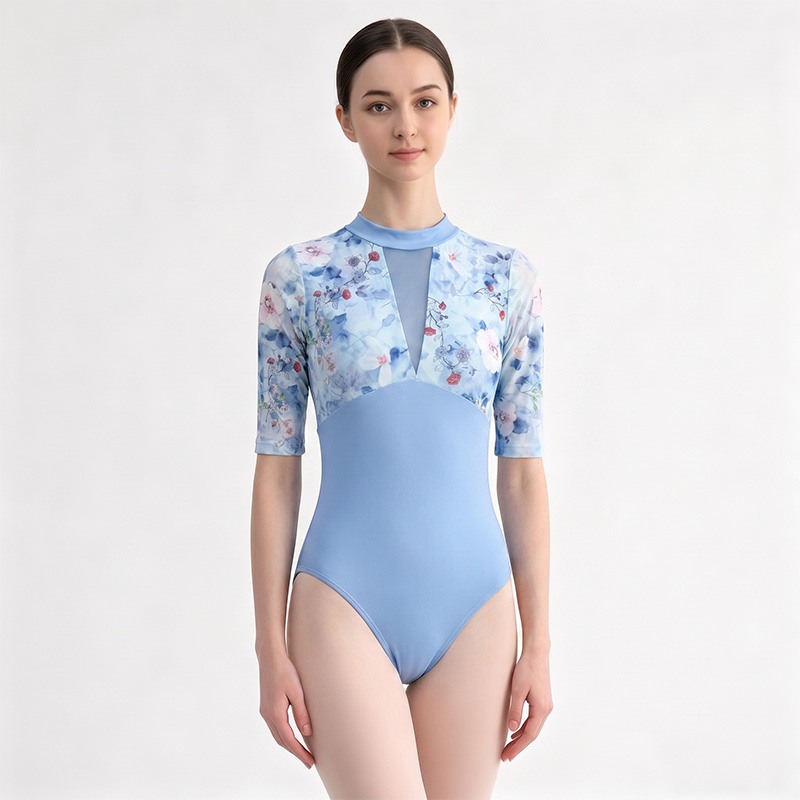
This guide to dance leotard focuses on how to present the product clearly in a shop or studio sales area. The product example is Jinwu’s High Neck Floral Ballet Leotard: a high-neck leotard featuring a floral mesh upper section. The practical outcome is a display plan that connects visible samples to accurate stock and information. Start by checking neck opening, upper-panel stretch and the method of putting the garment on and avoid selecting a high neckline for coverage without testing entry, comfort and movement.
Understand the High Neck Floral Ballet Leotard Reference
The High Neck Floral Ballet Leotard listing is the starting reference in Jinwu’s Adult Dancewear collection. Confirm neck opening circumference, upper-body panel height and fastening position where applicable for the selected version before treating dance leotard as an approved purchase.
A high-neck design needs a dressing check as well as a fit check. Ask how the wearer enters the garment and whether the upper panel uses an opening or fastening. Review that construction on the actual sample instead of inferring it from the front photograph. The neckline should return to its intended shape after dressing without requiring the wearer to pull excessively on a decorative mesh edge.
Check the upper panel while the dancer turns the head and raises the arms normally. Note any pressure around the neck, pulling at the shoulder or distortion in the floral area. A close visual outline does not require a tight feeling at the neck. If there is a problem, record the exact movement and panel involved so the revision can target neckline shape, panel height or stretch allowance.
Retail Presentation for Dance Leotard
Choose a display that shows the item in a recognisable and useful form. The customer should see the construction and understand which piece is being sold. Styled accessories can help communicate a theme, but they should not make the offer ambiguous. Keep model, colour and size information close enough that staff can retrieve the correct stock without guessing from appearance.
Review how the display affects the sample. Hanging, folding or attaching a decorative accessory may change how the product presents or put pressure on one component. Check the sample periodically and keep a separate approved reference for quality discussions. A heavily handled display piece should not become the only evidence of the original finish.
Plan the handover from display to purchase. Give staff a concise explanation of the important selection criteria and show where the size or use guidance is stored. If the customer needs a teacher or fitter’s input, make that clear at the appropriate point. Use sales and enquiry records to decide what information or variant is missing from the display.
Review Neck opening, upper-panel stretch and the method of putting the garment on
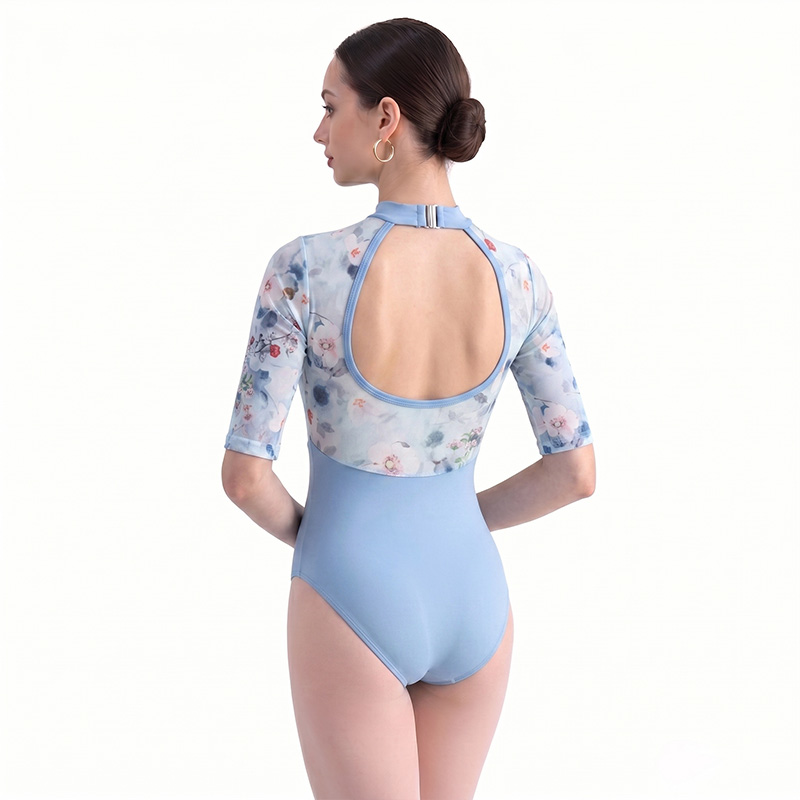
The high-neck floral look may combine an opaque lower body with a visually lighter upper section. Confirm where continuous coverage is required and where the mesh is intended to remain sheer. The word ‘high’ describes the outline, not the opacity of the material. Use a front and back panel map to avoid a buyer assuming that a raised neckline means a fully lined upper body.
If a closure is part of the selected version, inspect it from both sides. Check that it can be operated without catching the mesh and that its inside surface does not create a rough contact point. Confirm whether replacement parts are available for institutional use. Photograph the approved closure because a later substitution can alter both the dressing method and the finished appearance.
Keep the Product Details Consistent
A school or retailer should explain the distinctive neckline in its product description. Show the back and the entry detail so the buyer can judge suitability before purchase. This is particularly useful when the range serves wearers with different preferences for neck coverage. Offer an alternative neckline where practical instead of presenting the high-neck design as a universal fit solution.
For repeat orders, preserve a sample of the floral upper fabric and the finished neckline. Mesh suppliers, motifs or edge finishes can change the way the neck opening behaves. Review proposed substitutions before production, even if the colour name remains unchanged. A consistent purchase specification treats the upper panel as a functional part of the garment rather than as decoration alone.
Compare the order with the approved sample
The approved sample and the final purchase specification should agree before production begins. Check model, components, materials, colours, size range, labels and packing. If the quotation describes something different, resolve it in writing rather than assuming that the sample overrides the order automatically. The receiving team should use that same set of references to assess what has actually been delivered. For dance leotard, make this part of the written review before accepting the order.
Record the item reviewed, the reference used, the observations and the resulting decision. Photographs should show the location of a concern and include a scale where dimensions matter. State whether the review was informal or followed an agreed formal inspection method. An organised record helps a supplier investigate a specific issue and prevents an unresolved observation from disappearing when the project moves to another contact. When comparing dance leotard, connect this check to the chosen product reference.
Record body and garment measurements separately
A body chart and a finished-garment chart answer different questions. The body chart guides selection, while the garment chart helps production and inspection. State which one each number belongs to and use one measurement method throughout the project. On a leotard, torso girth deserves its own field because chest or height alone cannot describe the vertical path around the body. Keep the actual model reference with the chart instead of borrowing measurements from another style. This gives a buyer researching dance leotard a specific question to resolve with the supplier.
When a range includes a separate skirt or another coordinating piece, record how its size relates to the base garment. Check the complete combination after the leotard itself has been approved. The matching colour does not establish matching fit, and identical label numbers may use different measurement scales. A component pairing table helps the packing team issue the intended set and makes future single-piece replacements easier to manage. Keep this decision visible in the dance leotard enquiry so the final offer answers the same brief.
Plan replacement and replenishment separately
A replacement request may concern one damaged or missing unit, while a replenishment order addresses ordinary demand. Keep the reasons separate so a quality issue does not distort the sales-based reorder decision. Confirm which components or variants can be supplied again and how they will match the retained reference. Where supply is uncertain, communicate that before promising an exact replacement to the customer. For dance leotard, make this part of the written review before accepting the order.
State the destination market and ask the responsible supplier, importer or adviser to confirm the product information required there. Requirements can depend on product type and intended users. Keep that review separate from marketing language about general quality. A government information link can provide useful context, but it does not certify the selected product or replace a review of the actual materials, labels and intended use. When comparing dance leotard, connect this check to the chosen product reference.
Observe the garment during ordinary class movement
Review a garment with the intended wearer and teacher using movements that belong to the normal class routine. Watch the neckline, armholes, waist and lower-body position rather than asking whether the sample simply feels tight or loose. Record the movement that produces a problem and the location where it appears. This makes the feedback useful to the pattern maker and avoids a blanket size increase that introduces excess width elsewhere. This gives a buyer researching dance leotard a specific question to resolve with the supplier.
View light and dark fabrics in the conditions where the garment will be used and photographed. Stretch, lining and directional texture can all change the visible result. Ask the buyer to identify the coverage and appearance outcome that matters rather than relying on general words such as premium or opaque. Use the approved physical sample to resolve differences between photographs, and avoid promising a performance level that has not been evaluated. Keep this decision visible in the dance leotard enquiry so the final offer answers the same brief.
Compare the Evidence Before Approval
| Decision | Useful evidence | Avoid this shortcut |
|---|---|---|
| Entry | Dressing method tested on the sample | Approving only the front outline |
| Neck comfort | Ordinary head and arm movement checked | Equating a close outline with a tight neck |
| Coverage | Opaque and sheer areas mapped | Assuming high neck means fully lined |
| Retail Presentation | a display plan that connects visible samples to accurate stock and information | styling obscures product details or implies items are included when they are not |
A Worked Planning Example
Consider an illustrative dance leotard enquiry for 88 units in 3 variants. The buyer wants to present the product clearly in a shop or studio sales area and therefore requests a record of neck opening circumference, upper-body panel height and fastening position where applicable, plus a view of neck opening, upper-panel stretch and the method of putting the garment on. The required result is a display plan that connects visible samples to accurate stock and information. If styling obscures product details or implies items are included when they are not, that specific difference needs resolution before the affected approval. These figures are a planning example, not a customer case, quotation or minimum-order statement.
Use Category References Carefully
For general context for the garment category, see Wikipedia’s overview of leotards. Use the selected sample and product-specific evidence for the actual dance leotard decision. The reference explains category terminology and does not certify Jinwu’s products.
Prepare a Focused Enquiry
Send Jinwu the High Neck Floral Ballet Leotard reference, your destination and planned variant mix, with the request to present the product clearly in a shop or studio sales area. Discuss custom options through its OEM/ODM services or contact the team. Ask for current material options, quantities and timing for the actual dance leotard brief.
Questions About Dance Leotard
What should I confirm when researching dance leotard?
Start with neck opening, upper-panel stretch and the method of putting the garment on in the High Neck Floral Ballet Leotard sample. The purchase question here is how to present the product clearly in a shop or studio sales area.
Which measurements should the buyer record?
Record neck opening circumference, upper-body panel height and fastening position where applicable. Use the measurement method and current chart for the actual supplied model.
What record helps with retail presentation?
Prepare a display plan that connects visible samples to accurate stock and information and identify the exact approved sample revision.
Which shortcut should I avoid?
For this enquiry, avoid the situation where styling obscures product details or implies items are included when they are not. Resolve the specific difference before approval.
How should I enquire about dance leotard?
Send Jinwu the selected product reference, destination, quantity and variant mix. Ask how to present the product clearly in a shop or studio sales area for that scope.