
Ballet Dance Bag Selection: A Studio Buyer’s Sampling Guide
A ballet dance bag should fit the dancer’s actual class kit, keep shoes separate from clean clothing when needed, and remain comfortable to carry when loaded. For a studio or retailer ordering branded bags, approve these practical details before approving the logo. A spacious photograph cannot show whether a water bottle stays upright, a child can reach the closure, or a shoulder strap works over a winter coat.
This guide turns those questions into a sample brief for studio purchasing, retail assortment planning, and custom dance bags. It distinguishes published product specifications from features that still need to be checked on a physical sample.
Start with What Dancers Actually Pack
Choose the bag around a written packing list. For a regular ballet class, that list might include a leotard, tights, ballet slippers, a small towel, a water bottle, and a pouch for hair accessories. Pointe shoes, warm-up layers, multiple shoe types, or a change of clothing can change the required layout substantially. These are planning examples, not a universal kit list; the studio should define what its students need.
Ask several representative users to lay out their normal kit before choosing a sample. Record the bulkiest item and the item that needs quickest access. A bag that accommodates everything only after careful compression may work poorly during a rushed class change. Conversely, a large empty compartment can leave a small kit moving around and make smaller items difficult to find.
For retail buyers, explain the intended use clearly on the product page. “For a regular class kit” tells customers more than “perfect for every dancer.” Keep class bags, travel bags, and performance costume transport distinct unless a sample has been evaluated for each use.
What Size Ballet Dance Bag Is Suitable for Regular Classes?
The useful size is the smallest bag that holds the agreed kit without forcing the closure or making access awkward. External dimensions are a starting point, not proof of usable capacity. Curved ends, lining, pocket construction, and an internal shoe compartment can reduce the space available in the main section.
Jinwu’s Large Capacity Ballet Dance Bag lists dimensions of 49 × 21 × 25 cm and a weight of 0.4 kg. Its published description identifies Oxford fabric, multiple pockets, shoulder handles, and an adjustable detachable shoulder strap. Use those details to shortlist the style, then confirm the current sample’s internal layout and loaded handling. The dimensions should not be presented as a verified internal capacity in liters.
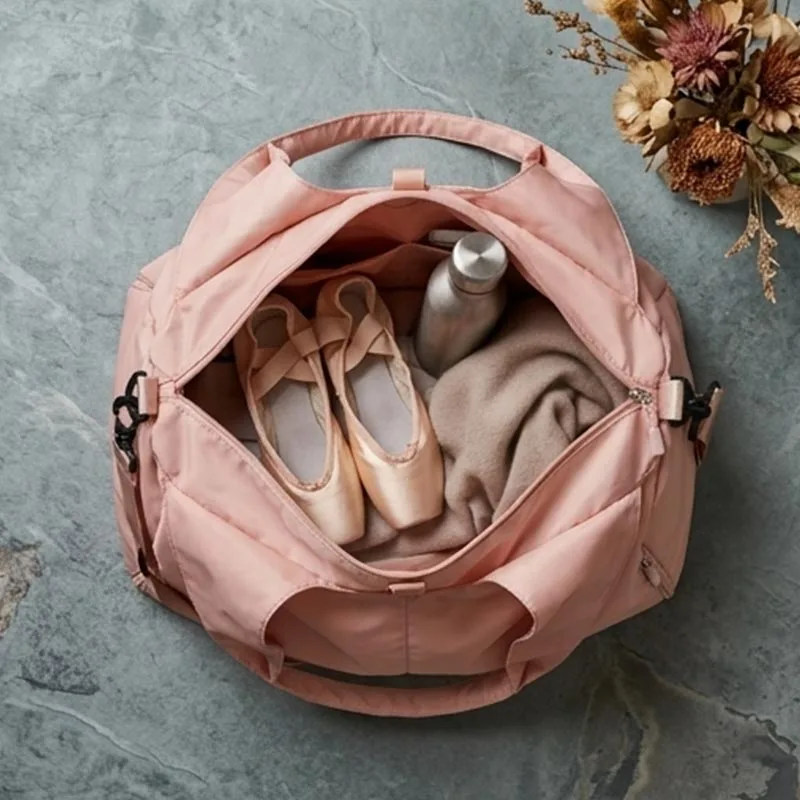
For a ballet bag wholesale inquiry, name the items the bag must accommodate rather than asking only for a “large” model. If the bag must fit into a studio cubby or locker, provide that opening’s measurements as a separate constraint. A bag can be large enough for the kit yet too wide for the storage space.
| Buyer situation | Prioritize | Sample check | Reason to reconsider |
|---|---|---|---|
| Short class with a compact kit | Easy access and manageable size | Pack the normal kit and retrieve shoes without emptying the bag | Small items disappear in an oversized compartment |
| Classes requiring several shoe types | Separation and identifiable storage | Load each pair in its intended section | The shoe section consumes needed clothing space |
| Children carrying their own bags | Reachable handles and simple closures | Check carrying height and opening with a representative user | The loaded bag drags or the closure is difficult to operate |
| Adult commuting between work and class | Loaded carrying comfort and protected personal items | Include the real daily kit, not only dance clothing | The strap slips or pockets become inaccessible when full |
| Studio-branded collection | Repeatable artwork placement and construction | Compare the finished decorated sample with the approved brief | Logo approval conceals unresolved functional changes |
Should the Bag Have a Separate Shoe Compartment?
A dance bag with a shoe compartment is useful when dancers regularly carry used shoes beside clean garments. However, the compartment must fit the relevant shoes without making the main section impractical. A removable shoe pouch may be a better choice when the kit changes between classes or the buyer wants flexible organization.
Inspect how a separate compartment is accessed. An exterior opening can make shoe retrieval convenient, but its position should not cause the rest of the bag to spill when opened. An internal pocket keeps the outside simpler, yet can be difficult to reach when the main section is full. Test both packing and unpacking rather than judging the empty interior alone.
Separation and ventilation answer different questions. A divider keeps items apart; it does not by itself establish that a compartment dries damp shoes. Do not describe a pocket as ventilated, odor resistant, or suitable for prolonged damp storage unless its construction and evidence support that wording. Shoe care instructions remain relevant even when shoes have their own compartment.
Small pockets also need defined jobs. A keys pocket should be reachable without disturbing garments, while a bottle pocket needs checking with the bottle size users actually carry. Avoid adding several pockets with no clear purpose: each can take space from the main kit.
How to Choose Ballet Bags for Children and Adults
For children, start with loaded handling and closure access. A bag advertised for a broad age range is not automatically comfortable for every child. Check that the child can lift it, carry it without dragging it, and reach the items needed at class. Have a parent or studio staff member supervise the trial and choose a sensible representative kit.
For ballet bags for adults, consider the full journey. A shoulder strap may be convenient when both hands are occupied, while handles can help with short moves inside a studio. Check strap adjustment over the clothing users typically wear. Evaluate whether the bag rests comfortably and whether hardware presses against the body when the kit is loaded.
Record observations rather than making unsupported ergonomic claims. “The strap remained in position during our specified sample trial” is a useful internal observation if a real trial took place. It should not become “prevents shoulder pain” in marketing. Where testing has not taken place, state the required trial in the purchasing brief.
Evaluate Fabric, Lining, Seams, and Zippers Together
A fabric name does not establish the performance of the finished bag. Ask for the actual fiber composition, construction, coating or finish if relevant, and care instructions for the proposed material. Oxford describes a fabric construction commonly used in bags; the word alone does not identify a fiber blend or demonstrate waterproof performance.
If protection from moisture matters, separate the requirement for the outer fabric from the requirement for the assembled bag. Water can enter through closures or seams even when the fabric itself resists it. Request evidence that matches the claim you intend to publish. Avoid replacing a narrow claim such as protection from light splashes with an unsupported promise of waterproof storage.
Color transfer is another useful check, particularly where a dark bag may rub against pale dance clothing. ISO 105-X12:2016 describes textile colorfastness testing for rubbing, including dry and wet conditions. A buyer can discuss an appropriate test and acceptance criterion with a laboratory or supplier. Mentioning this method does not mean that a Jinwu product has passed it.
Inspect seam alignment, exposed edges, strap attachment areas, and the lining around zipper paths. Open and close each zipper with the bag packed to its intended load. For a formal zipper strength specification, ASTM D2061-07(2021) covers several strength tests for zippers and components; the appropriate methods depend on the zipper and intended use. It is not a universal finished-bag certification.
Specify the Logo on the Actual Bag Panel
Approve branding on the chosen material and construction, not only on a digital mockup. Give the supplier the artwork file, intended dimensions, color reference, and the position measured from a stable seam or panel edge. Ask which decoration methods are suitable for that particular fabric and whether the requested area is accessible during production.
A large logo can cross a seam, become distorted when the bag is full, or disappear into folds when the bag is lightly packed. Check the decoration in both conditions. If embroidery or another process introduces a backing or attachment on the inside, inspect that area as well. Do not assume a process is appropriate solely because it worked on a different bag or garment.
Jinwu’s published bag listing offers logo customization, and the OEM and ODM services page explains its broader development offering. Confirm the specific bag, decoration method, color availability, and order conditions in writing. General customization information should not be treated as confirmation that every proposed structural alteration is available.
Approve One Complete Sample, with Clear Change Notes
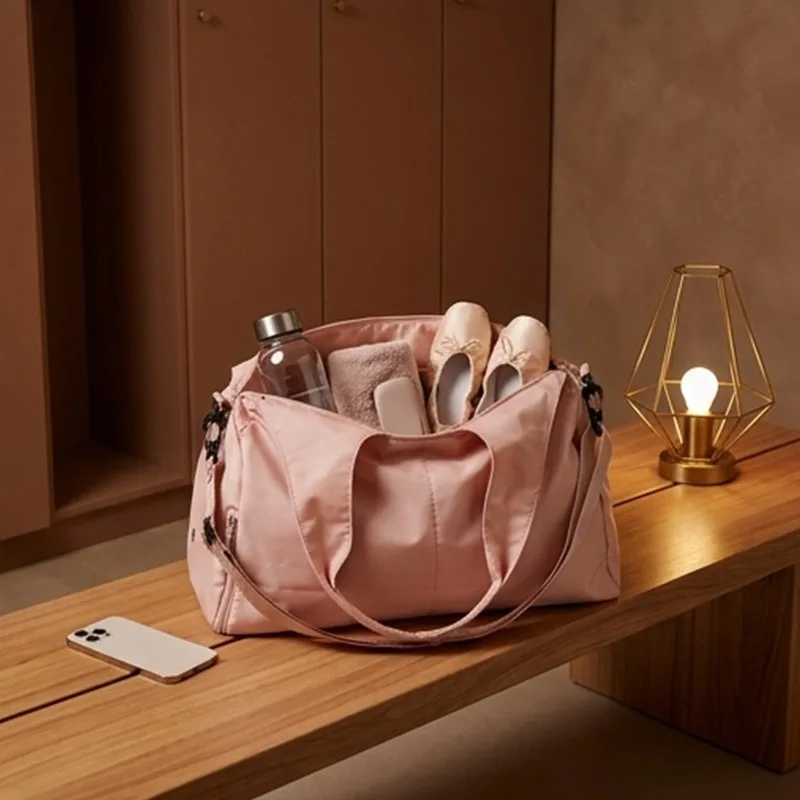
Review the sample in the sequence users will experience it: unpack it, inspect the exterior, load the kit, carry it, retrieve the items, and repack it. This sequence helps reveal problems that isolated product photos miss. Keep the proposed packaging available so that folding or compression effects can also be assessed.
Use specific feedback. “Increase access to the shoe section without reducing the main opening” identifies a functional problem. “Make it better” does not. If changing one feature affects another, request a revised complete sample rather than approving separate photographs of unrelated components.
Keep one dated approval record with the accepted sample identifier, dimensions, material reference, color, decoration, pocket layout, hardware, and packaging. Record unresolved items explicitly. A sample should not be marked fully approved while a replacement lining or revised strap is still awaiting review.
For repeat orders, compare the proposed materials and trims with that record. Similar appearance does not prove identical performance. Ask the supplier to identify substitutions before production, and decide whether the change needs a new sample or a targeted verification.
Prepare a Useful Wholesale Inquiry
A useful inquiry combines the intended user, packing list, preferred reference style, color split, branding requirements, quantity range, destination market, and required delivery window. Include any storage-space constraint and explain whether the bag is for studio distribution, retail sale, or a coordinated collection.
Distinguish stock bags, decorated stock styles, and structural development. These can require different approval steps and order conditions. Request a confirmed minimum order quantity for the exact option, plus the sampling sequence and production timing after approval. Do not assume conditions for a plain item also apply to a custom color or revised pocket layout.
If bags accompany a dancewear range, browse the ballet accessories collection to decide which items genuinely belong together. A coordinated collection should still give each accessory a useful role. Send the kit list and marked reference photos through Jinwu’s product inquiry page so the team can discuss a suitable existing bag and any requested adjustments.
Conclusion
A reliable ballet dance bag selection starts with the packed kit and ends with a documented finished sample. Choose capacity, separation, carrying options, materials, and branding as connected decisions. Confirm product-specific details before using them in an order or customer-facing description.
FAQ
Can external dimensions be converted directly into usable liters?
No. Multiplying outside dimensions gives only a geometric estimate. Curved construction, lining, and occupied pockets can change usable space. Ask how any stated capacity was measured and perform a packing trial.
Is a detachable strap always preferable?
It is useful when users switch carrying methods, but the fittings and adjustment range must suit the bag. A fixed design may be simpler when the intended use is consistent. Compare loaded samples before deciding.
Should a studio choose one bag size for every age group?
Only if representative users can handle the same bag comfortably with their required kits. Children and adults may need different carrying proportions even when their clothing occupies similar space.
Does a custom logo require a completely new bag design?
Not necessarily. A suitable existing style may accommodate decoration. Confirm the accessible panel, decoration method, and order conditions; changing the shape or compartment layout is a separate development request.
What photos should accompany a sample approval?
Include the exterior, interior, pocket openings, strap attachments, decoration placement, and packed configuration. Add measurement views and written notes so photographs support a defined specification rather than replace it.