Table of Contents
This guide to adult dancewear focuses on how to resolve sample feedback without losing the approved details. The product example is Jinwu’s Rhinestone Ballet Dress: a decorated ballet dress with a mesh skirt and embellished details. The practical outcome is a numbered revision sheet with photographs and a decision for each change. Start by checking embellishment placement, inside finish and the dress's back construction and avoid approving sparkle and colour before checking decoration security and comfort.
Understand the Rhinestone Ballet Dress Reference
The Rhinestone Ballet Dress listing is the starting reference in Jinwu’s Adult Dancewear collection. Confirm decorative placement coordinates, skirt length and torso girth for the selected version before treating adult dancewear as an approved purchase.
A rhinestone dress needs a decoration map. Mark the areas that carry embellishment, show where the pattern starts and ends, and keep a close photograph of the approved layout. Do not use the product name as a complete specification. The number, spacing and attachment method of decorative pieces need a direct discussion with the supplier if they matter to the purchase.
Review the inside surface behind decorated areas and the points where the skirt attaches. Check for roughness or pressure during ordinary movement, and examine whether any decoration has loosened during handling. Agree how the supplier will assess attachment security for the intended wearer and market. A visual sample review alone cannot establish a product-specific safety or durability claim.
Sample Revisions for Adult Dancewear
Review a sample against the brief rather than collecting unrelated impressions. Give every proposed change a number, show its location in a photograph, and describe the observed problem. Separate required corrections from optional design experiments. A supplier can respond more accurately to ‘the opening moves when the arms rise’ than to a general instruction to improve the fit.
Use one owner to consolidate feedback. A teacher, buyer and designer may all have useful observations, but several uncoordinated messages can create conflicting directions. Keep the accepted details visible on the revision sheet and ask the supplier to confirm which revision it is making. A material or construction change should be assessed for its effect on the rest of the product.
Compare the revised sample with both the original sample and the written change list. Confirm each required correction and recheck any adjacent detail it could affect. Do not approve a revision only because the most obvious issue has disappeared. Retain the signed-off revision reference and remove superseded versions from the active production brief while keeping them in the project history.
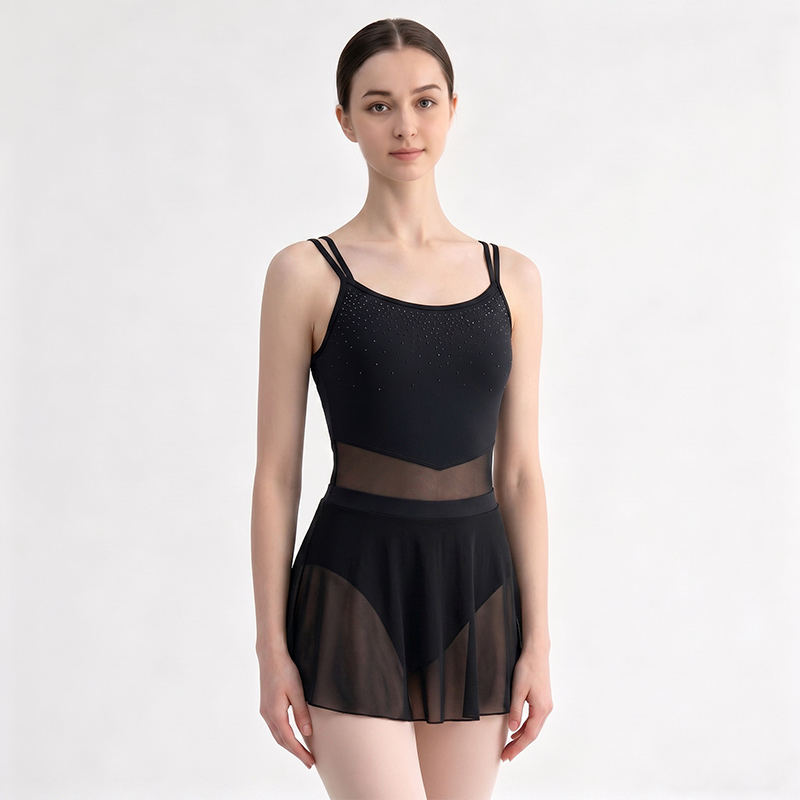
Review Embellishment placement, inside finish and the dress's back construction
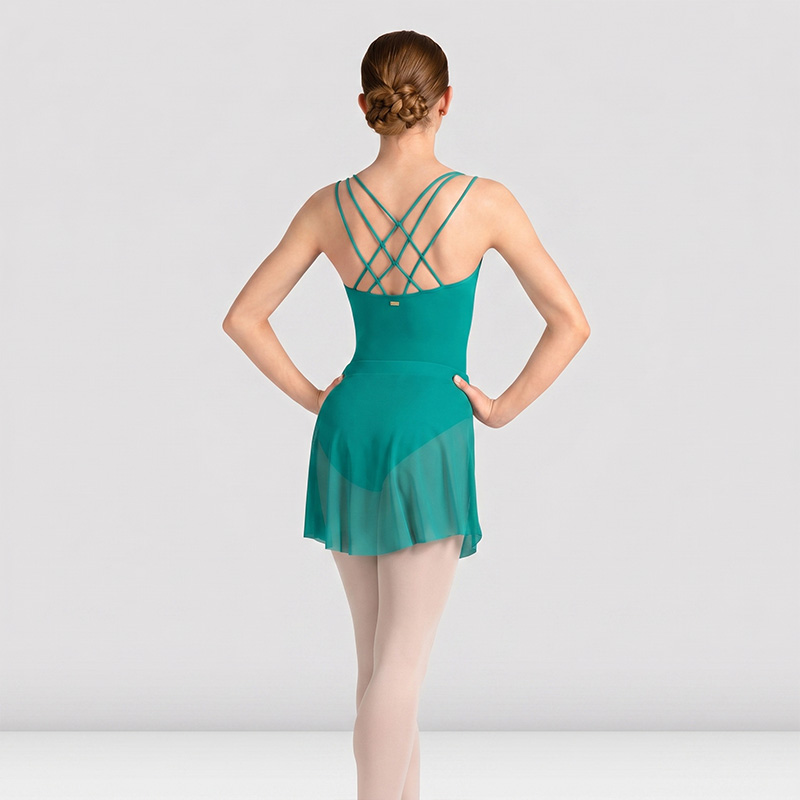
Inspect the back as carefully as the front. The product images show a distinct back design, and a school may have coverage requirements that the front view does not reveal. Confirm the intended lining and undergarment arrangement. An embellished dress should be selected for a defined class, performance or retail use rather than described as suitable for every ballet setting.
Packing should protect decoration from rubbing against other garments and against the pack itself. Open a trial packed sample and check the embellished surface and mesh skirt before agreeing the bulk packing method. Follow the garment’s approved care instructions and ask for a revised sample if the decoration or attachment process changes. Keep this evidence with the reference dress for future orders.
Check internal links between product and service choices
A buyer considering a stocked style may need a different next step from one developing a custom version. Keep those routes clear in your enquiry: identify the product reference first, then describe the requested material, colour, logo or construction changes. The supplier can explain whether the request fits a standard option or requires development. This makes the response more useful than an enquiry that asks only for the best price. When comparing adult dancewear, connect this check to the chosen product reference.
Ask which decisions belong to design development, sampling and bulk production. A first sample can reveal a construction problem without being a failed bulk order, but it still needs a clear revision path. Confirm sample fees, scope and the steps required for approval. Do not treat an early feasibility discussion as a promise that every custom option will be available at the original price or schedule. This gives a buyer researching adult dancewear a specific question to resolve with the supplier.
Define evidence for important claims
List the statements that matter to the customer, then identify what supports each one for the actual supplied product. Composition can come from a confirmed material specification, while a performance or certification statement may need applicable product-specific evidence. Do not extend a test report to different styles, colours or components without checking its scope. Where support is missing, use an accurate factual description instead of an attractive unsupported claim. Keep this decision visible in the adult dancewear enquiry so the final offer answers the same brief.
Sampling, approval, production, dispatch, transport and local distribution are separate stages. Confirm the assumptions for each one with the relevant party. A production estimate does not include every part of the delivery route, and a general website timeline is not a confirmed booking for a custom project. Review the consequences of late approvals before promising an unchanged customer deadline. For adult dancewear, make this part of the written review before accepting the order.
Record body and garment measurements separately
A body chart and a finished-garment chart answer different questions. The body chart guides selection, while the garment chart helps production and inspection. State which one each number belongs to and use one measurement method throughout the project. On a leotard, torso girth deserves its own field because chest or height alone cannot describe the vertical path around the body. Keep the actual model reference with the chart instead of borrowing measurements from another style. When comparing adult dancewear, connect this check to the chosen product reference.
Ask the teacher which elements are required for the intended class or examination and which are optional. Neckline, back coverage, skirt use and colour may all matter, but the rules need to come from the actual programme. A supplier's description cannot establish universal acceptance across schools. Record the agreed requirements before extending a uniform range, then present optional retail choices without suggesting that every student must buy them. This gives a buyer researching adult dancewear a specific question to resolve with the supplier.
Observe the garment during ordinary class movement
Review a garment with the intended wearer and teacher using movements that belong to the normal class routine. Watch the neckline, armholes, waist and lower-body position rather than asking whether the sample simply feels tight or loose. Record the movement that produces a problem and the location where it appears. This makes the feedback useful to the pattern maker and avoids a blanket size increase that introduces excess width elsewhere. Keep this decision visible in the adult dancewear enquiry so the final offer answers the same brief.
Lining can change coverage, feel and the way a garment stretches. Identify the lined areas on a front and back panel map and confirm the actual material reference. View the sample under ordinary studio lighting with the intended layers. Do not infer opacity from a dark catalogue background or assume that a decorative mesh area is lined. Any change to lining should be reviewed in the assembled garment before the buyer confirms production. For adult dancewear, make this part of the written review before accepting the order.
Compare the Evidence Before Approval
| Decision | Useful evidence | Avoid this shortcut |
|---|---|---|
| Decoration | Placement and attachment agreed | Approving sparkle from a distant photograph |
| Comfort | Inside surfaces and joins checked | Inspecting only the exterior |
| Packing | Embellishment protected in trial pack | Allowing decoration to rub during transit |
| Sample Revisions | a numbered revision sheet with photographs and a decision for each change | a correction fixes one detail while undoing a previously accepted feature |
A Worked Planning Example
Consider an illustrative adult dancewear enquiry for 28 units in 3 variants. The buyer wants to resolve sample feedback without losing the approved details and therefore requests a record of decorative placement coordinates, skirt length and torso girth, plus a view of embellishment placement, inside finish and the dress's back construction. The required result is a numbered revision sheet with photographs and a decision for each change. If a correction fixes one detail while undoing a previously accepted feature, that specific difference needs resolution before the affected approval. These figures are a planning example, not a customer case, quotation or minimum-order statement.
Use Category References Carefully
For general context for the garment category, see Wikipedia’s overview of leotards. Use the selected sample and product-specific evidence for the actual adult dancewear decision. The reference explains category terminology and does not certify Jinwu’s products.
Prepare a Focused Enquiry
Send Jinwu the Rhinestone Ballet Dress reference, your destination and planned variant mix, with the request to resolve sample feedback without losing the approved details. Discuss custom options through its OEM/ODM services or contact the team. Ask for current material options, quantities and timing for the actual adult dancewear brief.
Questions About Adult Dancewear
What should I confirm when researching adult dancewear?
Start with embellishment placement, inside finish and the dress’s back construction in the Rhinestone Ballet Dress sample. The purchase question here is how to resolve sample feedback without losing the approved details.
Which measurements should the buyer record?
Record decorative placement coordinates, skirt length and torso girth. Use the measurement method and current chart for the actual supplied model.
What record helps with sample revisions?
Prepare a numbered revision sheet with photographs and a decision for each change and identify the exact approved sample revision.
Which shortcut should I avoid?
For this enquiry, avoid the situation where a correction fixes one detail while undoing a previously accepted feature. Resolve the specific difference before approval.
How should I enquire about adult dancewear?
Send Jinwu the selected product reference, destination, quantity and variant mix. Ask how to resolve sample feedback without losing the approved details for that scope.