बच्चों का लियोटार्ड साइज़ चार्ट: एक स्कूल ऑर्डरिंग गाइड
A children’s leotard size chart is useful only when it identifies the exact style, defines its measurements, and distinguishes body measurements from garment dimensions. For a school order, measure the children, compare every relevant dimension with the supplier’s current chart, and resolve uncertain fits with samples before finalizing the size breakdown. Age alone is not a dependable ordering method.
This guide explains how a studio coordinator or dancewear buyer can turn a chart into a practical fitting process. It does not supply invented size ranges for Jinwu products. Request the current chart for the selected style so the order reflects the actual pattern and fabric.
Confirm What the Children’s Leotard Size Chart Describes
Start by checking the style name or code, units, chart date, and intended wearer group. A chart for a different leotard may not apply even when both products use the same size labels. Neckline shape, straps, lining, sleeve construction, and fabric can affect how the finished garment fits.
Ask whether each column describes a body measurement, a relaxed garment measurement, or an intended fit range. These are different types of information. A stretch garment may be smaller than the body when laid flat; that does not by itself show that it is incorrectly sized. Equally, a garment’s maximum stretched dimension is not a comfortable body-size recommendation.
Clarify the meaning of labels such as S, M, numbered sizes, or height-based codes rather than converting them by appearance. A number that resembles a child’s height is not proof of the supplier’s sizing convention. Confirm the units and measurement method before distributing the chart to parents.
Collect Measurements Consistently
Use the supplier’s instructions for the selected style. Where the chart asks for chest, waist, hips, height, and girth, collect all of those measurements rather than choosing only the easiest one. Use the same units throughout the school’s worksheet, and record the date so older measurements are not mistaken for a current fitting.
Have a parent, guardian, or appropriate staff member assist in a private and respectful setting. The child should stand naturally. Avoid pulling a tape tighter to reach a preferred size or adding unrecorded allowance. If two readings differ noticeably, check the tape position and repeat the measurement before deciding.
For clothing development, आईएसओ 8559-1:2017 provides anthropometric definitions for body measurements. Its role is to support consistent measurement descriptions; it does not prescribe Jinwu’s leotard size ranges or guarantee fit. A supplier’s style-specific instructions and a fitting sample remain necessary.
| Chart information | Question to resolve | Useful buyer record |
|---|---|---|
| Chest, waist, and hip values | Are these body circumferences or flat garment widths? | Measurement definition and units beside every column |
| Girth | Which complete tape path does the supplier require? | Supplier diagram plus measured result |
| धड़क की लंबाई | What are the start and end points? | Method recorded separately from girth |
| Height or age reference | Is it a guide or a deciding measurement? | Supporting information without overriding actual fit |
| Size code | Does it belong to this exact style and chart version? | Style code, chart date, and selected size together |
| Between-size advice | Which dimension needs a sample fitting? | Reason for the decision and sample outcome |
Do Not Confuse Leotard Girth with Torso Length
Leotard girth measurement commonly refers to a continuous loop over a shoulder, down the front, between the legs, and back to the starting point. A leotard torso measurement may instead describe a particular length between defined points. Because suppliers can use different labels, request their diagram rather than assuming that the words mean the same thing.
This distinction matters when a child’s width measurements appear to match one size but the leotard pulls vertically. Sizing by chest alone can miss the length needed through the body. However, choosing a much larger garment solely for added length may create loose areas elsewhere. The correct response is to compare the complete chart and inspect an appropriate sample.
Do not attempt to calculate a missing girth value from height or multiply a flat torso length to create a body measurement. Those shortcuts hide assumptions about the pattern and stretch. If the chart omits information needed to distinguish two sizes, ask the supplier for guidance tied to the child’s measurements and the exact style.
What If Measurements Fall into Different Sizes?
Different measurements can point to different rows in a chart. Treat that as a fitting question, not an arithmetic problem. Averaging size labels or automatically choosing the largest indicated size can produce a garment that still does not fit well.
Identify the likely conflict. If the body length appears limiting while the chest and hips fall into a smaller range, compare adjacent samples for vertical tension and excess width. If the width is limiting while length is adequate, check whether a larger sample creates an unstable neckline or loose seat. Ask whether another existing style offers more suitable proportions before assuming a custom pattern is necessary.
These are conditional fitting decisions, not a universal instruction to size up or down. Keep the supplier’s advice with the sample result. A style that fits one child between sizes should not become a rule applied to all children with the same age or height.
Growth planning also needs care. Extra room should not make the garment slip, gape, or interfere with movement today. If the fitting date is well before the first class or performance, schedule a measurement recheck rather than adding an arbitrary amount to every measurement.
Check Leotard Fit During Normal Class Movement
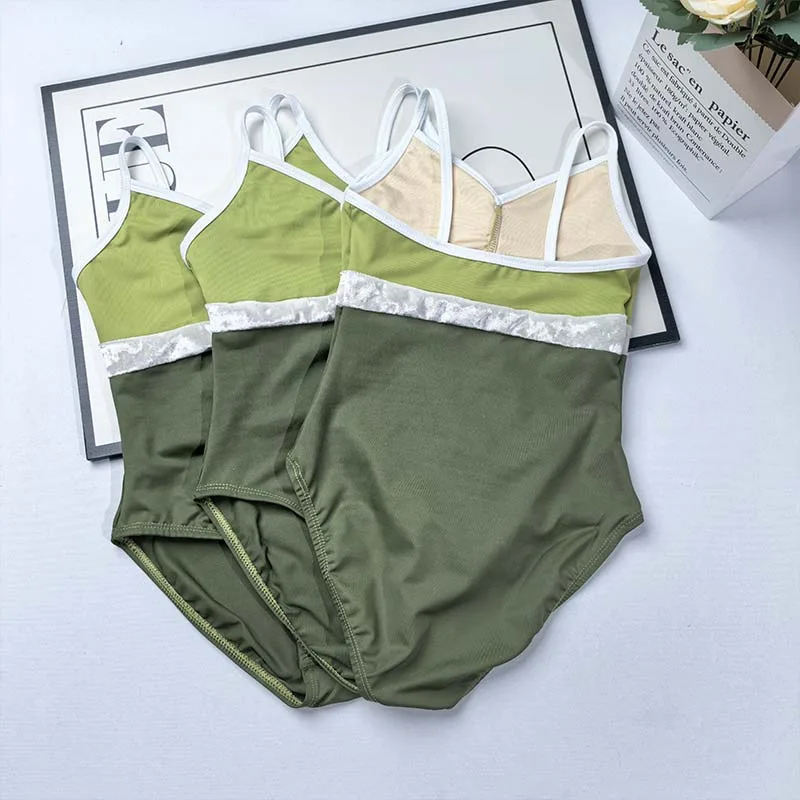
A useful fitting includes more than standing in front of a mirror. Under the guidance of the studio, ask the child to perform a few familiar, comfortable movements appropriate to the class. The aim is to observe the garment, not to test the child’s flexibility or require an unfamiliar exercise.
Watch the shoulder and neckline area as the arms move. Check whether the leotard stays in place without persistent pulling, gaping, or the need for repeated adjustment. Look at the waist, seat, and leg openings as the child moves and returns to standing. Ask the child where the garment feels tight, loose, scratchy, or distracting.
Separate size problems from construction or material problems. A scratchy seam may remain uncomfortable in a larger size. A low neckline may still have insufficient coverage when the rest of the garment fits. Changing size cannot reliably correct every design issue, so record the location and nature of the problem.
Include the intended tights or other permitted base layers in the fitting where relevant. Changing the layer combination between sample approval and use can alter comfort and the appearance of coverage. A buyer should evaluate the outfit in the conditions in which the school expects students to wear it.
Fit the Leotard and Skirt as Separate Components
Jinwu's लड़कियों के बैले यूनिफॉर्म सेट is described as a sleeveless leotard with a matching skirt. That coordinated format makes it a relevant reference for school purchasing, but the buyer still needs to verify the size relationship between the two components.
Ask whether the skirt is attached or separate on the version being ordered, how its waist is constructed, and whether the same size code applies to both pieces. The published product description should not be interpreted as confirmation that every skirt option is interchangeable or removable. Confirm the current construction with the supplier.
During fitting, check where the skirt sits and how it moves. A skirt that slides or bunches can change the apparent fit of the leotard underneath. Conversely, a leotard that fits correctly does not establish that the skirt’s waistband or length is appropriate for the class dress requirements.
Compare relevant styles in the kids dancewear collection when the preferred set does not suit the group’s needs. Choose based on the required silhouette and fitting evidence, not simply on a matching color name.
Turn Fittings into a Reliable School Size Breakdown
Build the order from confirmed selections rather than an even split across sizes. Keep an individual fitting record within the school’s normal privacy process, then send the supplier the aggregate quantities needed for each style, color, and size. Personal names are usually unnecessary for a standard bulk size breakdown.
Use separate columns for measured recommendation, tried sample, final choice, and any unresolved issue. This prevents a preliminary estimate from becoming a final purchase instruction. If a family changes a selection after fitting, record the change clearly so the order does not contain two competing versions.
Check totals in both directions: the sum by size should match the sum by class or group. Count complete sets consistently. One leotard and one skirt ordered together should not accidentally become two uniforms in a summary. Where components can be ordered separately, give each component its own quantity field.
Any reserve stock should follow the school’s actual enrollment and exchange experience. Without that evidence, do not describe a particular reserve percentage as optimal. Agree a practical review point and confirm reorder availability for the selected style with the supplier.
Give Parents Instructions That Resolve Common Errors
Distribute one current chart with the exact style name and a short explanation of the required measurements. Include the unit system and the contact for uncertain results. If the school has already approved a fitting sample, explain how families can access that fitting process rather than asking them to guess from age labels.
Keep the wording neutral. A child needing a different size does not indicate a problem with the child. The task is to match a manufactured garment to the wearer. Avoid language that encourages families to choose a smaller label for appearance or to ignore discomfort because a uniform is intended to be close fitting.
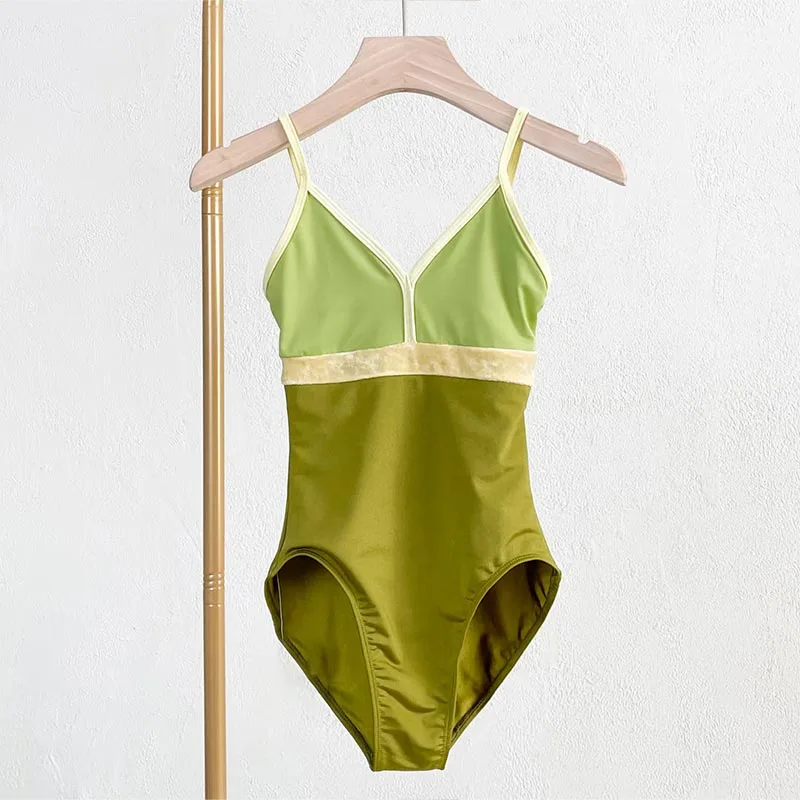
Explain which items are included and which are separate. Families should know whether the order covers a leotard, skirt, tights, or shoes. A leotard chart cannot determine shoe size, and an outfit image should not imply that every pictured accessory is included.
Keep the Chart, Sample, and Reorder Specification Together
Save the approved chart version alongside the style reference, sample size, fit notes, and material information. Record changes to lining, straps, or fabric because a repeat order with altered construction may need another fitting check even when the size labels stay unchanged.
Review recurring feedback after the uniforms are used. Several reports of vertical pulling in the same style may justify checking body length and pattern proportions; isolated problems may need individual fitting review. Treat the pattern in the feedback as a question to investigate, not proof of a manufacturing cause.
For a new school order, send Jinwu the selected uniform reference and aggregate size requirements. Ask for the current style-specific chart and sampling options, and flag any proportion or component-fit issue that needs clarification before approval.
निष्कर्ष
A children’s leotard size chart should support a measured fitting process. Confirm definitions, resolve mixed results with samples, check movement, and keep the leotard and skirt decisions explicit. Accurate records help the school place a clear initial order and make better-informed reorders.
अक्सर पूछे जाने वाले प्रश्न
Can a child’s everyday clothing size replace a leotard measurement?
No. Everyday clothing may use a different fit and sizing system. Use the selected leotard’s chart and fitting guidance rather than transferring a label directly.
Should measurements be recorded in centimeters or inches?
Use the units requested by the supplier and label every value. If conversion is necessary, retain the original measurement and avoid repeated rounding between systems.
Can one chart cover sleeveless and long-sleeve styles?
Only if the supplier confirms that the chart applies to both. Sleeve and armhole construction can introduce additional fit questions even when body measurements appear similar.
What if the supplier provides only a photograph of a chart?
Check that the image is readable and complete, including units and measurement definitions. Request a clearer or text-based version if any value or heading is ambiguous.
Does passing a sample fitting guarantee the whole order will fit?
No. A fitting validates the tested sample and wearer combination. The bulk order must still match the agreed specification, and individual wearers may require their own fit checks.