Girls’ Ballet Dress: 8 Easy Checks for a Better Class Fit
The right girls’ ballet dress for weekly class is the one the school allows and the child can comfortably move in. Start with the dress code, then consider the skirt, the way the garment goes on, and the care it needs between lessons. A pretty performance outfit is not automatically a useful class uniform.
That sounds straightforward until a product listing calls three quite different garments a “ballet dress.” One may be a leotard with a light attached skirt, another a two-piece set, and a third a fuller tutu costume. Before comparing colors, establish what is actually included and how the teacher expects it to be worn.
1. Check the School Rules Before Choosing a Girls’ Ballet Dress
Ask for the requirements for the child’s actual class, rather than a general description of what ballet students wear. A school may specify a color, a particular style, a skirt rule, or different clothing for a trial lesson. Those details can change between levels.
Boston Ballet School’s published dress code, for example, separates its requirements by training program and level. That is a useful reminder to check the relevant class instructions; it is not a dress code that applies to every school, nor an approval of any Jinwu garment.
If the wording says “leotard and skirt,” find out whether an attached skirt is acceptable. If it says “pink,” check whether any pink will do or whether there is an approved shade and style. A short email with the product link is more useful than arriving at class with a guess.
For a first or trial lesson, ask what the child may wear before buying the full uniform. Once the school’s requirements are clear, keep that information with the order. It prevents a well-meaning relative or a later replacement purchase from introducing a different style by mistake.
2. Check What the Seller Means by a Ballet Dress
Look beyond the title and read the construction details. A photograph of a child wearing several coordinated pieces does not establish that all those pieces are supplied together. It also may not reveal whether the skirt is attached.
Jinwu مجموعة زي الباليه للبنات is described as a leotard with a matching skirt. Confirm the skirt attachment and the supplied components for the selected option. The فستان دانتيل توتو presents a different visual direction, with lace detailing and a fuller tutu skirt. Neither product name replaces the school’s decision about appropriate classwear.
| Listing description | Question to ask before ordering | Why it matters for class |
|---|---|---|
| Skirted leotard or ballet dress | Is the skirt attached, and is that construction approved? | An attached skirt cannot simply be left in the changing room |
| Leotard and skirt set | Are both pieces included, and can they be worn separately? | The teacher may ask for different combinations during the lesson |
| Tutu dress | How full is the skirt, and is it intended for this class? | A performance-style silhouette may not match the lesson requirements |
| Complete ballet outfit | Which garments and accessories are actually supplied? | Shoes, tights, and pictured hair accessories may be separate |
When comparing two girls’ ballet dress options, write their component lists side by side. A matching skirt shown in both photographs may be detachable in one outfit and sewn into the waist of the other. Ask for a close view of that connection if the description leaves it unclear. This small check can prevent an unsuitable substitution later.
Keep an order confirmation that names the components. For a group order, avoid shorthand such as “the pink outfit” when the supplier offers more than one combination. The style reference and component list should travel together.
3. Decide Whether an Attached Skirt Suits the Class
An attached skirt keeps the outfit together. There is one less loose piece to identify or put back into the bag, which can be useful when the school permits a skirt throughout the lesson. The tradeoff is that the child cannot remove it while keeping the same leotard on.
A separate skirt gives the teacher and child more options. It can stay off for part of the class or be left at home when it is not required. That benefit depends on the child being able to manage the waistband or fastening and on the skirt staying comfortably in place.
Fullness deserves its own check. A soft, lightly draped skirt and a ruffled tutu do not occupy the same space around the hips. Ask the teacher which is appropriate for the exercises and group activities in that class. Do not assume that a garment is suitable for weekly training simply because a listing uses the word “ballet.”
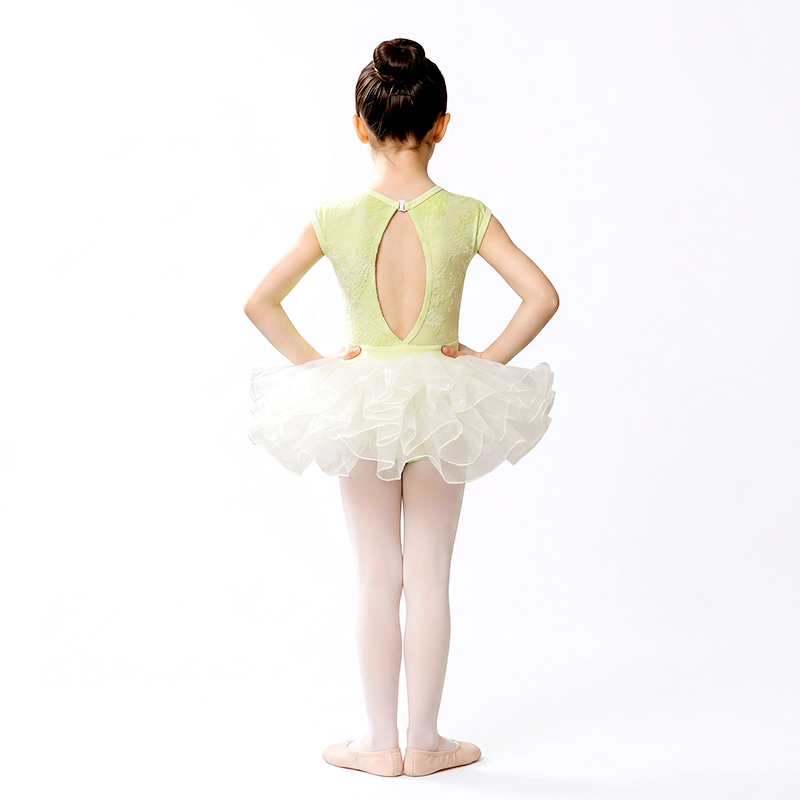
If the family is choosing one garment for both classes and a presentation, get agreement on both uses. A costume decision made for a particular performance should not silently become the uniform for the rest of the term.
4. Try Getting Changed, Then Check Movement
A girls’ ballet dress can look lovely and still be awkward to put on. During a fitting, ask the child to try the normal sequence: getting into the garment, arranging the straps or sleeves, and putting on the permitted layers. Notice where help is needed.
This matters particularly when children change at the studio. A fastening high at the back may be manageable with a parent at home but inconvenient when the child needs assistance during a lesson. Ask how changing and toilet breaks are handled, then choose a construction that fits that routine.
Once dressed, let the child make a few familiar movements. The garment should not demand repeated attention. A skirt that twists, an edge that scratches, or a neckline the child keeps rearranging deserves another look before the uniform is approved.
Use the children’s leotard size chart guide for measurement questions. If the leotard keeps moving upward, the separate guide to a ballet leotard riding up helps distinguish length and cut issues. The skirt should never be the reason to overlook an uncomfortable base garment.
5. Check the Inside of the Dress for Comfort
Turn the girls’ ballet dress inside out and feel the places that will touch the child. Look at armhole edges, seams near the waist, the underside of decorative panels, and any fastening. An attractive outside finish tells you little about how these areas feel against the skin.
For lace or mesh, check where the material begins and ends. Is there a seam under the arm? Does a decorative panel meet the neckline? Ask the child about those specific areas during the fitting. One child’s comfortable fabric can be another child’s distraction, so avoid choosing from touch alone when a wear check is possible.
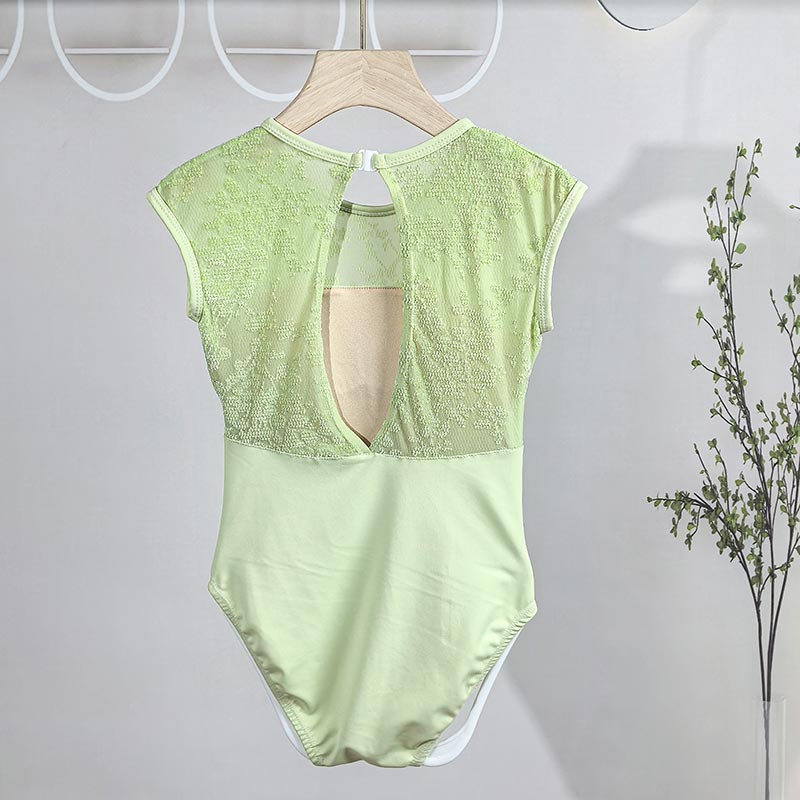
Request a back view of the girls’ ballet dress, even when the front looks simple. It can reveal a closure, opening, or seam that is absent from the front photograph. For the pictured lace style, assess the back fastening as part of getting changed; do not infer ease of use merely from the overall appearance.
Keep the review proportionate. You are looking for a comfortable everyday garment, not trying to turn every decorative detail into a problem. If a child likes the dress, the school approves it, and the fitting is comfortable, an elaborate list of hypothetical objections adds little.
6. Plan Care Between Lessons
Read the supplied care instructions before deciding how a girls’ ballet dress will fit into family life. Check whether the complete garment can be cleaned as one item and whether any supplied component needs different handling. An attached skirt and a decorated bodice have to be considered together.
Allow for drying as well as washing. The useful question is whether the approved care routine can be completed before the next class. Avoid assuming that a style with the same fiber description as another garment will need identical care; construction and decoration can differ.
For a school range, review the proposed uniform after its intended laundering routine before recommending it widely. Look at the skirt attachment, appearance, and comfort again. A care check on the plain leotard alone does not answer how a skirted or decorated version will behave.
Make identification easy without adding an uncomfortable label in a high-contact area. Ask the supplier where a name can be marked or attached according to the garment’s instructions. For separate pieces, remember that the skirt needs identifying as well as the leotard.
7. Let the Child Choose Within the Dress Code
When a school allows several girls’ ballet dress designs, a small shortlist works better than an unlimited search. Set aside options that do not meet the rules, then let the child compare the remaining colors or permitted details. Their preference matters because they will wear the garment every week.
Ask concrete questions: Can you raise your arms comfortably? Does anything feel scratchy? Can you manage the fastening? These are easier to answer than “Does it fit?” They also keep the conversation focused on the clothing rather than the child’s shape or size label.
If there is only one required uniform, ask the school how it handles individual fitting needs. Buying a larger label without checking the result may leave the child with slipping straps or extra fabric. The aim is a workable uniform, not conformity to an arbitrary size expectation.
8. Give Families a Clear Uniform Recommendation
A useful girls’ ballet dress recommendation gives families the approved style reference, color, required components, sizing route, and contact for questions. Separate what is compulsory from what is optional. If a skirt is allowed only for certain lessons, say so beside the product information.
Review the proposed dress with the teaching staff before publishing that notice. Teachers can judge its suitability for the class, while fitting feedback helps identify whether an alternative needs to be available. A catalog description cannot make either decision for the school.
When discussing a range with Jinwu, send the class dress requirements and the style you are considering. Ask the team to confirm the components, attachment details, current size guidance, and sample options. This keeps the inquiry tied to a real classroom need.
Before placing a group order, resolve exceptions in writing. If a child needs a different fastening or cannot find a comfortable fit in the approved style, identify who can agree an alternative. Families should not have to choose between following the notice and sending a child to class in clothing that does not work.
A simple fitting record can name the style, size tried, required adjustment and decision. For example, “skirt approved; neckline comfortable; child needs help with the back closure” is more useful than a single tick beside “fits.” Treat this as an example of the information to collect, not a report from a Jinwu fitting session.
ختام
A girls’ ballet dress earns its place in a weekly uniform by being appropriate, comfortable, and manageable. Check the school rules first, resolve what the outfit includes, and let the child try the everyday routine. The best-looking option is useful only when those basics work.
أسئلة وأجوبة
Does a girl need a tutu for her first ballet class?
Only if the school asks for one. Confirm the trial-lesson or beginner requirements before choosing a tutu-style outfit.
Can a girls’ ballet dress replace a leotard and separate skirt?
It may, if the teacher accepts an attached skirt and the garment meets the rest of the dress code. The two constructions are not automatically interchangeable.
Are tights and shoes included in a ballet dress set?
Not necessarily. Read the component list for the selected option and ask the seller to clarify anything shown in photographs but not named in the order.
Is a dress with a back fastening a poor choice for children?
Not automatically. It depends on whether the child can manage it and whether help is available when changing. Test the actual fastening as part of the fitting.
Can a child keep the same dress when moving to the next class level?
Check the new level’s rules and the current fit. A change in color or style requirements can make a comfortable existing garment unsuitable as the next uniform.