
Ballet Leotard and Tutu: Making Two Separate Pieces Work Together
A ballet leotard and tutu need to fit together as well as they fit separately. The leotard should stay comfortable beneath the skirt, while the tutu should sit at the intended waist position without rolling, rotating or pulling the outfit out of place. Matching the color and size label is only the beginning.
For a school preparing a recital or a retailer putting together an outfit, the useful question is whether those exact two garments work on the same dancer. A skirt that looks right on a hanger may cover an important seam, press against the leotard’s trim or move differently once worn over tights.
First, establish what the two pieces include
A separate tutu is not necessarily just a skirt on an elastic band. Depending on its construction, the garment may include a brief or other fitted lower section. That changes how it is worn over a leotard. Ask for front, back and inside views before deciding that two pieces are compatible. The name alone does not describe every layer.
Also distinguish a tutu from a lightweight ballet skirt. Jinwu’s طقم يوتار تانك باليه is described as a tank leotard with a matching pull-on skirt. It is a useful example of a coordinated two-piece outfit, but the product description does not identify that skirt as a structured tutu. Its listed leotard fabric is 75% nylon and 25% spandex; the buyer should confirm the separate skirt’s composition.
By contrast, the فستان دانتيل توتو combines a fitted upper section with a layered skirt. That is an alternative construction, not evidence that the same skirt is available separately. If a detachable tutu is essential to the brief, confirm the supplier’s actual offering before selecting the base leotard.

Fit the leotard before adding the tutu
Begin with the leotard and the tights intended for the performance. Check the shoulders, neckline, torso length and leg openings without the skirt concealing them. A tutu waistband can hold loose fabric against the body and make an unsuitable leotard appear acceptable in a standing photograph.
Have the dancer perform a few teacher-approved movements in the leotard alone. Note whether the neckline shifts, the straps slip or the dancer repeatedly adjusts the leg openings. If those problems occur before the tutu is added, address the base garment first. Tightening a skirt over it does not establish a good fit.
Then add the skirt and compare the result. New bunching at the waist may come from the interaction between garments rather than the leotard’s size. This sequence makes a fitting conversation more precise: the buyer can describe what changed when the second piece went on.
For a children’s group, record each garment’s size independently. A dancer may require a different label in the skirt than in the leotard. Use the supplier’s measurement method and chart for each item; do not force the pair into one size simply because a retail bundle is easier to label that way.
Agree on where the tutu should sit
Ask the teacher or costume designer to identify the intended waist position on the dancer. Then establish whether the skirt has been designed to sit there. A waistband that settles lower than intended changes the visible length of the bodice and the position from which the skirt projects or falls.
Measure at the position specified by the skirt supplier and record the unit. Keep body measurements separate from the garment’s relaxed waistband measurement. Those figures describe different things; neither can be substituted for the other without knowing how the garment is intended to fit.
ايزو 8559-1:2017 provides definitions for body measurements used in clothing. It does not provide one universal tutu size chart. For an order, the practical requirement is that the buyer and supplier identify the same measurement points and use the same method.
Ballet skirt length should also be assessed from the agreed wearing position. Moving a skirt up or down to achieve a preferred hem position may place its waistband somewhere it was not designed to fit. If the silhouette needs changing, discuss the garment rather than relying on the dancer to keep adjusting it.
Check the waistband against the actual leotard
A comfortable waistband should hold the skirt in its intended position through the required movements. It should not need to be excessively tight to compensate for a poor pairing. Compare the waistband’s inner surface, edge finish and stretch with the fabric it will contact.
Look especially at decoration and seams near the waist. Raised trim, a gathered section or a bulky joining seam may sit directly under the band. Move the skirt only within its intended wearing position when checking this. If the band and trim compete for the same space, a different leotard cut or skirt design may be the clearer solution.
| What happens in the sample fitting | ما يجب التحقيق فيه | What to ask the supplier |
|---|---|---|
| The skirt settles below the intended waist | Skirt size, band recovery and intended wearing position | Which body measurement and waistband construction define this fit? |
| The band rolls over | Band construction, fit and contact with seams beneath it | Can the pairing be assessed with the exact leotard supplied? |
| Leotard fabric bunches above the band | Base leotard fit and how the skirt grips its surface | Does the same bunching occur without the skirt? |
| A lower layer creates pressure or a visible ridge | Whether the tutu includes a brief or fitted understructure | What layers are included, and how is this garment intended to be worn? |
| The skirt rotates during the phrase | Fit, weight distribution and closure position | Which construction change or alternative size should be sampled? |
These are investigation points, not diagnoses from a photograph. Several factors can produce the same visible problem. Keep a short fitting note and a clear view of the affected area so the supplier can respond to the actual garment combination.
Watch the ballet leotard and tutu through a dance phrase
A standing fitting establishes the starting position. It cannot show whether the skirt returns to that position after movement. Use a short phrase selected by the teacher that reflects the intended dance, with appropriate supervision and enough clear space.
Watch from the front, side and back. Check whether the waistband remains level, whether the leotard gathers beneath it and whether the dancer reaches for the costume between movements. The dancer’s feedback matters: an outfit may look settled while a seam or waistband feels distracting.
Include arm positions and transitions that bring the hands close to the skirt. If the choreography includes partnered work, the teacher should assess the complete costume in that context. Do not assume that a skirt approved for a solo will create the same space or contact conditions in a duet.
Photograph the starting and finishing positions under comparable conditions. Record the exact sizes, tights and any other approved layers used. If the second fitting uses a different base garment, it is a new pairing rather than proof that the first combination was corrected.
Coordinate the visible details, not just the color names
A shared color name does not guarantee a visual match between a dense leotard fabric and open layers of net. Compare physical samples together under the lighting relevant to the performance. Decide whether the aim is a close match, a deliberate tonal difference or a clear contrast.
View the outfit at the distance from which an audience will see it as well as close up. A waistband that reads as a distinct stripe may be intentional, or it may interrupt the intended bodice line. A small neckline detail may become much less noticeable beside a full skirt. These are design decisions to settle with the person responsible for the costume.
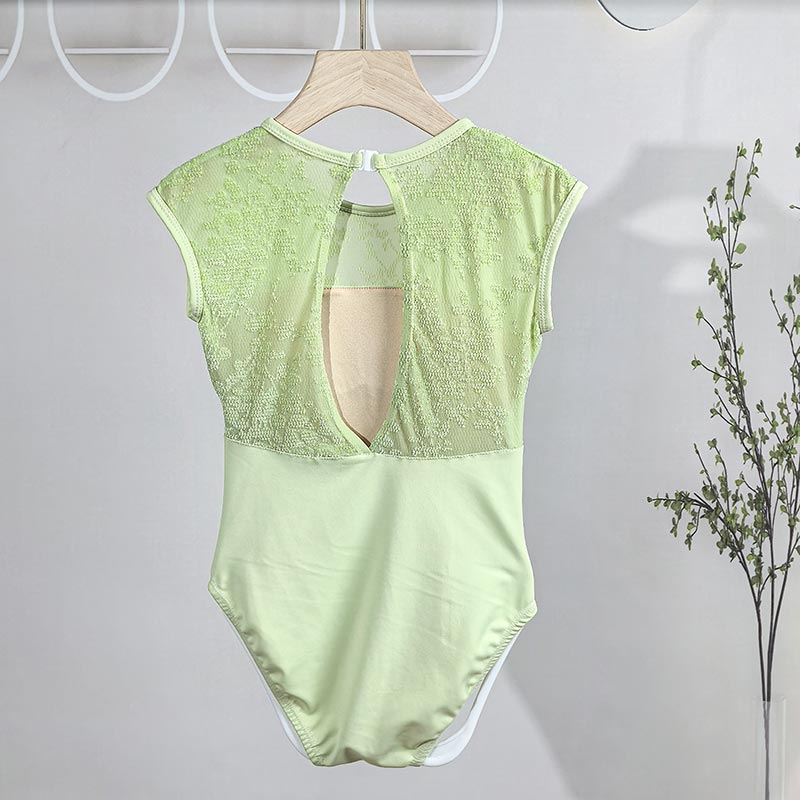
Keep the leotard’s back in the comparison. A low back, crossed straps or a prominent back seam can make the combination read differently from its front view. Use a complete outfit photograph for approval rather than placing unrelated product photographs next to one another and assuming the result.
Record the combination that passed the fitting
Keep one short record for the approved pairing. Identify both styles, both sizes, the intended waist position and the layers worn underneath. Add the fitting photographs and the teacher’s comments. A simple record is useful only if it makes the two garments distinguishable from similar alternatives.
For a group order, note any approved exceptions. One dancer may need a different skirt size or a different leotard proportion. Give each exception its own garment references so the packing team does not replace an intentional size combination with two matching labels.
Approval in one size also has limits. If the order covers a wide range, agree which additional sizes need a complete-outfit fitting. The leotard’s proportions and the skirt’s fullness can change across the range, so the smallest and largest pairings should not be inferred solely from a middle-size photograph.
Separate fit decisions from care decisions. The two pieces may have different care instructions. Removable garments can be cared for separately as directed, but if an alteration joins them, ask how that affects care and handling before making the change.
Make the order and product listing unambiguous
State whether the buyer is ordering a leotard, a separate tutu or both. List the components rather than using a styled photograph as the only explanation. Where a skirt is shown for styling and is not supplied, say so beside the relevant product information.
Give customers separate sizing guidance when the two garments use different charts. A retailer can still offer a coordinated outfit while explaining which leotard and skirt sizes are included. Avoid implying that every customer should select the same label for both pieces.
For Jinwu inquiries, send the proposed base style, a reference for the required tutu construction and the intended use. Ask whether the separate skirt can be supplied, what its size information covers and how the pair would be sampled. The published tutu dress construction guide can help clarify the difference between a soft attached dress and a specialist stage silhouette before that conversation.
Discuss the proposed outfit with Jinwu with front and back references and the required wearing position. Those details give the team a concrete pairing to assess instead of a request based only on a color and a size name.
ختام
A successful ballet leotard and tutu pairing starts with two clearly identified garments and ends with a fitting of the complete outfit. Confirm the layers, waist position and movement before approving the visual match. Record the exact combination so the order reproduces what was assessed.
أسئلة وأجوبة
Should the leotard and tutu have the same size label?
Not necessarily. Use each garment’s chart and the complete-outfit fitting. If the approved sizes differ, retain that combination in the order and packing record.
Can I assume every separate tutu is worn over a leotard?
No. Confirm the garment’s construction and intended wearing method. Some designs include a fitted lower section, which changes the layers that must be considered in the fitting.
Is a matching pull-on ballet skirt the same as a tutu?
The term pull-on describes how the skirt is put on, not its silhouette. Jinwu’s Tank Ballet Leotard Set lists a lightweight matching skirt; do not treat that description as confirmation of structured tutu construction.
Should I sew the tutu to the leotard to stop it moving?
Ask the costume professional or supplier to assess the cause first. Joining garments changes their construction and may affect stretch, dressing and care. It should not be used to conceal an unresolved fit problem.
Does a one-piece tutu dress need the same compatibility check?
It still needs a complete-garment fitting, but the bodice and skirt are already joined. You are assessing that construction rather than the interaction of an independently chosen waistband and leotard.